“These are the only clothes I’ve got,” she said, gesturing toward her pants and top. “When I’m drinkin’ I mess myself. So then when I sober up I have to throw out whatever I was wearin’.”
I nodded, encouraging her to continue. I asked where she was living right now. If she had a place.
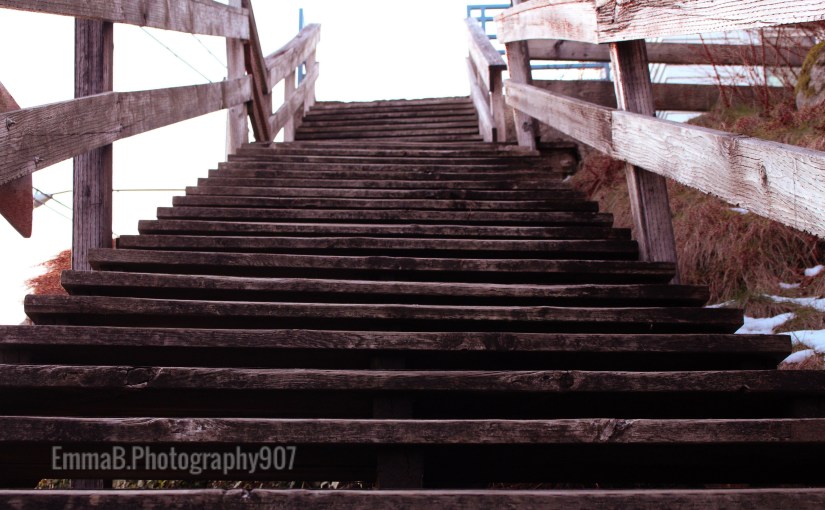
“Under stairways mostly,” she answered, looking me in the eye. “I don’t sleep too good. Never have. I don’t like to be closed in.”
I asked if she was bothered by nightmares and she nodded, still looking directly at me.
“Yeah,” she said, after a second or two. “There’s a lot to that.”
I said that I think there’s always a lot to it when someone has frequent nightmares.
She agreed.
We talked briefly about post-traumatic stress disorder. I explained how when scary things happen to us those images get stored in a part of the brain where they’re easily accessible, instead of being filed away with all of our other memories. So the brain continues to let us know that it’s got something misfiled by giving us flashbacks and nightmares.
She was still looking directly at me. I said that a lot of times those PTSD symptoms go back to scary things that happened to us when we were children. Then I waited.
“Yeah,” she said, still looking at me. “I got molested most of my childhood, and then raped as a teenager. I don’t even know how many times I’ve been raped as an adult.” She was quiet for a second. “It’s all still right here,” she said, putting her hand on her chest.
She’d just gotten out of the hospital. Intensive care. She’d been there for several days, having woken up one morning feeling “not right.” A friend had helped her walk 3 miles to get to the hospital where they discovered that she had an upper GI bleed.
“I think it almost killed me,” she said. “I went through the whole thing in the hospital. The DTs, hallucinations, feeling cold, then hot, shakin’, feeling things crawlin’ on me, vomiting blood.”
I asked how long she’d been out of the hospital and she said this was her third day. And so far she’d been able to “stay away from the bottle.” But, “I want it. I want it real bad. All the time. I walk by the liquor stores and the bars. And if I had any money at all, or found anybody to give me some money, I’d have a bottle. And then I’d go lookin’ for another bottle.”
She was just a few months older than me. But she looked quite a bit older, except when she smiled. She said she’d been homeless for “a while now,” saying again that usually she finds a safe place to stash her things in bushes and that there were a few different stairways around town which she would sleep under.
Our town exists between the ocean and the mountains. It’s several miles long and only a few blocks wide. The stairways she sleeps under are outside wooden stairs. Shortcuts up the sides of hills.
Winter is around the corner, and as she talked I was thinking about how cold the last few mornings have been. I asked if she had enough things to keep herself warm. A coat, or sleeping bag.
She smiled and reached down into her backpack to pull out a big black sweatshirt. It had a picture of a fishing boat on the front, and the name of a company.
“I picked this up. It’s big on me,” she said, pulling it on over her head and wrapping her arms around herself. “But it’s been nice and warm on these nights.”
I knew that sweatshirt. I’ve washed it dozens and dozens of times. The tear on the side of the front pouch guaranteed to me that it was the same one.
It had belonged to one of our sons. Given to him on his 16thbirthday by one of his older sisters. It had been worn frequently for a couple of years, and was one of the things that was given away in a bag of clothes when he left for college.
I didn’t say anything about recognizing the sweatshirt, or that I was glad it was being used. We continued visiting. We talked about the disease of alcoholism and how it is non-discriminatory. She said that she knows a lot of people who don’t believe that alcoholism is a disease and I laughed, telling her how much I love educating those people.
She smiled at that. Then she looked away for a second or two. And I sat quietly, watching her.
“I gotta get to treatment somewhere,” she said. “I’ve been before a couple of times. But I need to go again, and I need to stay sober this time. Or I’m gonna die. These last few days I think I was pretty close. And I’m too young to die from the bottle.”
We made a plan to help get her into a treatment facility, and I asked if she would be safe for the next week or so until we could get her somewhere. The need for treatment beds is exponentially greater than the number of actual beds available. Sometimes it gets tricky. And sometimes it’s a slow process. She nodded as I explained all of this and when I encouraged her to work with us so we could get this done. Then she told me what her plan would be to stay safe while we did the leg work to get her a treatment bed.
When we parted I told her how much I had enjoyed meeting her. She still had the huge, black sweatshirt hanging off of her thin frame, and had to shove the sleeve midway up her arm to shake my hand. We both chuckled.
“My big, warm, jacket,” she said.
When I got back to my office I texted my son at college to let him know I’d just seen his sweatshirt. And how it was being used. To keep someone warm at nights while she’s sleeping outside under stairways because too many bad things happened to her when she was young and she can’t stand to be closed in, and can’t sleep because of nightmares. He texted back that he was glad to hear that his sweatshirt was being used. And this evening I’m sorting through my clothes again. I’ve got more things than I need. Things I don’t even wear. Things that could be keeping someone else warm tonight.

 penniesonmypath
Thank you for this. Please write a follow up.
LikeLiked by 2 people