
Sarah’s Dad

There are times when I get so wrapped up in what I am doing at the moment, and my own plans and expectations, that I fail to see the bigger picture of what is unfolding around me.  I fail to see what I should have seen.  Fail to recognize what I should have recognized.  I’ll regret my self-centeredness later.  Not regretting so much what I did, as regretting what I did not do.

We had just gotten home after being gone on vacation and family reunions for nearly a month.  While we were gone, we had asked a contractor to do some work on the roof above  our family room.  The job was expected to be done before we got home.  But some unexpected delays occurred.  And when we got home, the job was still in progress.

I was sitting in the living room on our first morning back home.  I had my cup of coffee and was working on my computer. The contractor had already come to the house and was up on the roof working.  We had known that he’d be coming over early that morning, so when Geoff left for the office he had left the front door unlocked to give the man access to the upstairs if he needed it.

I heard the front door open and looked up.  A young girl, maybe 11 or 12 years old, was coming through the door. I didn’t know who she was or why she was here.   I stopped what I was working on and looked at her over the top of my computer screen, waiting.

“Oh,” she said, stopping short when she saw me sitting in the living room.  “Sorry.  I, uh, didn’t know anybody was…  Is he here?” She pointed up the stairs.

“I think he’s on the roof,” I said, assuming that it was the contractor she was looking for.  

 “Okay… thanks,” she said, hesitantly, and backed out the front door, closing it behind her.

I smiled.  Only momentarily distracted from my work.  Glancing out the front window, I saw her start up the ladder that he had gone up just a little while ago.  

Later that morning the contractor came off the roof and poked his head in the front door.  

“Sorry about Sarah,” he apologized.  “She’s my daughter.  She was just bringing me some water.” 

It was certainly understandable that in our absence, she had been used to coming and going freely to visit her dad while he worked. She’d undoubtedly been surprised to walk in that morning to what she’d known was an empty house only to find me sitting there. Suddenly, what had been commonplace for her must have felt like trespassing.

I assured him that it had not been a problem, and that I was glad she’d found him. 

I never saw her again.

He finished the job, though the work was sporadic. He had apologized for how long it was taking him to finish the roof. He’d been diagnosed with pancreatic cancer earlier in the summer, he’d explained. He had to fly down to Seattle every couple of weeks for chemo, and then it usually took him a few days to regain the strength to get back up on the roof. He’d smiled then, seemingly accepting of circumstances which were unacceptable.

We had assured him that we were in no hurry to have the roof finished, and to come as he felt able.  He’d thanked us.  For our understanding.  But Sarah, who in our absence from the house had often stopped by to visit her dad and bring him water, never came around again.

We went to his funeral the other night.  He had finished the roof.  And died a couple weeks later.  Not unexpectedly.  Just shockingly.  We went to the funeral out of respect and appreciation for the man whom we really hadn’t gotten to know much.  

Sitting in the front row of the church with her mom and older siblings was Sarah. Sarah, whom I hadn’t seen since the day she’d come uninvited into our living room.  

I had already regretted so many times that I hadn’t just gotten up out of my chair that morning, setting my computer and my coffee aside, and gone out after her. To reassure her that she was welcome here, even though we were back.   To invite her to come visit her dad any time. It was not a problem.  

But I hadn’t gotten up out of my chair that morning.  And the opportunity to welcome her had passed.  I told myself it wasn’t a big deal.  I hadn’t been rude to her.  I had just stopped what I was doing to look at her and wait for her to tell my who she was and why she was walking in my front door.  I hadn’t been rude.  I just hadn’t been welcoming.  I hadn’t said she couldn’t come in.  I just hadn’t invited her.  I just didn’t do anything that morning to make sure she knew that it was okay to be here.  Visiting her dad.

As I sat in the church the night of the funeral the burden of that morning weighed heavily on me.  As a regret. Not for anything that I had done. But for what I hadn’t done.  For once again being so wrapped up in what I was doing at the moment, my own plans and expectations, that I had failed to see the bigger picture  of what was unfolding around me.  
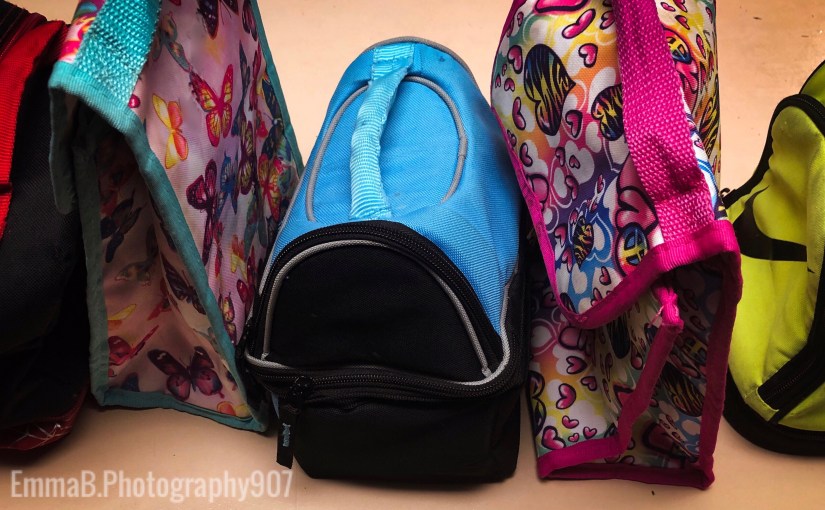
Home Lunch

We had picked him up the evening before from another home. His behaviors were too aggressive, and the other family felt like his needs were higher than they were comfortable with. Ours would be the sixth foster home he’d lived in the past year.

We brought him home to our house, and our other boys helped carry his boxes into the house and into their room.  They showed him which bunk would be his, and which dresser.  

He was happily distracted by our dogs.  All four of them.  Which is about two too many.  But that’s another story.  The dogs were delighted by a new little body coming into our house, and wouldn’t leave him alone.  

He laughed, and promptly sat down on the living room floor to be mauled by our dogs as they vied for his attention.  

A little later we reminded him to get his things unpacked and put away into his dresser, and our boys again offered to help him.  No, he would do it, he said.  So they sat in there with him, trying to visit, while he unpacked his few things into the dresser drawers which were now his.

We ate dinner after that and he sat on the bench on what has become the “boys’ side” of the table and watched the happenings. Our dinner table is just slightly smaller than a ping pong table, and when we sit for dinners every seat is usually occupied.  He looked around eagerly at the other kids as they all sat down, and then giggled at the dogs begging shamelessly for a handout below him.

He was a long ways from home.  With no idea really why he had ended up here at our house. Nor any idea how long he’d be staying. He was just trying to take it all in. Trying to get his bearings.

After dinner we sent everyone off to get into pajamas before sitting down to watch a movie for a little while before bed.  In the process, four of the kids grabbed their lunch boxes out of backpacks so we could pack up their lunches early in the morning before they were up.

“Can I have a home lunch?” he asked, watching the parade of lunch boxes being set on the kitchen counter.

We were going to explain that most of the kids in our home actually get school lunches.  But we stopped.

Kids in the foster care system qualify for the federal lunch program.  Schools get additional monies based on how many of their students qualify for the federal lunch program.  So generally, we have our foster kids get school lunches and we pack lunches for “our kids.”  Those who are legally our kids.

But in our moment of hesitation, he added, “I’ve never had a home lunch.”  

Geoff opened the cupboard where the extra lunch boxes are kept and pulled out another one.

“Yep,” was all he said, setting the lunch box on the counter with the others.  

The boy smiled, and then went to get into his pajamas.

The next morning at breakfast, when the lunches were all lined up on the counter waiting to be returned to backpacks, the boy came out to the kitchen and was eyeing the lunch boxes.  Waiting.  We reminded him which lunch box was his, and instructed him to put it in his pack.  

He nodded.  “I like home lunch much better than school lunch,” he said, smiling.

We’ve heard that a lot over the years.  By our kids who are in the foster system.  And it’s an interesting contrast to  “our own kids” who would love to get a school lunch every once in a while.  

But last night there was something about the delivery of the request that hit both of us. 

It’s not about the lunch itself.  It’s not about preferring a peanut butter sandwich and an orange to a burrito and a fruit cup.  It’s not about whether it’s a hot lunch or a cold lunch.

It’s about having a home.  And a family.  It’s about having someone who actually makes a lunch for you.  It’s about belonging somewhere.  And I suppose when you’re 8 or 9 nothing says “I belong” faster than showing up at school carrying a home lunch.

So, as for this new little guy, we don’t know how long he’ll be here.  He’s a long ways from home.  But I’m pretty sure that for however long he’s here he’ll be going to school every day carrying a home lunch. 

It’s Not About The Dressers

As a counselor it’s often my job to see behind what’s happening on the surface, and to listen beyond what’s being said.  But as a mom, I don’t usually have the luxury of much time.  So I plow ahead, and generally end up reacting to what’s right in front of me, on the surface, rather than identifying what’s really going on.

Geoff had built loft beds for our sons Ben, who was 16, and Mo, who was 13. We re-did their whole room, to better reflect the young men who lived there.  We moved out the old bunks which were more for little kids.  And moved in the new loft beds which the boys had sanded and helped build.  In the process, we moved some dressers around.

Martha, who was 14, had a tall and narrow dresser which now fit better at the foot of Ben’s bed.  Mo liked a dresser we had stored in the family room.  So Martha ended up with Mo’s old dresser, which happened to match the dresser Emma, also 14, was using.  

It was a busy evening setting up the new loft beds and then moving dressers around between the different bedrooms upstairs.  By the end of the evening we were tired and irritable.

We had just given orders to the boys to put their sheets and bedding on their new beds.  And we told Martha to get her clothes put away into the new dresser she was going to use. On our way downstairs, we noted that she was sitting on the floor of her room not doing anything and, as bedtime was approaching, we wanted everything finished for the night.  I ordered her to hurry up and get her clothes done.  

I vaguely saw that she looked upset.  But I was tired and needed to get things wrapped up so that we could all get to bed.

A few minutes later, we could hear Martha and Emma arguing upstairs.  We gave them a minute, hoping things would resolve.  They didn’t. We called up the stairs to Martha to come down and visit with us in the living room.

Our oldest daughter, Kathryn, had just left for her senior year of college. And our second oldest, Anna, had left two weeks earlier to begin her first year of college.  We were all adjusting to having them both gone.  We’d moved the two little kids into Kathryn and Anna’s old room, rather than leave their room untouched and keep everyone else crowded into other rooms.  But even that felt strange, changing things in what had been Kathryn and Anna’s room.

As we were adjusting to their absences, Martha and Emma both started high school.  Having been homeschooled since first grade suddenly being gone all day to the public high school down the street was strange.  For them, and for me.  

Seemed like every time we turned around something more was changing at our house.

Martha came storming down the stairs.  Mad at something that had happened upstairs.  And mad at us for calling her out of the mix.

She threw herself down onto the couch, arms folded over her chest, scowling at us.  We watched her for a second and then asked what was going on.

She spouted any number of things that were bothering her.  Ending with, “And I don’t want another dresser!  I don’t know why I couldn’t just keep the same old dresser I had.”  

We explained, again, that it fit better at the foot of Ben’s bed than his other one had.  And that the new one she was getting was nicer, and it matched Emma’s dresser which was already in their room.

She knew all this.  After a second or two, she continued.

“I’m just tired of having to change everything.  I don’t see why we had to change the dressers.  I know what you said.  I just don’t want anything more to change!”

Right then at that very moment I managed to step out of my mom-role for just a minute. I acknowledged what she was saying. I validated that there had been a lot of change in our home the last few weeks.  I identified some of those changes:  Kathryn going back to college, Anna leaving for college for the first time, their old bedroom now being John and Kristall’s room so it looked different in there now, the boys’ new beds, moving the dressers, Martha and Emma starting high school and going back to public school after seven years of being homeschooled. Holy cow, I said, she had had a lot of change.

She started to cry.  The tears ran unchecked down her cheeks.  And by then I was crying, too.  Because for all those changes that Martha was dealing with, I was dealing with all of them, too.  

After a moment’s pause, I said, “It’s not really about the dressers, is it?”

“No,” she admitted tiredly.  “It’s about everything else.”

I nodded.

A few minutes later I’d given her a hug, and she was heading back up the stairs to finish putting her clothes away in her new dresser.  I sat back down in my chair and gave myself a moment to breathe, marveling at how quickly everything resolved once I looked at it from a counseling perspective instead of always reacting out of my very practical mom-role. And I wished that I would start making that shift more often.  

It wasn’t about the dressers tonight. It was about something much bigger. It was about change.  And growing up.  And letting people move on, even when we’re not ready for them to go.  It was about uncertainty.  And the desperate desire to keep things the same.  Even when we can’t.  

It wasn’t about the dressers.  It almost never is.

Getting Dirty

I was in session with a client the other day who was talking about some of her life’s experiences.  She was saying that when she looks back on some of the things she’s done she feels so disgusted with herself that she can hardly stand to think about it.  

I asked a few questions to try to clarify.   She opened the door to her pain a little further.  Then she took a deep breath.  

“I know that God loves me,” she said in a trembling voice.  “I believe that God loves everyone.  But when I actually think about that…I mean…I know what I am.  I know what I’ve done.  What I’m guilty of.  I am so dirty.  So how can I really think that I’m not too dirty for God? I mean, maybe the truth is that God loves everyone….except me.”

The tears had started to come then.  I sat quietly while she took a few minutes to collect her thoughts.  Then we spent the rest of the session focused on shame, and what it is to be dirty.

On my drive home I thought about times when I’ve gotten dirty.  As a kid whenever I was at my dirtiest my cousin Sue, born four days after me, was usually on the scene.  Whatever trouble either of us were capable of by ourselves grew exponentially when we were together.  But there was one time in particular that always comes to the forefront of my memory when I think about getting dirty.  

It was late summer before our sixth grade year when my Uncle Carl said he’d pay us ten cents a pint to pick blackberries in their pastures. Sue and I had picked and picked most of that day.  We competed with the horses for the juiciest berries.  And were scared half out of our wits dozens of times to find giant spiders lounging on their webs right next to our faces while we reached for the best berries.  We picked until our fingers were purple and our arms and legs were scratched and scraped from the defending thorns.

I vaguely recall one of us finding an old rusted out child’s wagon buried deep in the wild blackberry bushes that day.  We wrestled it free from its entangled grave and then used it as a makeshift ladder to reach the upper branches.  While one of us balanced precariously on the rickety old wagon, the other stood behind steadying the climber with one hand grabbing hold of the back of her shirt.

It seems in my clouded memory that it was something to do with that rusty old wagon that ultimately led to the battle.  And although Sue’s recollection may be better than mine, in my memory I’m fairly certain that the first transgression was hers.

Regardless, one of us threw a blackberry at the other one.  It connected with a juicy splat, and was swiftly answered with a volley from the other side.  We’d been picking for the better part of the day, carrying our wealth in buckets wherever we went.  By the time the war began, we were both fairly well-armed.

What had started with individual berries being thrown, escalated to entire handfuls of berries being lobbed.  We quickly discovered that if we partially crushed a handful of berries before we lobbed them it made for a bigger impact.  And somewhere amidst the escalation, the argument became play.  We chased each other through the pasture, ducking in and around berry bushes, using the horses as living shields, dodging spider webs and manure piles.  We kept at it, lobbing rounds of smooshed blackberries at each other, until our munitions were spent.  Then with empty, stained buckets in tow we collapsed to the ground.  Exhausted and filthy.

We’d worked all day long and had nothing to show for it except our own filth, which was significant. Dirt and grass stains, dried bloody scratches from thorns, all saturated in purple blackberry juice.  

After a few minutes of sitting on the grass catching our breath, we carefully devised a plan.  We had to get clean.  And at some level we must have known that no one but the two of us would understand how this had happened.  That at the time having a blackberry fight had not only seemed like a good idea but had in fact been entirely necessary.    

We snuck up to the house, tiptoed through the backdoor, straight into the bathroom.  We took turns showering and scrubbing.  We shampooed and lathered until the suds no longer ran purple.  Then we put on clean clothes and hollered to my Aunt Elaine that we would throw in a load of our clothes because we may have gotten “a little stained” from picking berries.

And just like that we were good as new.  The dirt and dried blood had washed off easily.  And with a little scrubbing even most of the berry stains had come out.

I recall my Uncle Carl smiling at us later with a certain twinkle in his eye.  And I’ve always suspected that he knew about the battle out in the pasture, and what had happened to all the berries.  But he was generous enough to never say anything about it.

I don’t think either Sue or I were ever concerned that this time we might just have gotten too dirty.  That this one time there was no turning back, no way to ever get clean again. No way to ever just be Sue and Ruth again.  I’m pretty sure, in the wisdom of 11-year-olds, we probably just shrugged and said something about “just needing a little soap and water.”

I think that day was a life lesson for me.  A lesson on getting dirty.  And that even at our absolute dirtiest, we’re still just us.  And I’m convinced that God must smile at us sometimes with a certain twinkling eye, wondering if we’re ever going to admit what really happened out there.  But being generous enough not to ever say anything about it.

Because the truth is that there’s nothing we can ever possibly do to make ourselves so dirty, so permanently dirty, that we can never be made clean again. And with a little scrubbing, even the stains come out.

To The Oak Tree And Back

When I think back to childhood years many of my memories have to do with playing softball or baseball in the park across the street.  We played a lot of pick up games with whoever showed up that day.  And a lot of the games were developed, or at least fine tuned, on the spot.  

There was “work up” if we only had 8 or 9 kids.  You’d start out in left field and work your way to the next position until you eventually batted.  And when you got out it was back to left field.

If there was only three of us we’d play that the batter had to run from the sweatshirt “home plate” over to the big oak tree and back before the fielder got the ball and threw it to the pitcher standing on the sweatshirt “mound.”  Chances were slim.  And if there were only two of us the pitcher doubled as the fielder and had to field the ball and race it back to the “mound” before the batter was safely back “home” from the oak tree.

In all my years of playing I don’t recall ever having a single coach, or ever remembering by the next day who had won.  If my parents ever happened to see me play, I wasn’t aware of it.  We played for the game.  Not for our parents.  It didn’t matter whose team we were on because tomorrow the teams would be different. And if someone got hurt, ultimately the game stopped.  Because we were more concerned about our friend than the flow of the game.

So much has changed in a generation.

Our daughter Emma was 9 years old and pitching.  Her twin sister Martha was catching.  Our town was playing the bigger town in the tournament.  

The batter was 11, and a head taller than Emma.  She stepped up to the plate confidently, staring down at the puny 9-year-old pitcher. Emma did her wind up and pitched the ball as fast as she could across the plate.  And Goliath connected for a line drive.  The ball took a straight trajectory at Emma and hit her in the side near the kidney.

In an instant Emma doubled over and went down.

I gave it a minute, sitting there on the bleachers, before I stood up.  I always figured if the kids looked at me to see how seriously they might be hurt I wanted to do whatever I could to convey that I wasn’t worried.  

Marthy ripped off her facemask and charged to the mound, as did the rest of the infield.  

The batter hesitated for just a second, until her coach started screaming, “Go!”  

The runners on first, second and third base all stood for that split second, too.  Not sure what to do.  But their coach’s orders were clear.  “Go!  Go! Go!  Score!  Score! Score!”

The bigger town scored four runs off that “homerun” that never went further than the pitcher’s mound. Their coaches, full of testosterone over a little girls’ softball match, were congratulating each other with high fives and pats on the back.

To their credit, the runners for that team didn’t seem as sure of the victory.  And the batter, heavily congratulated by her triumphant coaches, kept turning a wary eye toward the mound and the other team huddled around their pitcher who was still on the ground.  

Emma’s coaches were out on the mound by the time the last runner crossed home plate.  Her team hadn’t made any effort to tag a runner. Or even to pick up the ball for that matter.  Emma was on the ground.  That’s where their focus was.

I stood up and walked toward the dugout.  I called Geoff on my cell phone and let him know what had happened and that we should probably get her checked by the doctor.  Then I stood, just outside the fence, while the coaches and teammates helped her off the field.  

The other team was quiet in their dugout by then.  They were lined up along the fence, looking with concern over at the home team’s dugout. With concern, now that all the runs were safely in.

Emma and Martha’s team ended up losing the game, I think.  More importantly, Emma was okay.  She had a lump and deep bruising on her side for a week or two, and was stiff and sore for a couple days.  But no internal damage.

But that game turned out differently for me than all the rest of the games that season in that I still remember it.  I’ll probably always remember it.  So will our daughters.  

I’ll remember it because Emma got hurt.  But I’ll also remember it as evidence that the winners don’t always win.  And that sometimes the losers don’t lose.  The victorious team, who didn’t seem all that victorious by the time they walked off the field with their heads hanging, had won by taking full advantage of an injured player.  And the losing team, who actually seemed to have already shaken off the defeat by the time they walked out of the dugout with arms on each other’s shoulders, congratulating each other for a game well played, had lost because in the moment of reaction they erred on the side of caring first about the well-being of a teammate, not the number of runs scored.  

Winners aren’t always winners.  And sometimes the losers get the victory.

When I remember that particular game I still shake my head wondering what we adults are teaching our kids.  Are we really thinking that if they win in sporting events as children we will have somehow taught them how to be winners at life?  Have we still not figured that out?  The ones who learn to win at all costs aren’t the winners in life.  That title usually belongs to the ones who leave the field at the end of the day with satisfied smiles on their faces amidst the camaraderie of the team and the assurance of a courageous effort.   

The other piece of that game that remains tragic in my memory is that in the moment after Emma went down the batter and the three runners on base all instinctively stopped. None of them moved.  They watched the pitcher, waiting to see if she was okay. It was the adults on their team, the “coaches,” who ordered them to run, to score.  Their instincts at ages 9, 10, and 11 were to stop and show concern for a fellow player who was down.  Their instincts were not to capitalize on an injury.  This was taught to them.  By the adults.

As glad as I was to have our kids on the team who “lost,” what I watched on the field that day saddened me.  Made me miss the old days.  When adults weren’t even present when we played.  I think it was more fun that way.  And if someone took advantage of someone else being hurt, all the other players would correct that person.  We might even go home and tell our parents about it.  But probably not.  Most likely we’d have solved it on the field.  And the errant one would learn.  That you just don’t play that way.  That’s how losers play.  Race you to the oak tree and back.

When I’m Gone

We’ve been a foster family for 12 years. Although we get asked fairly frequently, we actually don’t know how many kids we’ve had in our home in the past 12 years.  Nor do we know how many we’ll have in the next 12.  We do know that every one of those kids when they moved in to our home, also moved into our family.  And those who left, for whatever reason, left an empty space.  

We often get asked about being a foster family.  And much too frequently, we hear people remark that they “just couldn’t do it,” they “couldn’t handle having to let them go.”  

Yeah, that’s kind of the crux of it.  Deciding to love a child, knowing that they might not stay.  In fact, knowing that they probably won’t stay. But the reality is that every time we decide to take the risk and love someone we make that decision without guarantees. Love isn’t about receiving, it’s about risking.  It’s a risk we take, without the safety net of guarantees.  And it’s the very act of loving that enriches our lives.  Every single time.

We had a little one not too long ago who had been with us for almost two years while efforts were underway to find her a permanent home, preferably with relatives.  We had been told that a potential home had been found, and they were going to begin taking this little girl for visits with the potential family.  

I was sitting in the living room one afternoon having a cup of tea and trying to finish some work on the computer when she came through the front door in tears. I looked up and asked what was wrong. 

She had smudge marks on her cheeks where dirty hands had tried to swipe at the tears.  Her hair was sweat-matted to her face in places, and her arms and legs were dirty too from active play outside.  She struggled to kick off her shoes, all the while, crying loudly about some egregious action on the part of the other kids in the yard.

I closed my computer and set it aside, and then patted my leg for her to come sit with me.  She complied, collapsing in a heap on my lap.  I smoothed her hair, and asked if she was hurt.  She shook her head no.  I asked again what had happened, and she relayed the story of someone not being nice, although I suspected that wasn’t really the cause of her tears.  

We sat together for a while, her snuggled up on my lap, and me thinking about how much I would miss her once she went to her “new family.”  Gradually her breathing slowed back down, and the tears seemed to have stopped.  We were rocking peacefully in my chair together when she interrupted my thoughts.

“Mom?” she said, without lifting her head to actually look at me.   “Will you miss me when I’m gone?” 

The tears came instantly.  I kissed the top of her head again, letting my tears soak into her hair.  I nodded my response, while swallowing so that I could speak.

Oh Honey.  More than you know.  

I finally managed to whisper a “yes,” and then went on to remind her that we will always be family for her.  We will always be here anytime she needs us.  That we will always love her.  And that will never change.

“Yeah,” she said, “I know.”  

I went on to lay the groundwork for her move, reassuring her again that this sounded like a good family, and that they will probably love her even more than we do.  Which, I said, was hard to imagine.  She snorted a chuckle over that one, and finally lifted her head to look me in the eye.

“I love you, Mom.”

I said that I love her too, and always will.  And right at that moment the ache in my chest made it hard to take a breath.  

Yes, I’ll miss her when she’s gone.  I always do.  Her presence here has enriched our lives.  Just like the other kids who’ve come into our family for a time.  Every single one of them.

Preparing For Flight

The day our daughter Anna left for college I dropped her off at the airport with her dad and older sister at 6:00 in the morning.  I had done a heroic job keeping it together and acting like today was no big deal.  I reminded her that she would be fine, and would do well.  That her dad and I had confidence in her.  That we knew she was ready.  Whatever that means.  I’d told her that I expected her to keep us posted on her classes, new friends she makes, and how she decorates her dorm room.  I encouraged her to keep herself safe, and to have fun.  Then I kissed her goodbye at the airport, reminding her yet again how very much I loved her and would miss her.

And then I spent the rest of the day trying to stay busy so that my mind wouldn’t have time to linger on things that would only bring the tears again.  I kept telling myself that this was a normal transition in life.  One that I’d known was coming.  One that I’d already gone through once when her older sister, Kathryn, left home for the first time.  And one that I would be experiencing time and again with each of our younger kids when their time came to leave home.  

But my mind had another agenda.  Throughout the day memories would flash unexpectedly to the screen.  Three-year-old Anna proudly heading off for the first time to daycare next door.  Eagerly getting herself ready for her first day of kindergarten.  Excitedly dressing up for her first formal dance in middle school.

I’d bring myself back into focus on the day.  Reminding myself to breathe.  Even though breathing was a little more difficult today.

The next morning, after all the other kids had headed off to school for the day, I grabbed my cup of coffee and our youngest daughter, Kristall, who was 5 at the time, and headed out to the beach.  I didn’t have an agenda for the morning other than to spend some time with Kristall and get outside before the rain started again.

At the beach we walked and visited.  She alternated between walking beside me holding my hand, and darting off to investigate something which had caught her eye.  We counted dead salmon lying among the grasses, and talked about how the seagulls eat well this time of year.  She explored the taller grasses, looking diligently for more salmon carcasses.  Only to announce, “Oh Mom!  There another one!” each time she found one.  

I breathed in the morning.  Consciously appreciating this place which had been so wet and cold lately.   Kristall busied herself picking up shells and counting waterfalls.  And I found a spot to sit and write for a little bit.

Pretty soon she started looking up at the sky and cawing loudly at passing seagulls.  When she heard an eagle screaming from its nest high in the tallest trees she spun around and, squinting up in the direction of the eagle, did her best to imitate it.  I smiled, glancing up from what I was writing.

By the time I’d written a few paragraphs, Kristall had climbed up onto a nearby boulder. I tried to stay focused on what I was doing, while also keeping a watch on her adventures.  Making sure she didn’t go any higher than two or three feet off the ground.

A moment later, she had shrugged out of her sweatshirt and was standing on the boulder holding her arms out to her sides, with her sweatshirt pulled tight across her arms like a cape.  Out the corner of my eye I watched as she lifted her head to the sky, cawed again at any curious ravens or seagulls which happened by, and started flapping her arms.

I smiled.

She no longer noticed me.  She was busy, communicating with the birds.  

After more cawing and flapping, still keeping her gaze up at the sky, she suddenly leaped from the boulder.  It was a dramatic take-off.  But the flight deteriorated fairly quickly.

From the ground, she immediately turned to look at me.  I lowered my head and pretended to be paying attention to what I was writing.  Convinced that I hadn’t noticed, she quietly picked herself up and brushed off her knees.  Then she climbed back up onto the rock.

The sequence continued several more times.  Pulling her sweatshirt tight across her elbows like a cape, or maybe like wings; looking up at the trees and cawing; flapping her arms faithfully; and launching.  

Each time, her efforts met with the same dismal result.  And each time, she’d turn and look at me from her position on the ground.  Then, convinced that I wasn’t watching, she’d get to her feet, brush herself off, and climb back up onto the rock.

I stayed on my nearby perch the whole time, watching.  Working hard to give her the space and the confidence to try something new.  Giving her the privacy to try, and fail, without embarrassment.  Letting her dream, instead of quashing those dreams with helpful intrusions like,  “You know you can’t fly, right?”  Allowing her to be independent.  All the while making sure she didn’t get hurt.  Ready to rush in if she needed me.  

As Kristall and I drove home from the beach that day I thought again about our daughter Anna.  Who was also preparing for flight that day.  I thought about all the work that has gone into her move to college.  And all the emotions of these first few days as she tested her wings, and discovered that they actually do work.  

And I reminded myself that my job there is pretty much the same as it was with Kristall that morning.  To sit back and watch.  To give her enough privacy to try, and maybe even fail, without embarrassment. To let her dream. Hoping she didn’t get hurt. Ready to rush in should she need me. Allowing her to be independent. And fly.

The Picture In My Mind

(This story was actually written years ago.  I just recently re-read it and decided to post it.)

My cousin Tami buried her son today.  He was 18, almost 19.  He was killed on Friday in a car wreck on the highway a short ways from their house.  

Tami had been on my mind for the last several days.  No reason.  None that I could think of anyway.  Just fleeting thoughts of her kept crossing my mind throughout the days.

I kept thinking about the day I’d spent with her last July.  We had talked, and laughed, all afternoon.  And I remembered being so impressed by her.  By her candor.  By what a hard worker she was.  By what a good mom she was.  And by what a strong woman she’d become.

She had told me that afternoon about her boys, ages 18 and 16.  Both had dropped out of school.  Both were unsure of what they wanted to do with their lives. Both really were good boys.  She was worried about them.  They were her life, she’d said.

Then my mom called this morning.  To let me know.

Of the 20-some cousins I have on my dad’s side, Tami is the only one my age. Growing up, our lives were quite different.  We grew up 1000 miles away from each other, and worlds apart.  We became pen pals in about the third grade, so there’s always been a connection there between the two of us.  We have a lot of cousins.  But Tami has always been my very own cousin.

So I called her tonight.  Having no idea what to say.  Just wanting to express my sorrow at hearing about her boy.

“This is the hardest thing I’ve ever had to do,” she said, simply. 

Then she started to tell me about the night her son was killed.  She told about saying good night to him as he left with friends to go to a movie.  She told about getting a phone call half an hour later from one of his friends saying that the car he had been riding in had been in a bad accident out on the highway. She told about racing to get dressed, and jumping into the car with her husband Dwight to drive to the scene of the accident and make sure Scott was okay. 

I sat on the edge of our bed.  Listening, with my eyes closed.  Picturing all that she described. 

“It was such a cold night,” she said.  “We got out there.  And there were fire trucks and police cars all over the place.  I couldn’t even see the car Scott had been in.  There was another car there.  But I didn’t see Scott’s friend’s car.  Then I noticed it way out in the field.  It had been hit so hard that it got knocked way off the road out into a field.”

Images of a smashed-up car, at rest, off in an empty cornfield, came into my mind. I thought about how quiet it must have been out on that country highway, after what was probably a deafening impact of a collision.  Out in an empty field.  On a cold night.

She told me about the coroner finally coming up to talk with them, and her asking repeatedly which hospital they were taking Scott to.   But no one would answer her.  Then while the coroner was still talking to them she watched them stretch out a tarp to block her view while they lifted a body out of the car.   “And they didn’t carry that body to an ambulance like they had all the other bodies,” she said.  Instead they had walked over and put that body in the coroner’s car.   

They were told that he died on impact.  “So I guess that’s a good thing anyway.  He didn’t suffer.”  Then they were told that they should go home.  “And I said, ‘I’m not leaving here until Scott leaves.’  So, we waited, you know.  Finally the coroner’s car left.  And then I lost it.  Oh man, did I lose it.  Right there on the side of the highway with cop cars and fire trucks all around me. I kind of sank to my knees and screamed. I think people in three counties must have heard me.”

She laughed then.  A small, self-conscious laugh.  And I told her that I thought it would have been a stranger thing if she hadn’t lost it.

She continued on, telling me about how the rest of the night had gone.  How her other son was doing.  How hard it was on her husband.  She told me about the wake, and the funeral, and the burial. She said she wasn’t sleeping.  And that her sister was concerned that she wasn’t crying enough.  We talked about what constitutes “enough” crying, and whether that’s actually physiologically possible.

We laughed some.  About little things.  Stupid things.  She hesitated a few times.  And I kept having to swallow hard, like something was caught in my throat.  She asked how my family was.  I told her everyone was fine, but that one of our kids had broken her arm.  She said she was sorry to hear that.  And I winced a little at that.

I told her again that I was so sorry that this had happened.  That I would be keeping them in my prayers.  And that I would call again in a week or two just to check in on her.

“I’m glad you called,” she said.  “I love you.”

I said I knew that, and that I loved her too.  Then I hung up.  And I just sat there on the side of the bed for a few minutes.  Until the tears started to come.

So tonight I’m sitting here in the dark thinking, and crying.  I’m thinking about my cousin Tami who buried her son today. And I’m wondering if she’s getting any sleep at all tonight.  I’m thinking about Scott, whose life seemed at times to be a struggle.  And I’m hoping he’s enjoying Heaven.  

In my mind I can picture the scene Tami described.  And I keep thinking about that car that was hit so hard it got knocked clear off the highway and out into an empty field.  I keep thinking how, in the moment after impact, and before any of the sirens started, it must have been so quiet out there in that field. Almost peaceful.  And I wonder if that wasn’t the moment when the angels came to get Scott out of the car and take him Home.  

And I can picture Tami, his mom, waiting on the side of the highway. Stubbornly refusing to leave until her son left.  Keeping watch.  And then crumbling to her knees in the snow.  And I wonder if God wasn’t right there that night, too.  On the side of that highway.  Standing in the snow.  Waiting for the coroner’s car to pull away.  With His arms wrapped around a grieving mom and dad.  Whispering to them that it would be okay.  That Scott was fine.  Just holding them.  With tears streaming down His cheeks.  Knowing full well what it was to lose a son.

That’s the picture in my mind, anyway.

Tami and Dwight—Thank you for letting me tell your story.  Love you. R

The Bubble Gum Years

When I was in school to become a counselor we had an instructor whose specialty in the area of child development was the pre-teen years.  She taught a semester’s course on the topic, and part of the requirement for students in her class was to complete an internship in a middle school.  For beginning counselors like me it was a tough age to try and counsel.  But for our professor it was her favorite age to work with.  She fondly referred to the pre-teen years as “the bubble gum years.”

During that semester I interned at a middle school and dealt with kids flunking out, kids with alcoholic or drug-addicted parents, kids who couldn’t function socially with their peers, kids who were thinking about suicide, kids who were drug-runners for gangs, kids who said they didn’t care anymore. It was pretty heavy.  Far heavier than I had expected.   After all, they were just little kids, ages 11 to 13. Little kids trying to be grown up. 

I’d spend afternoons at the middle school fighting my way through the muck. Reminding myself that these were innocent little kids.  At times I’d feel sick to my stomach listening to their stories and their dismal outlook on the future.  And in the evening I’d go to class where my instructor would smile and nod and say things like, “Ah yes, the bubble gum years.”

The bubble gum years.  The age when a child becomes old enough to get a first glimmer of life as an adult. When the body is changing from child status to adult status.  Hormones are driving every aspect of life into utter chaos.  Emotions flit and flutter in a constant state of movement and change, never lighting in any one spot for very long.  The intellect is experiencing one of its most rapid growth phases, making it suddenly possible to approach a situation from several different perspectives and actually analyze things.  Thought processes are changing, trying, I suppose, to adapt to the brain’s rapid growth.   Life takes on a new seriousness.  

And yet, the appearance is more important than the actual being.  What others see matters more than what actually is.  And in the scariness of all this change there’s a certain comfort in still being a child.  Still enjoying play.  Laughing. Being silly.  Stepping back into the safe cocoon of childhood.  For just one more day.

I don’t think I really got it that semester.  I read the books.  I wrote the papers.  I completed the internship, hopefully without damaging anyone.  And I passed the class.  But I didn’t really get it.  I didn’t understand the fondness which my instructor felt when she talked about those years.  To me, it was just a stage in child development.  A kind of messy stage, actually.

I finished school and became a counselor.  And in the first few years I did work some with that age group.  But I never thought again about the bubble gum years. Until a few years later.

I had received a note from a close friend telling me that her husband was deploying. I had just finished reading the note when our daughter Kathryn, age 11, walked into the kitchen.

“You okay, Mom?” she asked.

I nodded, choked up.  I read a couple sentences of the note to her.

“How many kids do they have?” she wanted to know.

I said three, and told her how old they were.  That they were actually pretty close in age to our kids.

She was quiet for a second.  Then she walked across the room and sat down at the table by me.

“How long is he going to be in the war?” she wanted to know.

I said I didn’t know.

“D’you think he could get killed?” 

I shrugged and said there was no way of knowing that for sure.  That war was war.  But, I said I thought he would be fairly safe.  Safer than many.

She was quiet again.  Then she said, “So why’d she write to you about it?”

I explained that she was wanting to let us know so that Dad and I would keep them in our prayers.

She was silent for a second.  Then she nodded, and said, “I’ll pray for him, too.  For him to be safe.  And for his family to be okay while he’s gone.” 

I nodded.  I told her that I knew she would.

The phone rang then, bringing our conversation to an end.  It was for Kathryn.  One of her buddies wanting her to go ride scooters.  And in that instant, her quiet thoughtfulness was transformed into joyful exuberance.  Childlike excitement.

“Okay, meet you outside in five minutes,” she said, and hung up the phone. 

I folded the note and stood up from the table.  She jumped up and ran to get ready, hurriedly telling me what her plan was. Who she was going with, where they were going to ride, when she’d be home.  And by the way, what’s for dinner?

A moment later she was heading out the front door.  As she ran down the steps she turned and smiled at me through the living room window.  I smiled back and lifted a hand in a wave.  She was wearing her standard attire—a swim team sweatshirt, athletic pants, and tennis shoes.  Her hair was in braids.  Shoelaces untied.  

And it hit me.  Right then. I closed my eyes for a second, trying to memorize how she looked at that moment.  Red cheeks, and bright eyes.  Loose hairs curling out all over from her braids.  Braces gleaming as she laughed, running out our front door and down the steps to go ride scooters with a buddy.  I tried to hold the picture in my mind.  The picture of our independent 11-year-old who just yesterday was still a toddler.  

And I finally got it.  In that instant I understood the fondness my former professor always had when she’d talk about the pre-teen years.  I saw it all in that one moment.  

“Ah yes,” I whispered under my breath, still standing in the window with my eyes closed watching her leave, “the bubble gum years.”

Sanctuary

There are times when that fine line between irony and hypocrisy seems imperceptible.  And other times when it is uncomfortably, even painfully, clear.

It had not been a good day at our house.  Another of the days I hope our kids will forget as they grow up.  I hope that their childhood memories will be so filled with fun outings we took, funny things we said, adventures, heart-to-heart conversations, that there simply won’t be room for days like this one.  

It started with arguments between our two oldest.  One of whom tends to be heavy-handed and demanding of her younger siblings.  And the other of whom responds to that with a nonchalant, biting, sarcasm which is equally difficult to be around.  In my immediate irritation in addressing their clashes, I ended up setting the tone for the morning.

Mornings are when most of the schoolwork gets done in our house.  So the schooling time now became stressed and negative.  Every one of the kids took the opportunity to poke and jab at their siblings.  Refusing to grab a book.  Not answering when asked something.  Arguing over whose pencil it was.  Yelling at each other to be quiet.

My attitude was undoubtedly the most responsible for setting the mood.  From that initial clash I had become irritated and annoyed with the kids.  And in everything I did I managed to convey that.  I was impatient, irritated, angry, demanding.  

The morning was ruined.  And as lunchtime came, the filth from the morning flowed right over into the afternoon. That filth was most obvious shortly after lunch when we were all getting into the car to head into town.

There were arguments over who brought the baby to the car.  Arguments over who had to sit in the back. Arguments over who all brought their swim bags.  Over who had to buckle the little ones into carseats.  Over who hadn’t grabbed a jacket.  Locking each other out of the car.  Name calling. And I presided over all of this with an angry, demanding tone.

We got out on the road, and I turned on some music to drown out the fussing in the back of the car. The CD that happened to be in was one of Christian praise music.  Songs we all knew by heart.  Although if I’d been paying any attention to what CD was in I probably would have changed it.

But my mind wasn’t on the music.  I was thinking about all the running around I had to do that afternoon. As I ran through my errands in my mind, I didn’t immediately realize that the kids had stopped arguing.  In fact, the car was actually quiet, everyone staring silently out their windows.  

And a second later someone in the back started singing along with the music.

Lord, please make me a sanctuary.  Pure and holy.  Tried and true.

A few more voices joined in on a song they’ve all grown up singing.  I drove in silence, thinking about the irony of those words on a day like today.  

With thanksgiving, I’ll be a living, sanctuary, for You.

Listening to our kids singing what was really a prayer, I thought back over all of the negativity of the day.  We had all been anything but sanctuaries for God today.  There was very little purity and holiness flowing in our house that morning. Tried, definitely.  True, I’m not so sure.  We have so very much to be thankful for.  Yet, it is with irregularity that we acknowledge that.  And in all that we do, all that we had done, just this morning, there was nothing sacred or sanctified in any of us, or in our home.

The irony slipped away from me, and I began to feel the burn of hypocrisy.  I was a hypocrite.  All these things I say I believe.  When the reality of my behavior, especially toward those closest to me, is a harsh contrast.  I was a hypocrite.

Lord, please make me a sanctuary.  Pure and holy.  Tried and true.

The kids continued to sing, calmly staring out their windows.  And as I struggled once again with my own shortcomings, I started to sing, too.   Simple words.  Known by heart.  Sung hundreds of times.  But this time, it was my prayer.  My prayer for forgiveness for all I had done, and not done, this day.  My heart’s desire for what I want to be, and how I want to be.  Thanksgiving for my gracious and loving God.  And once again, my promise.  That I will try, and I will fall short.  And hopefully, I will try again.

The tears started to come, as I sat listening to the singers behind me.  I don’t know that they were thinking all the same things I was thinking.  But I know their hearts.  I know that they, too, were unhappy with how our day had gone so far.  And sorry for their contributions to it. 

As we sang the words through again the mood in our car was changed.  Transformed.  The filth and negativity from earlier in the day was gone.  And somehow we were back to normal.  Restored, I think.  To what we were intended to be.  Living sanctuaries.