Pulling Him Out By His Throat

There’s been a lot of focus on the opioid crisis for some time now.  And yet it doesn’t seem to be getting better.  Opiates, pain killers, heroin.  They’re calling it an epidemic.  A health crisis.  

There are some things we know about opiate addiction.  We know that opiate addiction, like all addiction, isn’t specific to any particular socioeconomic background.  It doesn’t target only one or two particular ethnic or racial backgrounds; nor does it only affect young people.  We know that opiate addicts, like all addicts, aren’t all homeless or uneducated; they aren’t all unemployed; they aren’t all alike.  It’s a health crisis that knows no bounds.  At least from what I can see.  

Years ago, I was running a weekly parenting group in a residential treatment center. Most weeks there were 12 to 18 people in the group.  Most were residents of the treatment center, and a few were graduates of the program. Most of the group members had children and had struggled to be parents while their addictions had ravaged them. 

For me, it was always interesting to hear people talk about their addictions. How the addictions started.  How much the person had lost.  How far they’d fallen, and how fast.  The things they never thought they’d do, and had.  The people they never thought they’d be, and were.  The regrets.  The loss.

And time and again, especially in referencing addictions to heroin and opiates, people in the group would talk about how their addiction had started.  

“Well I got in a car accident, and I got hooked on the meds.”  

“I was an athlete in high school, until I got hurt playing football,” or hockey, or baseball.  

I’ve not yet heard anyone say that they just woke up one day and decided maybe they’d try heroin. Just for the heck of it. For heroin or opiate addiction it was often after an accident or injury which resulted in getting hooked on pain medicine. When the prescription medications stopped, they bought the same drugs they now needed on the street. When those became too costly, heroin was a cheap substitute. End of story.

Until treatment.  Treatment, they said, was the worst.  Treatment was where they were forced to face all the things in life they’d like to forget. All the things they tried to pretend they hadn’t done, all the things they’d become.  Treatment wasn’t so much about not using alcohol and drugs.  Treatment was about facing everything that made them want to use.  And it was brutal.

A mentor of mine used to say that treatment was about “turning the lights on.” When someone was struggling to acknowledge the atrocities that had been done to them in childhood, or fighting to admit the wrongs they’d committed, he’d encourage them. 

“Turn the lights on,” he’d say. 

The idea being to get things out in the open.  That once someone can take a look at something in the light of day that thing, whatever it was, lost a lot of the power it had held over the person.  

That’s what treatment’s about.  It’s about turning the lights on.

One particular day in group we were talking about facing our fears, about allowing light in on our darkest fears and our greatest worries.  There was a man in the group who had been clean from alcohol and drugs for several months.  He was battling every day to continue to work his recovery program, and “fix the things I need to fix in order to stay sober.”  

He was talking about some of his anxieties and fears.  About how easy it would be on any given day to “just walk into the bar.”  He referenced that for him the desire to use alcohol and drugs was a desire to not have to feel anything for a little while.  To which the other group members each nodded and smiled.  They knew.

After a moment of silence, he let out a sigh which was actually almost more of a growl, and said, “I just know there’s a man in there somewhere.  And when I find him I’m gonna pull him out by the throat!”

The rest of the group chuckled in agreement.  

And that statement stayed with me.

I know the opioid crisis is about drugs.  I know that for a lot of addicts it seems to have started with medications. Medications which were given after accidents or injuries.  Medications to ease the pain.  No one knew the person would become addicted to those medications.   

But the opioid crisis is about much more than just the drugs.  It’s about pain.  It’s about feeling, and choosing not to feel.  It’s about seeking relief.  For people in pain.  Opiates treat pain.  ALL pain. 

And treatment?  Treatment isn’t so much about getting people to stop using drugs.  Treatment is about turning the lights on and facing all those fears that rule in the dark.  It’s about feeling all those feelings that none of us like to feel.  It’s about allowing ourselves to feel the pain that’s been there for a long time.  Treatment is about finding that person we used to be “and pulling them out by the throat.”
Part Of Your Family

​We’d gone to the evening service at church that night.  It was always a smaller, shorter service than the regular morning ones.  The kids liked it, partially because they knew they could wear whatever they had on–almost.  They could just go as they were.

​During the service, Geoff and I, and our two oldest kids—Kathryn and Anna, then 15 and 12, listened to the message.  The other three drew pictures, and whispered back and forth, somewhat quietly.  

I had been aware of Emma, age 8, messing around more than the other two.  She sat in the pew behind us for a while, and then a few minutes later she was two pews behind us.  I had motioned for her to return, and she had complied but wasn’t pleased.

​Kathryn turned to whisper to me, “You know, it’s really pretty quiet in here except for our family.”  

​I had smiled back at her.  It was true. There needed to be more than just a few people to really muffle the sounds of the seven of us.

​Our family.  Our family, which has been a source of both pride and embarrassment, depending on your age and perspective.  To the older girls our family was often embarrassing and loud.  We heard the frequent complaint,“Why is everybody always staring at us?”

​To the younger kids our family was a source of pride.  “They don’t defend each other like our family does,” they’d proclaim.

​I found myself smiling at Kathryn’s observation during the rest of that service.  Even though all of our kids were being relatively quiet, our pew was still the loudest.By far.  Our family being quiet was still always louder than everyone else.

​Back at home after the service Geoff started barbequing dinner.  And I was folding a load of laundrywhen Emma came slowly up the steps.

​“Mom,” she said plaintively, “I left somethin’ at church.”

​I asked what she had left, while I folded another shirt.

​“Somethin’ I wrote,” she answered, clearly uncertain about something.

​I stopped for a moment and looked at her.  I wasn’t sure what her concern was.  It didn’t seem like her to write anything that would be hurtful or embarrassing, or in any way problematic, if it were found.  I watched her for just a moment.

​“What was it, Em?”

​“Somethin’ I wrote to God while we were in church.”

​I nodded.  “Was it private?” 

​“Yeah, kinda.”

​“Can you tell me what you wrote?”

​She put her head down again, and said in a quiet little voice which I could barely hear, “I just said, ‘Dear God, thank You for lettin’ me be part of Your family.  Love, Emma.’”

​I nodded, wishing that she’d remembered to bring that note home.  Those are the things I try to save.

​“Do you think anyone’ll read it?” she asked.

​I asked where she had left it, was it just lying in the pew?

​“Yeah.  It was back behind where we sat.  Do you think anyone’ll read it?” she asked again, clearly worried.

​I said that someone would probably find it if it was just sitting on the pew.  And the person would probably read it to see what it was.  I asked if she thought that would be okay.  

“You wrote it to God.” I added, “So do you think Godsaw it?”

​She nodded.

​“Then do you mind if anyone else reads it, too?” 

​“I guess not.  It was just kinda private,” she said.

​“Just between you and God.”

​She looked at me and nodded.

​I told her that I thought it was a very thoughtful note to write to God.  I said that I was sure it had meant a lot to God.  And I said that if anyone else read it, it would probably mean a lot to that person, too.

​She hesitated, and then smiled just slightly.  She thought about it for another minute or so, and then slowly said, “Okay.”

​She headed back downstairs, and I returned to folding the last of the clothes.  

I thought about family then.  Our family.  And how our family is often either a source of pride or embarrassment.  Depending on your perspective, and what’s currently going on.  But that either way, it’s our family and we belong here.  

Then I thought about God’s family.    And how God’s family is also often a source of pride or embarrassment.  Depending on perspective, and on what’s currently happening.  But that’s our family, too, and we belong there, too.

Throughout dinner and the rest of the evening my thoughts kept returning to Emma’s little note to God.  Which was accidentally left on a pew in the church.  And which, I suspect, was received the very moment it was written.  Received, and accepted as a cherished gift.  

Just a little note.  To God.  From Emma.  A member of the family.  

Postscript: Thanks, Em. Your little note was a life lesson for me. Always remember who you are. Love, Mom

The Utility Truck

It was a Sunday night.  My husband Geoff was out of town.  I was home alone with our five young kids.  As I was getting dinner ready I started becoming aware of some fairly strong gusts of wind hitting our house.  I gathered a few candles and replaced batteries in a couple flashlights. Just in case.  

Our daughter Anna, age 9, asked me what I was doing and I explained that I just wanted to be prepared in case the power went out.  She nodded, looking outside apprehensively.

It was while we were eating dinner that I first started to feel alarmed.  The electrical lines running to our house from the utility pole just across the road were swaying in the wind like jump ropes. I took another bite of my dinner, vaguely aware in the back of my mind that something was wrong.  There was too much slack in those lines, and I wondered why.  

We finished dinner and I hustled everyone upstairs to get ready for bed.  The storm was quickly becoming violent, and I wanted everyone settling down to sleep as soon as possible.  

The kids got into pajamas, and pulled out sleeping bags.  They wanted to sleep on the floor of our room tonight.  With a big storm hitting us, they wanted to all be together.  

As they got their beds situated I checked the weather forecast on the computer.   Our section of the state was red with storm warnings.  And the storm was still increasing.  Gusts in excess of 100 miles-an-hour were predicted.  The peak of the storm was expected to hit in the early morning hours.  

I tried to be calm about it, but the kids were aware of the building storm outside and they were worried, too.  

“Are we okay?”  

“Is this storm stronger than most storms?”  

“What if the power goes out?”  

“Will Dad be worried about us tonight?”  

“Are we safe, Mom?”  

I reassured them, trying to sound calmer than I felt.  As each gust crashed into our house like a bulldozer I reminded myself that this old house had withstood every storm to hit this area for the past 80 years.  Surely it would withstand this storm, too.  But with each shuddering blast I felt less and less confident.

Alaskans like to brag about the weather they’ve experienced.  I don’t know why.  They’ll say, “Yeah, anywhere else this would be considered a hurricane. But here in Alaska we just call it Tuesday.”

But this storm didn’t feel like just another day of the week.  It felt like a hurricane.

I turned out the lights so that when the power went out, which I was fairly certain it would do, it wouldn’t seem as startling to the kids.  Then I closed all the shades so that if a window were to shatter hopefully the shades might help hold back some of the glass.  I lit two small candles, and as the kids climbed into their beds they commented on how cozy our room looked.  Except for the building storm outside.

Kathryn, age 12, read a story aloud, by flashlight, to her younger siblings while I finished closing the window shades.  

I again noticed the swaying power lines outside which had way too much slack in them. And then suddenly I saw why there was such slack.  The utility pole on the other side of our narrow road was leaning toward our house. Slowly being forced over by the winds. Falling, right toward our house.

I desperately tried to measure height against distance.  If the pole gave way and fell was it tall enough to actually hit our house?  I couldn’t be positive, but it did seem that the pole was tall enough to land on our house.

At around 8:30 there was a flash outside our house like fireworks on the 4th of July as the transformer across the road blew.  The kids saw the flash and were impressed by how pretty the burst of light was. A fraction of a second later everything went black.  We peered out the window together to see our whole community, the entire island, in complete darkness.  

The kids finally drifted to sleep, and I sat up worrying, unable to sleep.  The power was out.  The phone lines were down.  The roar of the wind was a deafening constant now.  The gusts were coming closer and closer together and our old house trembled in response.  And I kept peering out the window, desperately hoping to see lights somewhere. Anywhere.  

It’s not very often that I feel afraid.  But I was afraid that night.  I didn’t know if we were safe in our house.  I knew that we would be less safe trying to go anywhere else.  And where would we go?  

I was alone.  Cut off from the rest of the world.  And I didn’t think we were safe.  

I started to pray.  And, as is often the case, I prayed desperately.  

“Please God, keep me calm.  Help me to think clearly.  Help me know what to do.”  

But I didn’t feel calm.  And I didn’t know what to do.  I felt afraid.  I was worried.  Worried that when that pole gave way it would crash into our house.  And if the impact of the utility pole crashing down on us wasn’t damaging enough, the fire it would start probably would be.  

I was afraid.  And alone. Geoff was out of town.  It was up to me to keep our family safe during this storm.  It was up to me to protect all of us.  No help would even be able to get to us in this storm.  

At 11:00 I woke up the kids and had them move downstairs to our small family room. There was barely enough room on the floor for all of us, but that room had an outside door which exited to the backyard.  If the utility pole came down on us it would hit the roof on the front side of the house.  We would be better able to escape from the family room.  

The kids settled back to sleep after a few empty reassurances from me.  And I sat up, still desperately praying.

“Dear God, please keep our family safe tonight.  Please hold that utility pole up and keep it off our house.  Help me to be calm so I’ll know what to do if I need to act fast.”

By midnight the gusts were still increasing, and for a second I thought I could faintly hear an occasional shout outside.  I couldn’t see anything when I looked out.  I wondered if anyone had discovered yet that the blown transformer was across the road from us.  And I hoped they’d be able to see that the whole utility pole was giving way.

“Dear God, please keep us safe.  Please send an angel or something to hold onto that utility pole for tonight.  Brace up that pole until this storm passes.  Dear God, please  keep us safe until morning.”

A few short hours later I awoke to morning’s light, and a peaceful silence. The power was still out.  Our house was cold.   But the storm had blown out.

I got up and went out to the living room to look outside.  The ground was littered with branches and scattered debris.  It was a mess outside.  But calm.

 And on the other side of the road, directly across from our house, was a large utility truck with its arm extended, bracing up that power pole.  Holding the pole in place.  Keeping it from toppling onto our house.  The pole was still standing.  Kind of. Held in place by the utility truck.

I smiled as the tears started.

In my fear and desperation I had called out to God, pleading for an angel “or something” to come hold up that power pole. Something to keep it from falling over on our house. I had asked for an angel “or something.” The “something” turned out to be a big utility truck.

I humbly whispered my thanks, to a very practical God.  

The utility truck stayed there for the next several days while crews worked to replace the old pole.  And by the time the truck was finally moved it had become  symbolic to me.  Symbolic of a God who, even in my fear, and my worry, and my aloneness, was still taking care of my family in a very practical, and tangible, manner.  

I was reminded once again that nothing, NOTHING, not even a storm with gusts above 100 miles-an-hour, catches God by surprise.  And nothing, NOTHING, has ever been or ever will be more than what God can handle.  

And I could continue to trust in that. 

Making Landfall

Rough water didn’t bother me in my younger years. I enjoyed being out on boats.  I’d never felt scared out on the water.  But like many other things in life, that changed with experience.

We were on the Alaska State ferry headed home on a 20-hour ride.  During the night we had turned toward the west to head out to another community before making our way home.  The channel to the west was wider, and faced open water.  As we made our way out there in the dark of night the ride got rougher and rougher.  Depending on our direction we were either taking the waves from the side, pitching from side to side with each wave, or bucking directly into the waves head-on.  That particular night it didn’t really matter which direction we headed.  The heavy waves caused the boat to shutter with each crashing descent into a trough.  

The pitching of the boat, and the creaking and shuttering after each crashing wave, woke me up.  I got out of bed and stood anxiously watching out the window.  Straining to see anything in the dark.  Thinking that if I could just see I’d feel safe.  But all I saw was darkness, with whitecaps out across the water.  

I could hear the wind whistling against the boat as I stood desperately looking out on the dark, stormy seas, with no sign of human life anywhere else out there. 

I sat up the rest of the night keeping watch.  Nervously looking out at the sea, wishing it to calm down. Waiting for us to make a turn, to cut into a narrowing channel, and get out of the wind.  Waiting for us to make landfall, anything to block the winds so that the waters would settle down.

Landfall finally occurred early in the morning as we pulled into a channel closer to home.  As we came up on the leeward side of an island, out of the wind, what had been a fierce wind-whipped sea instantly flattened out.  And the rest of the ride home was peaceful.  Remarkably peaceful in the wake of the earlier hours.  Nothing in the weather had changed.  Only our circumstances had changed.  We had made landfall.

Since that night there have been countless times out on the water when I have anxiously looked for the nearest landfall.  Knowing that it will break the wind and the waves, giving us a protected ride. 

I’ll look out nervously across angry waters and tell myself it’s okay.  Just ahead on the right.  There’s an island.  We just have to make it to that island and everything will smooth out. I’ll keep watch, my eyes on the island up ahead.  Just have to make it to landfall.  And with each crashing wave, each listing of the boat as it plows through another trough, we’ll be that much closer to peace and safety.  As long as I can see landfall up ahead.  Something to shoot for.  Something to focus on.  Knowing that it will get better as soon as we get there.

And over the years I’ve often heard that same sentiment from others.  People trying to get themselves through the rough waters, eyes set on the landfall that they know is just up ahead.   The anxiety is always right there in the eyes. And in the voice.  That feeling of just hanging on.  Bucking their way through rough seas.  

“I just have to make it through this pregnancy, then I think it’ll be okay.”

“As soon as I get a job we’ll be okay.  I’ll be able to pay the bills again and take care of my family.”

“Once the kids go back to school in the fall I think things will settle down for me again and I’ll get back into a routine.  I’m just feeling out of control right now because there’s so much going on. But once the school year starts and we get into a schedule again things will settle down for me.  I’ll be okay.”

“I just have to hang on until I can get to treatment.  Once I can get into treatment I’ll be okay.  I just need to get my life back.  Need to beat this addiction.  If I can just get to treatment I think I can start turning things around.”

“I need to get me and my kids away from him, away from the abuse.  If I can just figure out how to get away from him. I don’t know.  Maybe the women’s shelter? Someplace he can’t find us. Then we’ll be fine. I just gotta get away from him.”

They’ll stare off to the horizon while they talk.  Their mind’s eye looking for landfall.  Just up ahead.  They can almost see it.  Hanging on until they’re on the leeward side of something.  Be it housing.  Employment. Treatment.  Predictable routines.  Safety. Just gotta make it to landfall. Then the seas will flatten out, and the ride will be peaceful again.  Things will smooth out.  I know it will. 

Just gotta make it to landfall.  Just up ahead.  

Some Other Day

Our oldest daughter, Kathryn, graduates from high school next week. And the moment which I have dreaded for 18 years is rapidly approaching.  That train is barreling down the tracks straight for us.  And I’m not ready.

I have gone about business as usual for most of this past year, refusing to let myself delve into the “this is the last time” mentality.  Refusing to wallow.  Refusing to grieve.  Refusing much of the time, even to acknowledge that this is it.  It’s happening.  This is her last year at home.  Pretending, for most of this past year, that this year was just like any other. Periodically hearing the faint whistle blow.  Or seeing plumes of smoke in the distance.  Reminding me as I’ve strolled along the tracks.  That there is, in fact, a train coming.

Then suddenly when the calendar page turned to May, there were things to be done.  Announcements to go out.  Photo displays to put together for banquets and awards dinners. Decisions to be made about graduation. A reception to plan.  

As each new request came I met it with my standard acknowledgement and assurance that I would take care of it.  But without a lot of commitment.  And certainly without excitement.  I’d reassure her that I’d take care of it.  Fully planning to do so.  Silently dreading it.

It was one night a couple weeks ago that she came into our bedroom as I was getting ready for bed. She sat down on the bed next to me and started to talk.  She told me she was worried.  That she really wanted this time to be special.  Her jumping off time.  The acknowledgement that she was growing up and almost ready to be out on her own.  The recognition of all her hard work.  Her milestone.  And she knew we were busy with all the kids and everything.  But just this once, could we please let the focus be on her?  And let her feel like this really was her time?  

I nodded my assurance that we would see to it.  That we’d planned to make it so.

She continued.  The thing was, it was me she was really worried about.  Worried that I’d put off choosing photos for her banquet display.  Put it off, in my usual manner, until the night before the banquet.  Then I’d stress about it.  Grab a couple photos and slap them on a poster board.  Handling this request, as I tend to do, almost as a stressor rather than as something special I wanted to do for my daughter.  Not carefully taking the time to lovingly put together a display of her.  The way all the other moms do.  

And, tearfully, just this once, Mom.  I really just want this to be my time.  I want you to put some thought into it.  Please?

And though the tears fall freely in the recalling of it, that night as I sat up in bed listening to my daughter pour out her heart, I managed to hold my own heart in check. Instead, I nodded my understanding, assuring her that I would put thought into it, and make sure this was a special time for her.

Thinking all the while how wrong she had it.  That it wasn’t that I didn’t see the importance of this time for her.  Nor that I didn’t realize it should be special. Rather, it was the realization that the moment I had so long dreaded, and pretended would not come, had arrived. And I was being asked not so much to acknowledge its arrival, as to celebrate it.  Couldn’t I just do that one thing?  

I sat there watching her with tears in her eyes, trying to explain to me how this was an important time for her.  And even though I was busy, would I please try to make it be special.  It should be a celebration.  

And the sudden, shrill intrusion of a train whistle blowing startled me.

It was a day or two later that I locked the bedroom door, took out a box of old photos, and several photo albums, and allowed myself the luxury of reliving a lifetime. Determined to face my own heartache, and make this a celebration.  Laughing at childhood photos of dress-ups, Halloweens, and family events.  Carefully choosing which ones to display at several upcoming banquets.  Photos to show the world the progression from the child we have loved to the young woman now before us. 

I think it was relief I saw on her face when I showed her the stack of photos I’d chosen.  We looked through them together, laughing, and recalling memories.  I’d done what she’d asked.  I’d carefully chosen a good assortment of photos for her senior banquet display. Doing what was asked of me.  What was rightfully expected of me.

And maybe some other day. When this train has long since departed the station.  I’ll explain to her how funny this time felt for me.  How conflicted I was.  How very proud of her I was.  And how much I wanted everything about her graduation, and her leaving, to be special. And how very strange it was to plan a celebration around an event I dreaded.  How much I wanted her to fly free.  And how much I wanted her to stay safely in the nest.  How impressed I was of the young woman she was becoming.  And how much I missed the child she’d always been. 

Maybe some other day I’ll explain all those things.  Some other day.  Long after this train has left the station and disappeared around the bend.

Kathryn:  That was long ago.  Thanks for all your years of coaching me to be a better mom.  As always, Dad and I are very proud of you.  Love, Mom.     

Happy St. Patrick’s Day

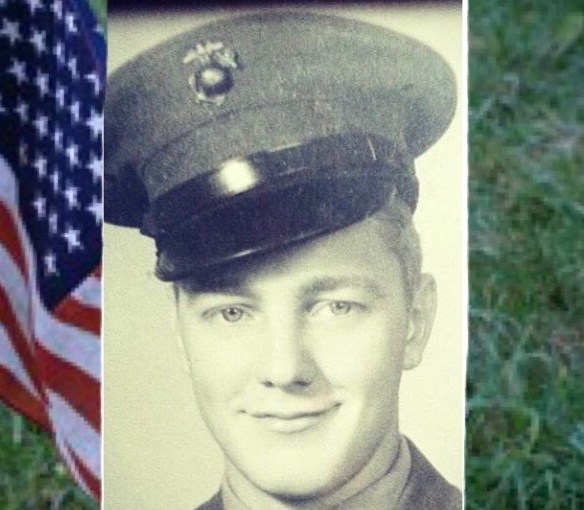
For years, our kids made it their tradition to call my dad on Veterans’ Day and Memorial Day.  Dad was a World War II veteran.  When he was 18 he became a Marine and shipped out to the South Pacific.  He survived five assault landings, each time in the first wave of Marines hitting the beaches.  

When Kathryn, our oldest, was old enough to understand what veterans were, and could somewhat grasp the idea of sacrifice for one’s country, she was eager to hear that her grandpa was a veteran.  

“But Grandpa Chris is blind,” she’d said at the time, questioning how it could be that he could have fought in a war.   

I had reminded her that he hadn’t always been blind.

She was fascinated to hear that he had been in World War II.  Fascinated with every bit of information I was able to give her.  She was also reverent. 

“He could’a died,” she’d realized aloud.

Yes, he could have.  I said that he had known plenty of other young soldiers who had died in the war.

She’d been silent for a few seconds, processing this new information.

“Can I call Grandpa later tonight and thank him for fighting in the war, so we could be free?” she asked.

And that phone call began a tradition in our family.  A tradition repeated twice a year, on every Veterans’ Day and every Memorial Day.  Every year. For the rest of my dad’s life.  

“My grandpa fought in World War II.”

“My grandpa was a Marine.”

“He was just a teenager when he was in the war.”

“He could’a died.  A lot of his friends died in the war.”

On what was to be Dad’s last Veterans’ Day, we had forgotten to call. After dinner, I was busy doing science homework with 11-year-old Anna.  Kathryn, 14, was in the living room working on homework.  Geoff was finishing some work at the computer.  Ben, 9, and Martha and Emma, both 7, were playing a game on the living room floor.

“Oh shoot!” Kathryn exclaimed.  “We forgot to call Grandpa Chris.”

I checked the time and said that I didn’t think it was too late to call.  

 “I wanna talk to him, too,” said Ben.

“Me too,” chorused Martha and Emma.

I said that they could all say something to him.  To which Kathryn argued that the twins didn’t even understand what they were thanking him for.

“Uh-huh,” they defended.  

“We’re thanking him for bein’ in the war,” Emma announced proudly.

I repeated that each one of them could have a moment on the phone to thank Grandpa.  Then, while Kathryn dialed the number, I practiced with the little girls for just a second.

“What is it again?” Martha asked.  

Marthy has a language delay, which was first diagnosed when she was 18 months old. She does really well with it, and has developed some strategies to help her remember things which come easily for most of us but don’t come easily at all for her.  

I repeated to her that this was Veterans’ Day.  She repeated the words ‘Veterans’ Day.’  

“Can I just say, ‘Happy Vet-er-ans’ Day, Grandpa’?” she asked.

“That’d be perfect,” I reassured her.  

Kathryn was talking to Dad on the phone by then.  She told him that she’d almost forgotten to call him.  They visited for a few minutes.  Then she said that the other kids each wanted to talk, too. With that she passed the phone down to Anna.

Anna said hi and wished Dad a happy Veterans’ Day.  She thanked him for serving in the war.  Then she talked for a moment about the science unit she was working on before passing the phone down to Ben.

Ben said, “Hi Grandpa, happy Veterans’ Day.”  Then he visited for a minute or two, asking questions about the war, and what it was like for Grandpa to be shot at.  “Did you actually ever kill anybody, Grandpa?”  Then he, too, passed the phone down.  This time to Emma.

Emma took the phone, and in a self-conscious voice greeted Grandpa under the watchful eyes of her older siblings.  She thanked him for fighting in the war.  “I’m glad you didn’t get killed over there, Grandpa.”  Dad probably said that he was glad about that, too.  She smiled, anyway.  And handed the phone down the line to Martha.

Marthy cupped the phone in her hand and turned to me.  “What do I say again?”  she whispered loudly.  

I reminded that it was Veterans’ Day.  Vet-er-ans’ Day.  I said it slowly, breaking it down into syllables to help her remember how to repeat it.  Vet-er-ans-Day.  This was important to her.  She wanted to do it right.  She nodded to me, smiling confidently.  She had it now.

“Hi Grandpa,” she said, smiling as she spoke.  He asked her a question and she nodded, still smiling.  Then she said, “Happy,” and paused.  

I could tell by the look on her face that she’d gone blank.  She searched for the words, looking at me for prompting.  Her siblings by now were less than patient, all loudly whispering different things for her to say.  Any one of which would have been fine, but all coming at the same time, only added to her confusion.  

“Happy…” she repeated, desperately searching her memory again for that new word. Then, finally, she blurted the rest of it.

 “St. Patrick’s Day, Grandpa!”

The other kids groaned.  She looked at me.  Worried. Had she just messed up again? This one had been so important to her. I smiled and nodded.  With relief, she visited on the phone for a few minutes, while Geoff and I admonished her siblings not to say a word about it. That she had done just fine.

Marthy finished visiting with Grandpa and handed the phone to me.  I could hear both of my parents on the line, chuckling.  

“Yeah, so we just wanted to call and wish you happy St. Patrick’s Day, Dad,” I said.

We chuckled together for a second.  They both said that the phone call had meant a lot to them.  Then Dad said that Marthy’s greeting was “priceless.”  One of the best Veterans’ Day greetings he’d ever had, he said.

And of course none of us knew that night that it would be the last time our kids would call Grandpa Chris on Veterans’ Day, or Memorial Day.  Or St. Patrick’s Day.  And maybe because it ended up being the last time, it has also become my most memorable Veteran’s Day phone call.  

So on that note, happy St. Patrick’s Day, Dad.  And thank you for your selfless service to our country.

And Marthy, I know it’s been a struggle for you.  But your language delay has actually enriched all of our lives.  With love, Mom.

Being Blended

We have twelve people in our family at the moment. Twelve of us living under one roof. Geoff and I, and our five biological kids, who are now 17, 14, 12, 10 and 10.  We have five foster kids, as well.  Two little ones, ages 4 and almost 2 who are full siblings.  And three older ones, who are also siblings, ages 9, 15 and 17. 

I’ve been thinking about the term “blended families.”  My husband and I have often commented to each other about the unique struggles and complications parents must deal with when trying to blend a family.  I’ve always been grateful that we didn’t have to do that.  

It only recently occurred to me, after a particularly difficult week in our home, that we are trying to blend a family.  And that our earlier presumptions were correct.  It is difficult.  And complicated.  And sometimes I get so sick of the fighting and arguing that I’m ready to admit failure and walk away.

I’ve always considered the word “blended” as in “blended family” to be an adjective.  “Blended” describing “family.”  What kind of family?  A blended one.

But so far in our efforts “blended” has not been an adjective.  It’s been a verb.  An action verb.  One requiring much action on our part.  Frequently running interference.  Frequently mediating and explaining.  Frequently enforcing the rules and refereeing.  Constantly standing up, sometimes running.

Our biological kids get upset when they know our foster kids are lying to us. Understandable.  To them, it’s a show of disrespect.  Which burns indignation.  

Our foster kids get upset when our biologicals treat them like they can’t be trusted to handle responsibilities.  To them, it’s a show of disregard.  Which burns resentment.

Round and round we go.

And through it all, in my mind, I’m wondering if we’ve taken on too much.  If we’re in over our heads.  If this is so much that it’s actually detrimental to all of us.  Our biological kids used to get along well.  Now they often act in either cool aloofness or hostility.

Are we in over our heads?  Is it fair to our biological kids to have to share everything they have?  Even their parents?  And each other?  Is it fair that they feel their home isn’t just theirs anymore?  Are we taking away what they have every right to expect?

And what if we find that we can’t do this?  It will be even more difficult for the next people to reach the hearts of those who’ve been put out of our home.  The hurt will be compounded.  For all our reassurances to them that they’re safe here.  And wanted.  Being removed from our home because somewhere along the line we realized that we were in over our heads would prove the fallacy of all that we’ve assured.  How fair is that?

These are the questions keeping me awake at night.  My worries and concerns.  Is there really any hope of blending this family?  Or are we in way over our heads?

And then tonight I was making dinner and the recipe called for butter and flour to be combined in a roux.  Then bouillon blended to the roux to form a thick, creamy sauce.  

As I stood in the kitchen dutifully stirring the pot, it occurred to me what was going on.  Butter and flour and bouillon do not mix well.  In fact, under different circumstances, the three ingredients could make a mess.  

But this recipe instructed me to return to heat.  Let boil.  Stirring frequently.  

Under the right circumstances, in this case more heat, butter and flour and bouillon mix really well.  They become the creamy base of a favorite halibut recipe in our house.  

As I stood there, staring down into the boiling pot of seemingly incompatible ingredients, I got to thinking that maybe all is not lost just yet for this family of ours.  Granted the blending’s not going so well right at the moment.  But maybe that’s why the heat’s been turned up lately. Maybe we just needed a little extra heat to bring everything together smoothly.  

Currently we are a family of twelve.  From three separate families.  But with the right amount of heat.  And frequent stirring.  We might just be able to blend this family.

Blended.  Not just as a verb.  But as an adjective.

“Christian Enough”

There are times when something is said to me and I’ll know right at that moment that I need to write about it.  Usually, those times come when I’m busy doing something else and not thinking about writing. Which was the case today.  

I had just gotten off a brief phone call with my husband Geoff in which he’d explained to me that a friend was in need of a place to stay for a couple weeks. Geoff wanted us to invite the person to stay with us.  Normally, this would be fine.  But we’d just earlier in the day had someone else who’d been staying with us, leave.  In fact, I had just walked into the house and was thinking how nice it felt to have it be back to just our family.  One less person to be responsible for.  One less to feed.  One less spectator to sibling arguments or parent-child power struggles.  That’s what I’d been thinking when the phone rang.

I wasn’t opposed to inviting the person to stay here.  We’ve always tried to open our home to folks when a need arises.  And it’s been a pretty frequent occurrence over the 30-some years of our marriage.  It’s just that the timing wasn’t the greatest today.

I told Geoff that it would probably be fine.  We clarified the dates, making sure that it wouldn’t conflict with anything else coming up. Then I hung up the phone and was digging through the freezer when one of our kids walked into the kitchen.

“What’d Dad want?” 

I explained that somebody needed a place to stay for a couple weeks.  

“Nooooo,” came the drawn out response.  “We just got our house back to our family.  It’s always so crowded around here.”

Finding what I wanted in the freezer, I explained that it was only for a couple weeks while the person was in transition.

“Come on, Mom,” came the pleading response.  “We’ve been Christian enough already.” 

I stepped back from the freezer and looked over at our daughter.  I smiled.  I may have even chuckled for just a second.  She started to smile, too.  I think realizing how funny that had sounded.  And probably feeling a little sheepish for actually letting those words come through her lips.

“Christian enough,” I repeated.  “Hmm.  I like it.  Has a nice ring to it.”

“Come on, Mom.  You know what I mean,” she complained, still fighting a smile.

Yeah, I know what you mean.  And I’ve thought it plenty of times, too.

Like when someone comes into the office at 4:30 on a Friday afternoon, and I’m trying to get the rest of my paperwork done before my weekend starts in 30 minutes.  And I’m really pretty tired of being a counselor for this week.  But the person is in crisis.

Or when someone near me on the road is driving stupidly–too fast if they’re behind me, too slow if they’re in front of me. And what I really want to do is roll down my window and flip them off.  But this is a small town, and chances are pretty good that I know them.  And they know me.  So I just shake my head, in case they’re looking in their mirrors, and say nothing.  Even though, in spirit, I’m flipping them off.

Or when people who share my faith are judgmental of others who are less fortunate than we are. When they look down on the poor or incarcerated, and those struggling with mental illness and addiction.  But they don’t know, and don’t want to know, how difficult that particular journey might be. No, it’s easier to stand around in their coffee circles and whisper.  Ridicule.  Further demean.  And what I’d like to do is school them, right then and there.  I’d really like to go right over the top of them in a prideful, sanctimonious tirade.  I’d like to offer sarcastic thanks for all that they do to assist those who are less fortunate.  And tell them how the world is all the richer for their presence.  But instead, I offer a few thoughts about how difficult it must be to be homeless, or addicted; and I offer reminders of how fortunate we are.

Yeah, I know what you mean.  There’ve been lots of times when I’ve told myself that I’ve already been Christian enough.  Which got the wheels spinning in my head,  and I started to wonder if Jesus ever felt that way.   

“Oh come on,” I can almost hear Him say.  Like maybe in the Garden of Gethsemane.  Or struggling up Golgotha carrying the cross.  

“Enough already. When’s enough gonna be enough? I’m tired.  I’ve done everything you wanted.  And more.  But come on.”            

I wonder if He ever thought any of those things.  I couldn’t blame Him if He did entertain thoughts along those lines.  But I doubt He did.  I think He probably stayed ever true to what He knew to be right.

And if I’m going to claim to be a Christian, that’s who I say I’m following.  That example has already been set.  And at least so far I haven’t found where Jesus clarified just what exactly constituted being “enough” of a follower.  Do what you can for the poor and downtrodden, the least of these.  But only to a point.  Enough’s enough.  

So, we meet with the folks who are struggling with crisis, even when it means staying late again on a Friday.  And we don’t honk at, or flip off, the other drivers on the road.  Even when they’re driving stupidly.  And we try to offer gracious reminders to each other of how blessed our own circumstances are, to encourage kindness and compassion, instead of shaming.

And we invite people to stay in our home for a couple weeks when they’re in transition, even though we’ve had a lot of visitors lately and just today I was thinking how nice it was to have the house a little less crowded.  Because it’s being true to what we say we believe.  True to who we claim we’re following.  That example has already been set.  And that’s “enough.”

Choosing A Focal Point

My mom was an art teacher.  When we were kids anytime we’d sit down to work on an art project Mom would tell us to “find your focal point first.”  She always said that once you have your focal point you build your picture around that. That our focal point gives us our perspective.   

Our daughter Martha called us a few weeks back.  She was crying so hard when we answered the phone that it was difficult to hear what was wrong.  She has one of our cars with her at college and had taken friends to the store that afternoon.  In the process of backing out of her spot in the parking lot at the mall she hit a cement post.  It dented up the front quarter panel of our car.  The whole episode had startled her, and embarrassed her.

It took much longer to get the story from her as she was sobbing, and difficult to understand.  But that was the gist of it.

We directed her to contact our insurance company.  She apologized about a dozen times.  She complained that she hadn’t even wanted to go to the stupid store, but her friends had needed to get some things and kept asking her.  She had eventually given in and taken them.  And now this!

 After directing her again to call the insurance company, we hung up the phone. An hour or so later she called back, still upset.  She had called the insurance adjuster. 

“The lady wasn’t even listening to me!” she complained, starting to cry again. “She just kept asking me stupid questions.”

I asked her to tell me the conversation.

“Well, I told her what had happened.  Then she asked if anyone was hurt.  I said no!  Then she asked if I was listening to loud music.  And I said no!  I can’t listen to music when I drive because it distracts me!  Then she asked if I was going too fast.  I said no!  I was BACKING UP in a parking lot!  I told her, again, that the reason I didn’t see the cement thingy was because I was watching what was in the back-up camera so that I wouldn’t hit anything and the cement thingy was next to the front of our car, not behind me.”

I encouraged her to calm down.  Which is never helpful.    

She started crying harder.  Clearly frustrated.  And upset at herself for having her first accident, and being completely at fault.

“I felt like she wasn’t even listening to me.  I kept saying that the front driver’s side of the car was all banged in and that I needed to pay for it because it shouldn’t be up to my parents to pay it.  It wasn’t their fault.  It was my fault.”

She stopped talking for a second or two as a new round of sobs hit.   I tried to be encouraging.  But nothing I said was even remotely helpful.

She stopped talking for a second, trying to stop crying and just breathe. I waited.

“Then the lady said, ‘And did a child die?’  And I was like, ‘What are you even talking about?!  Didn’t you hear what I said?  I hit a cement post in a parking lot!’  The whole conversation was stupid!  She wasn’t even LISTENING to me!”

I closed my eyes then, to keep the tears back.  I was smiling.  Mentally thanking that particular insurance adjuster.

I assured our 20-year-old daughter that I thought the woman had been listening to her. I explained that I thought the question was intended to help put the whole experience into perspective.   For Martha.  The new driver who was a complete emotional wreck over a single vehicle fender bender. 

Martha, of course, didn’t get that at all.  She didn’t see the wisdom in it.  But I did.  

I imagine that particular insurance adjuster has probably handled calls over far more serious car accidents than this one.  Very likely she’s had to process accidents that have resulted in the loss of a life. For her, Martha’s fender bender in the parking lot was a minor incident.  And her question, I think, was an effort to help Martha see it that way, too.  

Eventually Martha seemed to get it.  She stopped crying, and her breathing settled down.  Yes, the front quarter panel of our car would need to be replaced.  Yes, she would pay for it.  And yes, everybody got home safely.  

There was no loss of life.  No serious injury.  Just a banged up front quarter panel on the car.  

I reassured her, again, that it would all be okay.  That it already was okay.  And it was while we were hanging up the phone that I heard my Mom’s words again.  

I think Mom was right.  It’s all about choosing your focal point.  And building your perspective from there.

The Prayer Vigil

I grew up in a small town.  My dad was a pastor.  My mom had been a teacher, but by the time I arrived she was a full-time pastor’s wife.  From the earliest I can remember my parents were determined that my siblings and I would grow up as “normal” kids and not preacher’s kids.  That was their desire, anyway.  But they weren’t “normal” parents.  They led by example.  

We always prayed at mealtime.  Even in restaurants.  We kids would cautiously look around the restaurant to make sure none of our classmates were present every time we ate out.  Hoping no one was there to see how weird our family was.  Mom and Dad were a lot of things, but being showy wasn’t one of them.  We prayed in restaurants because we prayed at every meal wherever we were.  It was never loud or attention seeking.  It was a part of who they were.  Who we were.

Whenever we came to them with issues, whether it was a bully or an opportunity, their response was invariably, “Well, pray about it and see what comes to you.”  Simple. In all that you do.  Start with prayer.  Take it to your Creator, who has a perfect plan in mind for you.  

Prayer was the norm in our house. And I never really thought about it, and certainly never struggled with it, until the summer of my 14th year.

There was a man in my hometown who, in retrospect, I think probably felt threatened by my dad.  He started telling lies.  Even from the pulpit.  And people believed him.  People who I thought should have known better.  It hurt my parents.  And seeing their hurt infuriated me.  

I became angry.  I wanted to humiliate the man, to strip him in public, to expose his lies.  I was indignant, enraged.  I hated him.  He ripped holes, or tried to rip holes, in my parents’ reputation and I wanted him to pay. I wanted to get lawyers involved. And of course underneath that anger was the question, as old as humanity, “Why is God allowing this to happen?”

One summer afternoon my parents called us all to the living room to talk. My two older siblings were in college by then, but were home for the summer.  Mom and Dad said that our family was going to have a prayer vigil.  

We had never done anything like this before.

They explained that we were going to pray for a 24-hour period for the man who was spreading lies about our dad. 

I was stunned.  My parents were crazy.  

We would take turns, they said.  We would each be responsible for a 3-hour block of time during this 24-hour period. As the youngest, I would have a block of time in the afternoon.  Mom and Dad would take the late night hours.

What, exactly, was expected of us, I asked.  

Mom and Dad said that we were to pray for the man.  For his family.  For whatever his needs were.  For God to heal whatever needed healing in his life.  For God to restore him.  For God to protect him and his family.  And for God to help us to love and forgive him.

But I didn’t want to love him.  And I certainly had no plans to forgive him.  I could feel myself squirming inwardly at the thought of having to pray for him.  I respected my parents.  But they were crazy if they thought I needed to pray for this man.  Nobody else’s parents made them do things like this. Why was our family always having to do weird stuff like this?

I didn’t say much.  None of us did.  I did ask what would happen, hypothetically, if one of us didn’t really pray for the man when we were supposed to.

“Nothing will happen,” Dad said.  He went on to say that we were simply praying for this man.  For a full 24 hours.

“Just pray whatever is on your hearts,” Mom added.

Yeah.  I still didn’t want to.  And I was pretty sure God already knew what was on my heart and probably wasn’t delighted about what was there.

The day of the prayer vigil arrived. It was a beautiful, sunny, summer day and I decided I would lay out in the sun on the back deck while I covered my shift. At least I could get tan during those three hours. So the time wouldn’t be entirely wasted.

At first I prayed rigidly.  Empty words through clenched teeth.  But, as is often the case for me, the more I prayed the more honest I got.  I told God how angry I was.  I told God how hard it was to see my parents hurt.  I told God that they had always been faithful in all that they did, and that it angered me that God was allowing this to happen to them. I told God that I was disappointed in people.  Adults. People who should have known better. People whom I had lost respect for.  I started to cry.  I told God that someday I would like to look this man in the eye and dare him to look back. 

I thought about the man’s kids.  And thanked God that I had the parents I had.  Not parents who lied about other people.  I had parents I could respect.  I was thankful for that.  And I asked God to protect the man and his family, and to help him to see the hurts he was causing.  

By the time my shift was over I had even asked God to help me forgive him, I guess. Which kind of shocked me.

Our family completed the 24-hour prayer vigil.  Nothing Earth-shattering occurred.  Certainly nothing miraculous.  The lies still continued for a time.  Though eventually they were stopped.  The man ended up moving a little later and I never knew what happened to him after that.  

I was still angry at him for a while. But the tiniest bit of compassion had begun to sprout. I could allow myself to feel badly for him, and for his family. And for the first time since it had all started I began to see that it wasn’t my family who was being harmed by his lies. Our family was actually just fine.

It wasn’t until years later, long after I’d become an adult, that I wondered if maybe that was exactly what my parents had in mind all along. For God to take this burden from us and to heal us. For God to be present in all of our circumstances. To be in us and with us. In all things.

Healing did occur.  And I think for me it actually began that day of the family prayer vigil. Miraculously.  

As for Mom and Dad, it’s possible that they failed.  They didn’t really raise us to be “normal” kids.  And we never were a “normal” family. We had parents who led by example.  Every day. Parents who in every circumstance started with prayer.  Inviting God to be present.  Knowing that God had a perfect plan for each one of us.  And that prayer vigil, that was just like any other day for Mom and Dad.

Mom and Dad:  Well done. And thank you.