As Like To Nothingness

It’s a foggy morning.  Grey and drizzly.  Not unusual weather for us.  But on my walk this morning the fog held my attention.  

Fog moves in and changes everything.  The colors of the water, sky, and land all fade to grey. The land and air become as one in the fog.  Even the light of the sun is blocked out.

Fog seeps and slides along channels, and fills valleys.  It unfolds over the tops of mountains and slides down the mountainsides like a carpet being rolled out.  

Or it drops suddenly from overhead.  As the cloud ceiling falls lower and lower toward ground the inclination is to hunch down in a last, vain attempt to see. 

Fog. Water vapor.  “As like to nothingness,” a friend of mine once said. And yet so powerful as to make even the mountains disappear. 

I walked along the water’s edge this morning, very familiar with my surroundings. I know precisely where land ends, and sea begins.  Where the air and water meet.  I know where the other islands lay, and where mountains stand.  I know this place well.  But this morning I couldn’t see any of it.  This morning, instead of walking my familiar path, I walked along the ends of the Earth.  Surrounded by, and breathing in, the very thing which kept me isolated.   

Fog makes it difficult to get my bearings.  Even when I know where I am.  Even when I am very familiar with the path that I’m on.  When I can’t see any of the sign posts it’s easy to lose my way. Even sound gets distorted in the fog. Further disorienting and confusing.

Fog is really nothing.  Nothing of significance.  Yet its results are notable.  The sun still exists.  It still gives off light and warmth.  But the nothingness of fog, water vapor, changes everything.  Making things appear different from how they really are.  From how I know them to be.

And isn’t this also how fear works?  Fear is nothingness.  Fear cannot DO anything.  But it functions in a way that prevents me from seeing clearly.  Where does the land end and the water begin?  Where do Earth and sky meet?  Which way am I to go?

Fear moves in and changes everything.  It seeps in along valleys and grows its way along low areas. Innuendo.  Concern.  Gossip. It spirals its way along easy paths. Moving freely, engulfing everything in its way.   

Sometimes the ceiling drops suddenly without warning.  An unforeseen loss of employment.  A bad health report.  Violence. Catastrophic and crippling fear.  Leaving us hunched over trying desperately to see.

Fear has the power to block out everything.  It prevents joy, and robs us of peace.  It gets between us and all of the blessings which surround us.  It affects our relationships, and changes every aspect of our lives.  Even when we know where we are.  Even when we are very familiar with the path we are on.  Fear moves in and surrounds us.  Winding its way along channels, and low areas.  Unfolding over mountains.  And suddenly we are surrounded by, and breathing in, the very thing which isolates us.  

As I walked my path this morning I marveled at how differently everything appeared from how I know it to be.  The fog didn’t change where I was.  It didn’t change the very spot where the land meets the sea.  Nor did it have power over where the Earth and the air meet. The islands that I know to be still existed.  And the mountains still stood.  Fog hasn’t the power to actually change anything.  

Fog. As like to nothingness.  Has only the power to affect how I see what surrounds me.  

And fear. Fear is nothingness.  Fear cannot DO anything.  It hasn’t the power to eliminate the mountains.  Nor to change where land meets sea.  Fear is a deceiver.  It confuses and shrouds.  It convinces us that we are seeing that which does not exist, and at the same time makes even mountains disappear.  Fear distorts what is.  But it hasn’t the power to change what is. 

Like fog, fear isolates us.  It moves in and surrounds.  It changes the appearance of what is.  It confuses and distorts.  Making it difficult for us to get our bearings.  

As I was finishing my walk this morning a single ray of sunlight broke through the fog off to my left.  I stopped and watched with anticipation, knowing that the fog was slowly starting to clear.   A brighter spot here.  Higher visibility there.  I watched, as what I know to be true of my surroundings was slowly being restored to normal.  

My friend was right about the fog.  It exists, as like to nothingness.  

All Those Balloons

Our little town does the 4th of July in grand fashion. We have a children’s parade, which is a prelude to the big parade down the main road through town. Some years I think half the town is in the parade. And in any given year half of our kids have been in it, leaving just Geoff and me and the other half of our kids to watch.

Some years the cruise ships that are in town on that day will have a make-shift float full of ships’ musicians performing as they lazily pull through town.  When their floats pull into view the ships will start blowing their horns from the dock.  All adding to the festivities of an already-festive morning.

In the afternoon there are food and game booths on the dock, and a logging show.  Some years back there would be an outside open dance down on the dock in the evening. And almost every year, except for a few recent ones when weather has been inclement, the day ends around midnight with fireworks out over the water.  

It was on the 4th of July a few years back that Geoff had purchased helium balloons for the kids. The kids were little at the time. And although the helium balloons were tied around their wrists, little Emma’s red balloon quickly slipped off.

As we watched it take on a life of its own, soaring up into the clouds, little Emma shaded her eyes and strained to watch it as it left on its journey.  Disappointment and concern etched in her face.

She was pretty sure that Dad needed to hurry up and get it before it was “too late.”  To which we explained that it was already much too high for even Dad to get.  

“Where’s it going?” she asked, still watching it.  

I said something about it going up into the sky, all the way to Heaven.  

She was quiet for a few seconds.  Assimilating this new understanding of God into what she’d already understood.  She was still squinting, still trying to make out the tiny speck of red way up high.  

Once it disappeared she turned her attention back down to Earth and asked, “But what’s God do with all those balloons?”  

I said that I really didn’t know, and I guessed that was something we’d find out some day when we got to Heaven.  And thankfully, that was the end of the conversation.  

It’s one of those brief moments which has stayed with me, though.  Funny how that is.  I’ve thought about it every time I see a helium balloon breaking free and drifting up into the sky, escaping its confines of Earth.  

But what does God do with all those balloons?

For a while, I regretted that conversation with Emma.  Regretted that I hadn’t just tried to explain to her that helium is lighter than our air so it rises, taking the balloon with it.  Regretted that I hadn’t just suggested we wave to it, and wish it well on its adventures.  Regretted that I didn’t use it as an opportunity to talk about the dangers of broken helium balloons falling back to Earth wherever they land, and how they don’t decompose.  Regretted that we didn’t just go buy her another one.  Instead, in the moment, I had offered a cute, empty, “explanation.”

But over the following weeks my thoughts on the matter started to change. Maybe I’m getting old. Old enough for my understanding of God to slowly be returning to how I knew God when I was a child.  It started to occur to me that maybe my explanation to Emma was right.  Maybe the real wisdom in that situation wasn’t in explaining the mass differential between helium and oxygen, but in understanding that the physical and the spiritual co-exist everywhere. 

As a parent, I would grab every one of our kids’ escaping balloons if I could.  If only to have them in hand and present them back to their owners, with a smile, upon their return home.  

“Hey, I think this belongs to you,” I’d offer, holding out my hand, with the balloon bobbing happily above.

“You got it!” they’d gasp, excitedly taking the string from my hand, and happily reclaiming ownership of what was once lost.

It makes sense to me that God would do the same.  

I can picture God up in Heaven reaching out and taking hold of each and every helium balloon that floats up into the heavens just to have on hand for another day.  Maybe to celebrate that child’s arrival Home.  

“I think this belongs to you,” God will offer, holding out a hand.  With every lost helium balloon ever, bobbing happily above.

“You got it!” we’ll gasp, excitedly taking the string from His hand, happily reclaiming ownership of what was once lost long ago.

I don’t know.  Maybe Heaven really is full of helium balloons just waiting to be returned to their owners upon their return Home.  And some day, when I get there, if there’s a bright red one, I’ll know whose it is.  

To Stop And To Bow

We were standing at the end of the church service. The pastor had given the benediction and we were waiting while the acolyte went forward to extinguish the candles on the altar.  The acolyte, a role I often filled as a kid, proceeded to the front of the church.  

The process of extinguishing the candles requires that the acolyte come up to the altar, bow in a show of respect, extinguish the candles on one side of the altar, come back to the middle and bow again, extinguish the candle on the other side of the altar, bow one more time in the middle, and then walk back down the aisle toward to the back of the church.  

There is significance to the candles being lit for a church service.  They’re lit in the beginning, signifying the beginning of a holy or sacred worship time.  They are extinguished at the end illustrating that the set aside time of worship has now concluded and we are being sent back out into the world.  

The acolyte this Sunday was a young kid, maybe 10 years old.  He looked a little shy.  Maybe embarrassed, maybe even bored.  He walked up to the altar, bowed quickly and moved to extinguish the candle on the left.  Then he returned to the middle of the altar for the second bow.  But instead of stopping to bow, he kind of bobbed his head halfway as he continued to move along to the candle on the right side.  After he extinguished the second candle, he moved back toward the middle of the altar and bobbed his head again while he was turning around to hurry back down the aisle.

I smiled, remembering the feeling of embarrassment that everyone was looking at me. As I glanced around the congregation most people were smiling.  They’d seen the kid’s embarrassed, hurried approach to acolyting.  Maybe some of them had been acolytes, too, when they were young. 

As I stood there for the last few minutes of the service I started thinking of how often in my day to day life I do the exact same thing.  I’m so focused on hurrying along so that I get everything done, that I end up not really focusing on anything that I’m doing while I’m actually doing it.  Never really present.  Not fully, anyway.

I drifted over the past few weeks.  All the times that I’d said my prayers while I was doing something else, or maybe two other things.  Saying the words, going through the motions.  But not really praying.  Not really communing.

I thought about all that I have to be thankful for.  And how instead of really taking a moment and offering thanks, I often tend to kind of acknowledge it, and maybe even mumble something, as I’m moving on to the next task.  Often losing the sacredness of the moment in the hurriedness of the day.  Not really even being present.  Much less, trying to be in the presence of God.

That young acolyte, bobbing his head while he moved on to the other candle, but never really stopping to bow.  That acolyte was me.  

I put my head down for a second. Struck with this sudden realization of what I’ve been doing.  And took a moment and apologized.  For not really being present much of the time.  For allowing distraction and hurriedness to often keep me from fully participating in my relationship with God, as well as my relationships with my family and loved ones.  

I renewed my commitment to what’s important in my life, and identified once again those distractions which really aren’t at all important.  

And I vowed, once again, to take the time to stop.  And to bow.

The “F-f-f” in “Fox”

Our son Benson was in kindergarten, struggling to learn the alphabet.  He was pretty good with A, B, C, W and X.  But he didn’t particularly care that there were 21 other letters.  Nor did he seem to care that each letter made a sound. 

He was starting to get behind in his class.  So one morning after the older kids left for school I turned to him and suggested the two of us go get a cup of coffee and work on some schoolwork together. 

He quickly grabbed his worksheets and we headed out the door.  When we got to the coffee shop he chose a table for us by the window, while I ordered him a hot chocolate and me a coffee.

Once we were both seated at the table he pulled out some of his homework papers and his crayons.  He was grinning, which we normally didn’t see when he was working on schoolwork.  I think he liked the idea of getting to be grown up for the morning, going for coffee to do homework.  I smiled back.

I looked at the first page which was all about the letter “D.”  There were pictures on the page, some beginning with the “D” sound, others not beginning with the “D” sound.  Ben was to color each picture that began with a “D” sound.

He cruised through the “D” page.  And I was prematurely thinking to myself, as I took another sip of coffee, that this might not be as difficult for him as we had thought it might be.

Just as Ben was turning to his second page, the “F” page, another mom came into the coffee shop with her daughter.  The girl appeared to be about Ben’s age.  I smiled at them both and the other mom acknowledged my silent greeting.

Ben was studying his “F” page, frowning in concentration.  This was the look we so often saw whenever he had to sit down to do schooling.  

The other mom walked to the counter, while her little girl adjusted her ponytail, then her tights.

“I don’t get this one,” Ben said in frustration.

“What don’t you get?” I asked.

“Which ones am I s’posed to color in?” he asked, in a hopeless tone.

“Okay, this page is the ‘F’ page.  The letter ‘F’ sounds like ‘f-f-f-f’,” I explained, making the “F-f-f” sound for him to hear.

“F-f-f,” Ben repeated, although not happily.

“Right,” I encouraged.  “What pictures on that page have a ‘f-f-f’ sound?”

Ben furrowed his brow some more as he pored over those pictures.  

“F-f-f,” he repeated to himself.

Meanwhile, the other mom came and sat down next to her daughter.  She smoothed out the little girl’s long hair. They were visiting quietly.  Then I turned back to Ben, who was frowning in misery.

“Van,” he said finally.

I explained that, although it was close, “van” actually has the “v-v-v” sound. And I again sounded out the “F-f-f” sound. “Do you hear ‘f-f-f’ in van?” I prodded.

He scowled again.  “No.”

“How about this one?” I asked, pointing to a picture of a bare foot.

“Foot,” Ben identified, still studying the page.  “Nope, I don’t hear the ‘f-f-f’ sound in that one either.”

I may have sagged down a little then.  As the realization was starting to sink in for me that the years of schooling ahead for Ben might be more difficult than I had assumed.

“Yes, you do hear the ‘f-f-f’ sound in ‘foot,’ Ben.  Hear it?  ‘F-f-f-foot.’” 

Ben just shook his head in utter bewilderment, and started coloring the foot purple. Clearly he did not hear the “f-f-f” in “foot.”  But if I said it was there then he would color the picture.

“Rainy,” I heard the little girl at the other table say.  “It’s a rainy day. Is that right?”

I wondered what they were working on.  And the answer came momentarily when the mom corrected her.

“No, ‘rainy’ is an adjective describing the noun, ‘day’.  We are talking about adverbs today.  Not adjectives.”

Holy cow!  I quickly brought my eyes back to our son, who was still scowling at the “F” page.  Our son, who was content to know five letters of the alphabet, and if they made sounds or not didn’t particularly concern him.

I may have sunk down in my chair a little at that point.  I’m not completely sure.  I just remember hoping that Ben could finish the “F” page without too much more talk or confusion.

“Mom!” he loudly interrupted my defeatist thoughts.  “Fox!  I hear the ‘f-f-f’ in ‘fox!’  So I guess I better color that one in!”

“Good job, Bud,” I nearly whispered.

“What color do you think I should color it, Mom?  Should I color the ‘f-f-f fox’ red or blue?” he said, triumph increasing his volume a little more.

I was about to encourage him to speak a little quieter, not wanting to distract the little girl and her mom who were working on adverbs.

And then I saw his face.  

He was beaming.  Delightedly wagging his head from side to side, all lit up inside.  He had chosen a red crayon to color his “f-f-f-fox” picture. 

I glanced over at the other table.  The little girl appeared to be enjoying herself less and less.  I couldn’t tell if she was upset, or searching for a sentence which highlighted an adverb.  I glanced briefly at her face, and then back at our son’s exuberant expression.

He was triumphantly coloring a red fox.  He stopped to take a sip of hot chocolate, and grinned at me with a little whipped cream mustache.  

I smiled back, inwardly ashamed of myself.  We had been concerned about his lack of progress in learning his letters. But in this moment I had felt embarrassed.  Embarrassed at my happy, easy-mannered child who just couldn’t quite master the sound of a letter which he didn’t know or care about, but was trying to learn because his dad and I seemed to think it was important.

In my shame I was reminded of how proud I am of him.  Benson is a nice kid.  He’s happy most of the time.  He tries. He’s kind.  He’s truthful.  He doesn’t know his parts of speech, or all of his letters and their sounds.  But he will some day.  And in the meantime, in the right now, I am fortunate to get to have coffee with him every once in a while.  To sit and work together on schoolwork.

Ben looked up right then and smiled at me again.  I smiled back, and took another sip of my coffee.  And someday, he will probably know the difference between an adjective and an adverb, too.  My hope is that he will always know the delight that he knew right at that moment.  When he finally heard the “f-f-f” in “fox.”

Postscript:  Ben is graduating with his Masters in Teaching today.  His dad and I think he will be a wonderful elementary teacher. He did end up learning all 26 letters, and their sounds.  I think he may even know the difference between an adjective and an adverb.  

And Ben, thanks for the coffee dates.  I love you much.  Mom

Every Single Tuesday

It had been a difficult year for our family. A storm had blown into us, and had taken us off course.  Or at least it felt that way.  We prayed throughout the storm, asking for the winds to settle, and for the seas to lie down.  We prayed asking for direction, as we were fairly certain we’d been blown off course. We asked for help to keep our little boat afloat.  There were plenty of times during that year that we weren’t sure that we would stay afloat. 

On the good days we kept our heads down and tried to just keep going.  And on the bad days we prayed even harder. Pleading for help.  For a safe harbor.  

And through it all, our kids watched our every move.  Worried that we weren’t somehow “okay.”  Fiercely defending us.  And trying in their child brains to sort out details that weren’t clear to us in our adult brains.  

Each of them weathered the storm in their own way.  At times growing stronger by the moment, and at other times regressing to their younger years which seemed safer than this particular year did.

Our daughter Anna was 9 that year.  She is our second-born and wasn’t quite as quick as her older sister in verbalizing whatever she was thinking or feeling.  

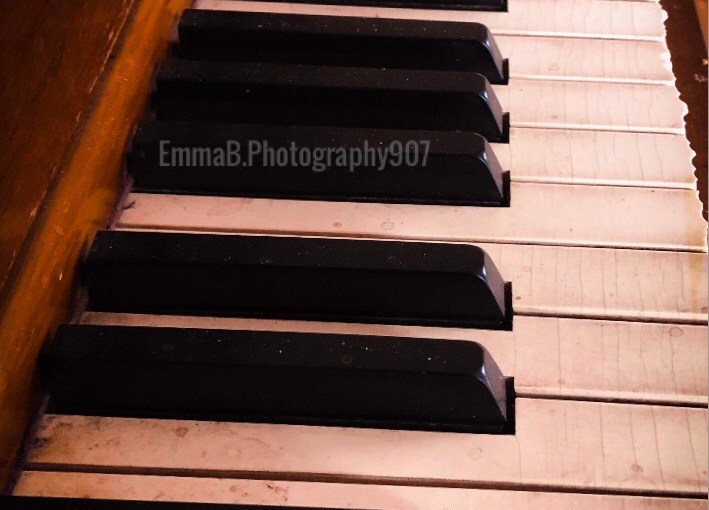
Instead, Anna turned to music as her expressive outlet for processing the chaos. She had composed a little tune at the piano, and many times a day, every day, she would sit down at the piano and start playing her composition.  Over and over.  Giving expression to what she couldn’t express any other way.

Money was tight that year.  Tighter than we’d ever experienced before.  But the more we watched Anna at the piano the more we felt the need to get her back into piano lessons.  We believed she needed that outlet.  We just couldn’t see how we could afford it.

We talked about it.  And we prayed about it.  We asked God to show us how to help her.  Maybe there was someone Anna could talk with, who might just help usher in some reassurances for her that everything would be fine. Someone who shared her love of music.

One particularly stressful afternoon I finally made a call to Colleen, a woman who lived two blocks down the road from us.   We knew her to be a kind and gentle woman with many talents.  One of her talents was playing the piano, and another talent was teaching music.  We were broke, struggling to pay even our basic bills.  But we thought that maybe if Anna could have a lesson with Colleen just once or twice a month, instead of weekly, we could afford it.  

Colleen answered the phone, and after a greeting, I told her why I was calling. I asked if it was at all possible for Colleen to give Anna lessons after school, maybe just once or twice a month instead of weekly.  I explained that I thought we could afford once or twice a month.

She listened quietly while I explained why I was calling.  Then she said that she would be happy to give Anna piano lessons.  But she thought they should meet every week. 

 I started to object, to explain again that we couldn’t actually afford weekly piano lessons.  

“I won’t be charging you,” she said simply, in her soft-spoken manner.

Again I started to object.  I wasn’t asking for a hand-out.  We were needing some help for our 9-year-old.  But I wasn’t asking for charity.  We could pay, at least for one or two lessons a month.  I thought.

She listened silently while I went through my litany of objections.  But she wasn’t swayed by them.

Finally, she said, “I actually think this is God answering my prayers.  And I won’t be charging.  Tell Anna to walk down to our house Tuesday after school and we’ll get started.” 

And that was that.  

My eyes welled up with tears, and I worked hard to try to keep my voice level as I thanked her.  

And then she actually thanked me.  

“I have been asking God to show me how I could help your family during this time,” she affirmed.  “This is the answer to MY prayers.”

The following Tuesday after school Anna marched down to Colleen’s house for her piano lesson.  And pretty quickly Colleen became a special friend to Anna, offering reassurance and calm amidst the chaos.

Anna loved playing the piano.  She loved music.  She loved Colleen.

Her music lessons with Colleen were a gift.  For Anna.  For us. And I think also for Colleen. They also served as a reminder. That even in the darkest of times God answers prayer.  And usually does so in a manner which blesses everyone involved.  

And in case we weren’t clear on that, we had a reminder.  Every single Tuesday.  

Colleen and John:  Thank you.

Magnificence

Years ago a friend told me a story about fishing. He said that he’d gone out fishing for the day with another friend and as they sat facing each other in a small skiff, fishing poles in the water, he’d gotten a call on his cell phone notifying him that a friend had died unexpectedly.  It was more than a year after the fact when he told me about it, but still he choked up in the retelling of the story.  

“So I hung up the phone and we sat together for a few minutes staring at the water.  Then I said, ‘Well God, we could sure use a fish today.’”

Moments later they were startled by the sound of a whale spouting nearby. They looked up to see that a humpback whale had surfaced and was slowly glided closer to their little skiff. Then another whale surfaced with an explosive spout on the other side of them.  And then a third.

I suppose the argument could be made that the whales were not an answer to prayer. My friend had asked for a fish.  And instead whales came and scared all the fish away.  

But he experienced it as an example of the generosity of God.  “I asked for a fish and God sent us a pod of whales.”

A generous response to a simple request.

We were out on the boat the other evening.  The skies were overcast, with a few patches of blue showing through.  The waters were flat, and we’d gone out quite a ways to do some halibut fishing in deep waters.  We were sitting on the back deck of the boat, poles in the water, looking around at the scenery which we take for granted much of the time.  

We’d caught a couple of sharks.  But no “keepers.”  There were a few other boats off in the distance, but no one anywhere close to us. It was a lovely, still evening.  And every few minutes the silence was punctuated by the spouting of humpbacks.  A few ahead of us to the west.  Another at our stern slowly meandering its way along a channel to the east.   A couple more to the north of us.  

We often couldn’t see them.  We just knew they were there by the blows.  The spouts which explode loudly in the air, and reverberate along the water.  

I checked my line to make sure I was still on the bottom, and then reeled it in a few turns.  

We visited about the weather.  Hoping we weren’t going to catch anymore sharks.  Wondering if we should try another spot.  Squinting out at the horizon every few minutes trying to actually see the creatures we could so clearly hear.   

We commented about how flat the water was.  And what a lovely evening it was.  I said that I really didn’t care if we got any fish.  I was enjoying just being out on the boat on a peaceful evening. No one else particularly agreed with my perspective.  And we chuckled at that.

Later, we had started reeling in our lines, still without any “keepers” on board, when two or three whales started bubble feeding near us.  We’d spot the circle of bubbles breaking the surface of the water followed seconds later by 40-ton whales shooting up through the surface, jaws wide open, filtering krill.  

We watched in awe, and I was thinking about how stunning they are.  We see them frequently.  But the frequency of seeing whales doesn’t diminish their magnificence.  

Magnificence.  That’s the word I’d been searching for.  

I looked again at the water, the mountains, the clouds with shafts of evening sunlight filtering through in spots.  The wide open space.  I breathed in the stillness.  And marveled at the whales feeding all around us.

We were surrounded by magnificence.  

I was reminded again of the story my friend had told years earlier about asking God for a fish.  For comfort on a sad day.  Only to find his skiff surrounded by a pod of humpback whales.  

Eventually we headed back to the dock.  Still with no fish on board.  But it had been a successful fishing trip.  In the peacefulness of the evening we were once again reminded. Of the magnificence of God.

You’re Welcome

My parents raised us to believe in a God who wanted to speak with us.  Some of my earliest memories involve my parents encouraging me to pray about something and “see what comes” to me.  For years I never really heard anything when I prayed.  But their message to me was consistently clear:  pray, expecting to hear an answer.  

One summer afternoon when I was 14 it happened.  I was sitting in the library of our house praying about something with my dad.  Quite suddenly, after years of kind of trying to listen, I heard very distinctly the answer to my prayers.  And I recognized that voice.    

Several decades have passed since that day.  And listening when I pray has become something I rarely even think about anymore. When I pray, I listen.  I expect to hear.  And I know that voice.  In the way our children know the voices of their parents.  

We too have raised our kids to believe in a God who wants to speak with them. We’ve encouraged them not only to pray, but to listen.  Explaining to them that just as we want to hear what’s on their hearts, God also wants to know the burdens and the desires of their hearts.  We’ve told them that God wants to be able to visit with all of His kids.  Just like Dad and I do. 

Our daughter Martha was first diagnosed speech and language delayed when she was 18 months old.  Understanding language was a struggle for her.  Particularly as a child.  Language and communication were not her strengths.  And so, of course, God chose what was her deficit, her weakness, to also be her gift. 

My dad, who was blind the last 10 years of his life, had tremendous insight and vision.  So, too, our daughter Martha, who struggles with language deficits, speaks openly with God and regularly hears when she prays.

When she was 10 years old I began the practice of regularly asking her what things she’d gotten in her prayer time.  When I’d ask she would usually tell me.  But it was rare that she’d offer such information unsolicited.  

What have you heard in your prayer time lately, I’d ask.  Has God spoken to you recently?

We were walking together one afternoon just the two of us and I asked if she had had any recent visits with God  

“Yes,” she answered matter-of-factly as we made our way along the path we were walking.  “I visit with Jesus a lot at bedtime.”

And what has Jesus said to you lately, I prodded.

She thought about this for a minute, picking her way around a small puddle in our way.  

Once we were safely around the puddle she continued, “He said, ‘You’re welcome, Marthy.’”

“You’re welcome’?” I repeated.

“Yeah,” she nodded, still looking down at the ground, watching for any new obstacles in our path.

 And what had you said, I asked.

 “I said, ‘Dear Jesus, thank you for dying for me,’” she said simply.

  I nodded, fighting back a tear that wanted to come.

We finished our walk mostly in silence after that.  And that night as I tucked her into bed I kissed her goodnight and turned her loose to visit with God before falling asleep.

Then I crawled into my own bed a little later, and let the tears come. The simplicity with which she had revealed her recent conversation, and the innocence of her words, had struck a familiar chord in me.  

 You’re welcome.

 Jesus went to the cross for me.  For my family. For my loved ones. 

 You’re welcome.  

 Simple.  So easy a child could understand it.  

Lying in bed that night I vowed to be better about thanking Him.  For His sacrifice.  For His willingness to be a sacrifice.  For suffering in my place.  For my sins, for my decisions, my shortcomings, my failures.  I decided that night to be better about thanking Him. Like my 10-year-old daughter did. 

“Dear Jesus, thank you for dying for me, too,” I whispered silently from my heart that night.  

And I think I may have heard it then, too.  Just like Marthy had.  Very simple. Always gracious.

“You’re welcome.”

Happy Easter.

Standing In The Coop

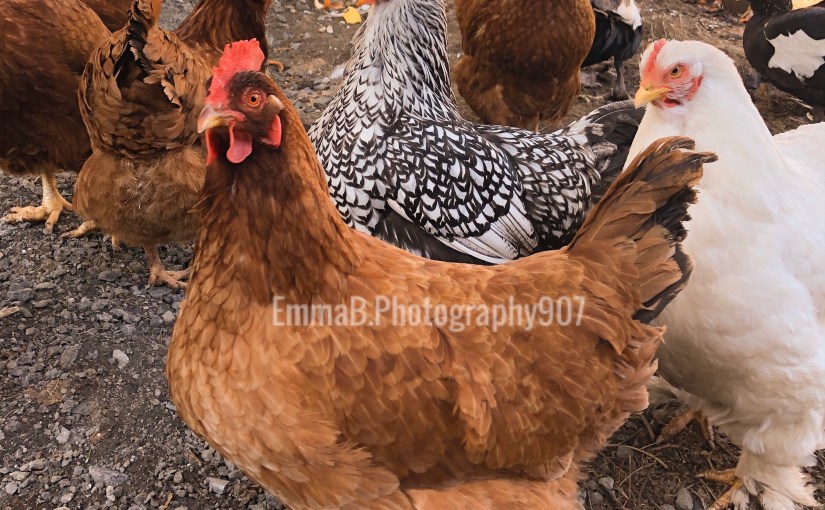
We were awakened in the middle of the night that night by what sounded like a toddler screaming outside in our yard. As we shot out of bed to look out the window we saw the bear wreaking havoc in our chicken coop.  

We raced to put on jeans and sweatshirts, and then ran in to wake up our teenage son, Mo, to have him help us.

“Mo, wake up! We need to go get a bear out of the coop!”

“Okay,” came his half-awake answer.  Then, already out of bed but not really awake, the realization hit.  “Wait.  What?!”

We turned on the back porch light and ran outside.  My husband Geoff reached for a shovel and started swinging it to chase off the bear.

There was a dead chicken just inside the gate and a couple of bloody wings lying on the ground.  A group of chickens were squawking, huddled together in the far corner of the coop. A quick head count revealed that we were missing a few.

The bear had broken through our neighbor’s fence which forms one side of our chicken coop.  As we ran outside shouting the bear had quickly ducked back through the broken slats to get away. 

Lucy, our yellow lab, had come outside with us and was pacing inside the fence, growling, the hair standing up along her spine.  And we could hear the bear, pacing on the outside of the fence, huffing and snorting, probably tracking Lucy.  

I picked up the dead chicken and a couple bloody wings.  We hunted around in the dark for the bodies of the missing chickens but didn’t find them, and guessed that the bear had escaped with them.   Then we turned our attention to the rest of the group huddled in the far corner of the coop.  We started coaxing them out, trying to usher them back into the hen house.  They squawked and flapped their wings, letting us know how upset they were.  Understandably so.  

Violence had just broken out in their neighborhood.  And I think they wanted to make sure we knew just how awful it had been. How we had failed to keep them safe. They weren’t too sure about being here anymore if things like that were going to happen.  There were casualties.  This was upsetting.  

We reassured them, and tried to encourage them back into the hen house.  

And the whole time we were out in the coop, restoring order, the bear was just outside the broken fence, huffing and snorting.  Letting us know that it was still there and that it planned to return the second we got out of its way.

We shooed it away a few more times, yelling at it to “get outta here.”  Each time we did, it would turn as if it was going to leave the neighborhood.  Pretending. But with no real intention whatsoever of leaving.   It was planning to return.  To kill some more.  To terrorize more.  To wreak more havoc. 

Over the course of the next couple hours the bear tried four more times to climb back through the gap in the fence, only to be met by Geoff with the shovel blocking its way.   He’d force it back out of the coop, yelling at it to “git.  Get outta here!”  We’d finally gotten all of the chickens to go back in the hen house, amidst lots of arguing and flapping of wings from them and lots of reassurances and encouragement from me.  

They were finally settling down some.  But we had to stay out there.  Standing in the coop in the middle of the night, keeping watch, to protect against the bear.  

When we finally did go back to bed the first rays of light were already in the sky. We didn’t sleep anymore, we just laid in bed straining to hear even the slightest hint of the bear’s return.  

Over the next few days we kept extra lights on outside, and kept listening for any more bear activities during the nights.  And I thought a lot about vulnerability.  

As much as we try hard to keep our chickens safe from predators, they must generally feel pretty vulnerable most of the time.  In the event of an emergency there isn’t much they can do to protect themselves other than stay close together and do a lot of flapping and squawking.  

I felt like we had let them down in our efforts to protect them, and I wondered if they felt the same.  Somehow, a major predator was able to come right into the neighborhood, right into their home, and violently destroy all that was normal and safe.  And we hadn’t prevented it.  

By the following week my thoughts on the event had broadened and I was  thinking of it more as a lesson in reclaiming space.  When something bad happens, an intrusion or an act of violence, anything where we are made to feel vulnerable or helpless, there are steps we take to reclaim the space.  

First, we go in and try to clear the area of any further violence or threats.  We pick up the carnage and debris.  We tend to the broken and wounded, reassuring the victims and coaxing them back to safety.  We may even have to make some physical repairs afterward, like fixing the fence.

But if we’re really going to reclaim the space, we also need to stay.  Just stay.  We don’t reclaim space after the intrusion of violence by swooping in to restore order and then swooping back out.  We reclaim space by staying.  Because often whatever the intrusion was, whatever violence broke out, it’s still right there.  Just under the surface.  Pacing on the outside of the fence.  Waiting for a chance to return.  

If we’re to reclaim a space, in our home, our community, our country, we need to show up. We need to stand there in the middle of the chaos and debris. We need to tend to the wounded and the broken. To reassure them that we’ll do our best to protect them. We need to make it safe again, and fix whatever needs fixing. And we need to stay. Because it’s our presence that reclaims a space.

I think that’s what I learned that night. Standing out in the coop until the first rays of morning.

Stumbling Down the Road

I was on my way home that afternoon when I noticed a man walking on the sidewalk.  He was staggering all over the place to the point that I slowed down as I passed him for fear he might step off the sidewalk and out into the road. As I slowly drove past I realized who he was.  He used to be our neighbor.  Someone we’ve known for some time.  I was surprised to see him obviously intoxicated and stumbling down the sidewalk in the middle of the afternoon.  

As I pulled up to the stop light a police car was pulling alongside the man, and I suspected someone had made a call to let them know that he needed help. I knew that he and his wife had had a child die not too long ago.  And my occasional thoughts since of wondering how they were doing had been answered.  

The rest of the way home my thoughts lingered on the man and his grief.  And how being drunk and stumbling down the road in the middle of the afternoon was essentially letting the rest of his friends and neighbors know that he was struggling.  That he’d lost his balance.  That the grief was so heavy he was staggering under the weight of it.  Just trying to find his way.

I thought too of all the times in my life when I’ve struggled, and the ways I’ve behaved which let those around me know that I wasn’t okay.  No, I’ve never stumbled down the sidewalk drunk.  But I’ve had meltdowns, and behaved poorly. I’ve been rude and thoughtless. I’ve been so full of self-pity at times that I couldn’t see beyond myself.  I have stumbled down the road.

Fortunately, so far in my stumblings, I have been surrounded by grace. Family and friends, neighbors and coworkers, who care enough about me to hang in there even in the face of my ugliest behaviors.  With grace enough to stand by and help me find my way home.  Grace enough to reach out and make sure I’m okay.  When I angrily say that I am fine.  And I so clearly am not.  

I have been surrounded by grace.  And faithfulness.

Those around me who have stayed nearby, making sure I get where I’m going have been faithful in their efforts.  Even though I push them away and say I can do it on my own.  They’ve been faithful.  They’ve known that I couldn’t.  And that my pride alone wasn’t going to keep me safe.  My pride wasn’t going to see me though.  I needed help.  So they stood off a ways, ready just in case.  Faithful to who they are, and to what they believe.  Protecting, making sure I didn’t stagger out into traffic. Standing guard whether I thought I needed them to or not.  And most of the time I did.

I have been gifted with grace and faithfulness.  And tolerance.

Those close enough to me to know the truth of my shortcomings, have tolerated me no matter what.  Not necessarily tolerated my bad behavior.  But tolerated ME, regardless of my behavior.  Tolerating ME does not mean approving of all that I do.  I know that.  So do they.  My family and friends, neighbors and coworkers, have tolerated me.  Even at my worst.  Not made excuses for me.  Not pretended that I didn’t err, and I have erred, but have chosen to love me all the same.

I have been overwhelmingly blessed.  With grace, faithfulness, and tolerance.  Gifts.  Given to me in abundance by those around me.    

I saw our former neighbor again the other day.  We were at a barbecue together.  He was sober.  I put a hand on his shoulder and said that it was great to see him.  He smiled for a second, and then put his head down.  With his eyes on the ground he told me that he’d been struggling.  He’d relapsed actually, after having been sober for a few years.  I nodded and listened.  He said he was back now, working his recovery program again.  I said I was glad to hear that, and offered some small encouragement. I asked how he was doing with his grief and he looked at me again as a few tears welled up.  He shrugged.  

“It’s hard,” he said.  

I said yeah, that’s what I’ve heard from other friends and family who’ve lost a child.  

We visited for another minute or two and he said it was good to see me.  And that maybe he’d see me around again soon. I said that I hoped so.  

And I made a mental note then.  For the next time, and every time, I see someone stumbling down the road.  To choose grace.  To choose faithfulness.  And to choose tolerance.  Every time. 

A Load Of Firewood

I was on my way to our son’s baseball game. It was a lovely summer evening, bright and sunny. One of my clients had been on my mind off and on throughout the day, and by the time I got to the field it was beginning to nag at me. Just pestering in the back of my mind. I happened to have my work bag in the car with me, which had the woman’s phone number in it. So after I pulled into a parking space at the field, I dug through my bag for her phone number, and called from my cell phone. Just to check in before I headed out to watch the game.

She didn’t answer, so I had started to leave a message saying that I just had her on my mind and thought I’d check in.  Midway through the message she picked up the phone.  I explained that she had been on my mind and I thought I’d just check in.  I knew that her husband was out of town that week, and she had been really struggling with some heavy depression.  I wasn’t particularly worried about her.   I just had her on my mind, so I thought I’d check in.

She was quiet for a second.  Then said,  “Wow, interesting timing.”  

I thought that was an odd response.  

She went on to say that she was doing okay, that her son was home from college for the summer, and her husband was due home tomorrow.  We visited for a few more minutes, and she said again that the timing of my call was interesting.  That concerned me a little.  But I didn’t pick up on anything else concerning during the conversation.  After a few minutes I said I had better get going to watch the baseball game, and that I might call again tomorrow just to check in. She thanked me for calling, and we each hung up.

I was out of town the following week, so it wasn’t until Tuesday of the second week that I saw her.  

She came into the office smiling.  We greeted each other, and I asked how things had been going since we’d last talked.  

She said things had been okay.   “But first I need to tell you about the phone call that changed the rest of my life.”

I sat back as she started to talk.  She told me that her psychiatrist had changed her medications, again.  I had known that.  She said that it didn’t seem to help the depression much at all.  And that the day I had called her, two weeks earlier, she had been battling suicide for over six hours.

“It was really interesting,” she explained, “one by one, each of the barricades that I had always thought would keep me from ever killing myself, fell.” 

She described how in her mind she could envision her husband remarried to a beautiful, educated, intelligent woman.   She could see her son sitting down, holding the new woman’s hands and sobbing.  In her mind, the new woman was saying all the right things, and she knew that her son would find healing.  One by one, she said, every single reason that normally would have prevented her from suicide, dropped away.  She said that she had never before understood how anyone could actually make the decision to kill themselves.  That it had always seemed “like such a selfish thing to do.”  But for the first time in her life, she could understand it. 

“Because by that time they have themselves convinced, or something has them convinced, that everyone they love would be better off if they were out of the picture.  They’re convinced that this is the best thing they could do for their loved ones.”

She went on to explain the progression of her thoughts that day.  The plan that had formulated in her mind. The details set out so that she had wrapped up as many loose ends as she could ahead of time.  The method she had chosen as it wouldn’t be “as messy” as other methods.

I sat listening.  My heart beating a little faster than normal.  

“It’s a silly image, but you know in old western movies how the cowboy would be sitting around a blazing fire out in the wilds.  And as long as that fire blazes, the wolves stay at a distance?”

I nodded, in rapt attention.  Reminding myself to breathe.

“Well I was that cowboy.  And the wolves were circling.  But I’d run out of firewood.  And my fire was burning lower and lower.  And all I could do was sit there watching the embers slowly burn out.  And all the while, I could hear the wolves circling closer and closer.  I could actually hear them, howling and kind of whispering.”

“And they lie,” I interjected quietly.  “The wolves lie.”

She looked at me for a second and then nodded.  

“Yes,” she agreed, “the wolves lie.  So I had decided to get everything ready.”

She described her day. How she had decided to call 911 right before she carried out her suicide plan so that emergency responders would find her body.  She didn’t want her son coming home and finding her.  

“And just as I was about ready, the phone rings.  I was so out of it by then, and so focused on what I was doing, I heard it but it was like it wasn’t really there.  And then I heard your voice on the answering machine.”

Her voice waivered for a second and she paused.  

I was stunned.  I reminded myself to take another breath, and swallowed a couple of times.  

“So we talked for a couple minutes and when I hung up the phone there was this sense of peace.”  She paused for a moment, and shook her head slowly.  “It was like all the sudden, another cowboy had come walking through the dark and dropped a big load of firewood next to what remained of my fire. The fire started blazing again.  And it pushed the wolves back away.  And there was just a sense of peace.”

She paused again, staring into an empty space.  And I wiped at my tears. 

“And all the sudden I knew,” she continued quietly.  “I knew that God cared enough about me to send another cowboy with a load of firewood.”

We sat silently then for a few seconds.  Then she added, “So thank you.”

I nodded, looking at her.  I managed to say something, and then clarified that all I had done was to make a five-minute phone call.  That I hadn’t had any urgency about it, or any great counselor insight that she just might be suicidal. I explained that even while we were talking on the phone I hadn’t picked up anything concerning, other than her reference that this was “interesting timing.”  I said again that I had had her on my mind so I thought I’d just check in, and I had just happened to have my work bag with her phone number in it on the seat next to me in the car.  I hadn’t done anything spectacular.  

We sat together, absorbing the whole experience.    

I was overwhelmingly humbled.  Awed by the assurance that God had spoken to me.  And that my heart had heard.  And even two weeks later, sitting together in the office, I felt as if God Himself were standing in that little room with us, smiling at us, and saying, “Well done.” Because just this once, we had defeated the wolves.  

I put my head down.  And the two of us continued to sit in silence.

“We have a gracious God,” she said.

“Yes we do,” I agreed.

I told her I liked the image of the cowboy in the wilds with the fire dying out and the wolves circling closer and closer.  I said that I didn’t know many people who haven’t at some point in life felt like that cowboy.  I could remember several specific times in my life when that was me.  And that I liked the image of another cowboy showing up, walking straight through the wolves and the darkness, to drop off a load of firewood. 

She nodded in agreement.  

Later, as I walked out to my car, the tears came freely.  I sat in the car for a few minutes thanking God for putting her on my mind that evening two weeks ago.  And for keeping her on my mind until I finally gave in and called her.  I thanked God for keeping her safe.  For pushing the wolves back.  For being ever present.  I thanked Him for being such a gracious God.  God who is above all else.  And I thanked Him for letting me be a cowboy.  Who got to haul a load of firewood.