Red Converse

“Do you want to send that priority, or first class?” the man asked me.

I asked what the difference in time was. 

“Priority will get it there fastest.  Course, you pay more.  Depends on how valuable it is.”

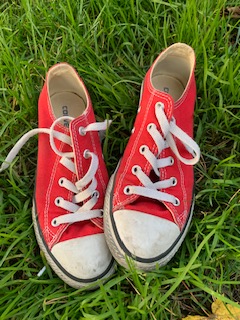
I’m pretty sure it was mostly just clothes, maybe a couple pairs of shoes and a few personal items.  But somewhere in those bags there was also a pair of kids’ red Converse tennis shoes.  And I think those were really pretty important.

“Priority,” I answered.

I’d gotten the call Saturday evening.  Someone had died.  No one knew the cause.  The police were there now. 

I hung up the phone and told my husband Geoff that he’d have to make dinner.  I had to go.  Then I slipped on my shoes and headed out.

I spent the next several hours visiting with the folks who’d been on site. 

“What happened?”  Their question. Not mine. 

“I just wish I would’ve known…..” their voices would trail off.  Not really sure what they could have done.  Had they only known.  Known what?  We still didn’t know what had happened. What was it that no one had known?

Sadness and grief gave way to anger and betrayal once police confirmed that the death was drug-related.  And then everything went numb.  This group had already experienced enough loss in their lifetimes.  What’s one more?  Just one more loss washing over the brain.  Mercifully numbing everything.

Their friend had died.  So together we sat vigil waiting for the police to finish their job.  Waiting for the coroner to come and take the body.  Waiting for feeling to return.  Waiting for everything to become real again. 

We all knew that addiction had just won. Again. Another victory claimed. Another life taken. And more lives left to simmer in pain and disbelief.

“Does anybody know if he got those shoes today?” one of the men asked, breaking the silence.

No one actually made eye contact.  We were all just sitting, staring blindly toward the center of the space.

“Yeah,” someone else confirmed flatly.

“What shoes?” a woman asked without emotion.

“The Converse.  He wanted to get those for his kid.”

Everyone nodded. 

“What color?” someone else asked after a moment or two, still staring toward the center space. 

“Red.”

“Very cool.” 

Others nodded. 

“Yeah.  Red Converse are the best,” another agreed.

“Well good,” someone else replied.  “He really wanted to get those for his kid.”

More silence followed as we sat together just trying to be present in the events of the evening.   

Then another voice broke the silence, “Oh man.  How’s that gonna work?”

And no one answered. 

I asked if they knew how old their friend’s son was.  They said he was nine. 

I said that the way it was going to work was that somewhere there was an 9-year-old boy whose dad had just died from drugs.  And that at some point in the next few days that boy was going to get a pair of red Converse tennis shoes.  And he was probably going to be told that his dad had purchased those shoes for him on the day that his dad had died.  And as the boy grows up those shoes are probably going to become more important to him than “just another pair of shoes.”

Everyone nodded.  Still with vacant expressions.  Yeah, they all agreed that made sense.  That’s probably how it would go.

And the tidal wave crashed over us all again.

We talked about addiction.  I said what I usually say.  That I really hate addiction.  That I hate it when people talk about their “right” to use substances, as though that’s a benign decision.  That I hate how much we protect the use of substances, and even addiction itself, instead of protecting the people struggling with addiction. 

I looked around the room and talked about how addiction had won tonight.  And that I hoped that maybe one of the ripples from tonight might be that just one more addict could win their battle with the disease which was determined to kill them.  That maybe just one more kid could be raised by a parent in recovery, instead of another orphaned kid growing up knowing by heart the story of how their parent had overdosed and died. That maybe just one more kid could grow up having a parent, instead of owning a pair of shoes which held way too much significance.

They all stared at me, I think desperately hoping to hear something that made sense.  Some nodded.  I don’t know that any of them really heard.  Shock is a pretty effective sound barrier.

Eventually we said our goodnights, and everyone headed off to a sleepless night.  Their friend had just died.  And the reality was suffocating.

So today I shipped off the personal belongings to family.  A lifetime’s possessions in three tattered bags.  And somewhere in those bags was a pair of kids’ red Converse tennis shoes.  The final gift for an 9-year-old kid, from his dad.  

And I hope that when the shoes are given to him he’ll be told how much his dad had loved him.  I hope he’ll be told that his dad had wanted to give him those shoes in person when he got home.  Clean and sober.  I hope he’ll be told how much he mattered to his dad.  And that it wasn’t that his dad hadn’t tried in his fight against addiction.  Because he did try.  He just didn’t win. 

I hope the boy will be told all of those things.  While he tries on his new shoes.  Shoes which, I think, are probably going to become really pretty important in the days to come.
The Box In The Road

My dad shipped off to fight in World War II at the age of 18. When he returned at the age of 21 he enrolled in college, and then eventually went on to seminary.  He worked his way through school, working long hours at numerous jobs.  His first job  upon returning home from the war was driving a delivery truck through much of the upper Midwest delivering ice cream to stores. 

His dad, my paternal grandfather, had been a truck driver for that same company and had been killed in a highway accident weeks before my dad was supposed to have shipped off to war.  Having lost his dad at an early age, I’ve always figured Dad was probably very aware of the responsibility that went with driving those big rigs, and the importance of safety. 

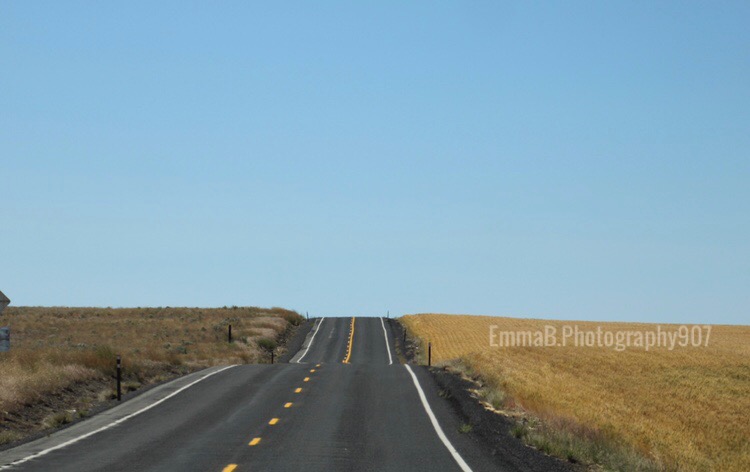
One afternoon when I was about 10 I was riding along in the car with my dad while he ran some errands.  We were driving along a bumpy country road when a paper bag blew across the road up ahead of us and got snagged on some sagebrush to the side of the road.  

Dad started to tell me a story about one summer evening shortly after he had returned from the war.  He said he’d been driving a long, deserted stretch of road in northern Iowa.  He’d had a long day, and he was making his way home having just made his final delivery for the day.  

Up ahead, in the middle of the road, he saw a cardboard box.  He explained to me that the box was situated perfectly in the middle of the narrow, two-lane road, not leaving him enough room on either side to easily get around.  He had already worked a long day.  He was tired.  He said that he didn’t particularly want to take the extra time to gear down and slow the truck to a stop so that he could jump out and move the box out of the road.  He decided to just hit it and hope to knock it off to the side of the road.

But then, he got to thinking.  If he ran over the box it might get stuck in the grill of the truck, or hung up on something underneath.  He didn’t want to have to pull over later and deal with a mess.

So, with a begrudging sigh, he started to slow the truck and gear down.  He stopped the truck in the middle of the road, able to see far enough in both directions to feel confident that no other vehicles were coming along this stretch of road anytime soon.  He opened the door and climbed down from the cab.  Just as he was walking over to kick the empty cardboard box off to the side of the road a young boy jumped out of the box!

“Surprise!” the boy exclaimed.

Dad was stunned.  

And that was the end of the story.  

I remember sitting in silence in the car absorbing the weight of his story.  He could have killed that boy.  I remember turning to look at my dad, and watching him drive, continuing to look at the road up ahead.  I don’t remember that any more was said after that.

Yesterday was a busy day for me.  Too many things got scheduled into one day.   In the afternoon as I was driving to get to a meeting for which I was already late I noticed a white plastic grocery bag in the road up ahead.  There was something inside the bag.  Maybe some groceries, or garbage, or somebody’s lunch.  There was plenty of room for me to steer around it, so I was able to avoid hitting it.  

And I was reminded again, as I have been many times over the years, about Dad’s story that day.  And how stunned he must have been out there on that deserted two-lane country road when a small boy jumped out of what he thought was just an empty cardboard box lying in the middle of the road.  

I imagine there was more to Dad’s story.  That after the boy jumped out and yelled “surprise,” my dad probably admonished him and explained how very dangerous that was.  He probably warned him not to ever do that again because he could be hit and killed.  He probably tried to educate and caution.  That’s what I would have expected him to do anyway.

But Dad didn’t say anything about that when he told me the story.  He didn’t say anything about talking to the boy, or how shaky he felt as he climbed back into the cab of his truck.  He didn’t say that he felt like vomiting the rest of the way back to the shop.  Or that he couldn’t sleep that night because he kept thinking about how he could have killed a child that day.  

I think he purposefully didn’t say anything more.  Clearly, he’d wanted to end the story where he had.  To make sure I didn’t miss the point.  

And the point of his story wasn’t to warn me to never hide in an empty cardboard box in the middle of a road.  Although I imagine he hoped I would realize that on my own.  The point of the story was for me to be cautious.  To be aware that obstacles and inconveniences are sometimes much more important than I might realize at the time.  That things aren’t always as they first appear.

It’s been a good reminder for me over the years.  To stop being so focused on what I have to do that day, or what I had planned, that I miss the signs telling me to consider something else.  It’s been a reminder to not just plow through an obstacle that’s in my way because there might just be something more to it.  To slow down when circumstances outside of my control are forcing me to slow down, because I don’t necessarily know the rest of the story.  To be willing to experience an inconvenience.  And maybe even sometimes to allow a detour from what I had planned. 

That sometimes an empty cardboard box in the middle of the road, isn’t.

And I Will Help You Heal

I had a counseling session that day with an elderly woman.  She had been in the emergency room the evening before saying that she was thinking she wanted to kill herself.  They’d sent her home with instructions to see a counselor the next day.  

When I walked into the room I introduced myself, saying that I am a counselor. And that was about it.  She took it from there.  

She was a small woman, frail, hunched over in what appeared to be a permanent posture.  Grey hair brushed back from her well-lined face.  

She told me about her physical health.  The pain and limitations she deals with daily.  She referenced the deaths of some of her family members, and that she feels that everyone in her generation is dying off.  “All the deaths, all the deaths,” she said repeatedly.

I listened.  Offering occasional brief comments to let her know I was staying with her.

“I’ve got so much to talk about,” she said.  “I’ve never opened up about any of it.  I just went on with the day each time there was a death, each time there was another loss.”

I asked about suicidal feelings the evening before, and she nodded solemnly. 

“Yes, I decided I better get myself to the hospital before I did anything permanent,” she said.  

I said that I was glad that she had, and she confirmed that she was glad, also.

We talked a little bit about how counseling works, and why it seems to work. I explained that it’s not that the counselor has any cures, that the healing actually occurs in the process. And she nodded, saying that she understood this.

My knee had been bothering me quite a bit at the time.  I don’t know if she saw it in my face, or in the way I moved. But I could tell that she was zeroing in on something, watching me intently.  Never wavering from looking me in the eye.  Her eyes squinting just slightly in assessment.

After talking for a time she said that she thought she had talked enough for today.  

“Now, what hurts you?” she asked.

I explained that I’m fine, that I just have a knee that’s not doing what it’s supposed to do.  I smiled reassuringly.

But her intent assessment of me didn’t waiver.   She continued to hold my gaze.

After a moment’s pause she said, “I am a medicine woman, a healer of my people.” Then she was silent.  I think waiting for me to catch up.

I nodded.

“It is a gift that I have,” she said simply.

I nodded again.

“You have already helped me today.  And I would like to give you something.  To help you.”

I said okay, and she reached out for my hand.  I was curious.  And a little uncomfortable.  

She took hold of my hand and closed her eyes.  Then she hovered her other hand over my hand, gently moving it in a circular motion above my hand.

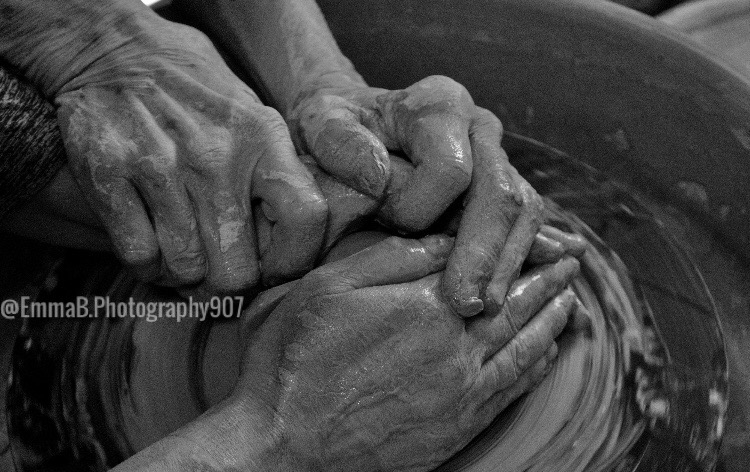
Her hands were smaller than mine.  Her fingers crooked little twigs, bent and twisted.  Evidence of a lifetime of hard work.  

I watched her work, surprised as heat started radiated across the back of my hand. Her small hand holding mine was actually cooler than mine.   Yet the heat seemed to be coming from her other hand which hovered several inches above.

 “Do you feel it?” she asked, still keeping her eyes closed.

I said that I felt a good deal of heat across the back of my hand.

She smiled.  

Then slowly she slid her chair over to be closer to my knee, reassuring me that she wouldn’t touch it.

She hovered both hands a few inches above my knee, moving them in the same circular motion, while her head remained bowed.  And that same heat which I had just felt in my hand started to flood into my injured knee.  

She seemed to be praying, but I couldn’t hear her.   

She continued in this manner for several minutes.  Then she removed her hands and shook them off.   The way you would shoo away a fly.  

“I am getting rid of the pain,” she explained.

A moment later she slowly slid her chair back to where she had been sitting when we first started our session, and looked at me.  Again, I think waiting for me to catch up.  

I thanked her.

We wrapped up our session and made plans for our next meeting.  She said that she already felt better, and I said that my knee was continuing to feel quite hot.  

We both smiled.

She thanked me again for meeting with her.  “I like talking to you,” she said.  “And I’ve got so much I need to talk about.  You will help me heal.”  

Then as she was going out the door she turned and said, “And I will help you heal.”

Yes. I had a feeling that would be the case. 

When Bad Things Happen

Our daughter had flown home unexpectedly.  She had other plans. But a gall bladder attack brought her home sooner than expected.  

The morning after the second gall bladder attack in a matter of weeks we told her she’d better come home so we could get it taken care of.  She had agreed, reluctantly giving up her plans.  My husband Geoff made the travel arrangements to get her home, and set her up with a medical appointment.

Three days after she got home tragedy struck where she had just been. Where she still would have been had it not been for a sick gall bladder.  And the tragedy resulted in the death of one of her good friends, and injuries and devastating shock for numerous other dear friends.  

That evening before I headed up to bed I gave her a hug goodnight.  She’d been on her phone a lot that day checking in with friends who were on the scene when the violence occurred.  I hugged her goodnight, and noticed how limp she felt against me.  Then I whispered to her that I felt conflicted.  

She was beginning to cry again, and didn’t say anything.  I explained that I was heartbroken for the families of those who were there that night.  And at the same time grateful to not be among them.  Grateful that through very minor circumstances our daughter just happened to not be there, where she had planned to be.

The tears came again then.  For both of us.

I found myself watching her closely those next days and weeks.  When she’d leave a room I’d pay attention.  If she didn’t come back I’d go and look for her.  Just making sure, I’d say.  Just checking.  Was she okay?  No, she wasn’t not okay.  And I knew that.

Geoff and I were both very aware of the blank expression on her face.  The grief in her eyes.  She’d smile and be present one moment, quickly excusing herself and leaving the room the next.  

And every time I stood with my arms around her I was thanking God.  For protecting her.  For getting her out of there.  That she wasn’t present that night, the night the violence happened.  

And in the tears she’d say things like, “I don’t understand why God lets these things happen?”

No. We don’t either.  We don’t understand any of it.

“Why did he have to die?  Seems like God would have wanted to keep him here helping people.”

I know.  But I do believe God welcomed him Home in that very instant that the shooting started.

“I feel so sorry for the families.  They’re just left.  Trying to get through this.”

Yes. 

There are so very many things I don’t understand.  I don’t understand why bad things happen.  Period.  And I don’t understand why violence happens.  Ever.  

But there are things that I know.  I know that for those who survived that violence there will be a long road ahead for them to move through.  I know that grief is a slow process, and the only way to do it wrong is to try to rush it. Grief will happen on its own timing, and on its own terms.  But the road will be a long one.  I know that.

And there are things that I believe.  I believe in a loving, compassionate God who is present in all things. Even when someone’s death is unexpected, or too soon.  I believe in a God who is never surprised.  Never caught off guard.  Never wondering what to do next.

Everyone in our family was heavyhearted at the devastating event that occurred.  That took the lives of several, including one of our daughter’s good friends.  We were also grateful.  Grateful that this time our family member was protected. Grateful that she wasn’t there when the violence erupted.  Grateful even for a sick gall bladder.  

 And through the processing of what had previously been unthinkable we continue to hold our daughter when the moments of grief break through.  We continue to reassure her that this is grief. Grief comes in waves and we rarely have any say in when one of those waves is going to come crashing into the beach. 

And we continue to trust in a loving God who remains sovereign in all things. Even shocking and unthinkable things. A God who is present with us. Even when bad things happen. Especially when bad things happen.

On The Front Of The Fridge

The front of our refrigerator is a chaotic collage of things that are important and things that are not. It’s a very busy, often messy, assortment of family photos, photos of family and friends, kid drawings, engagement announcements, coupons, held together with tape and magnets. Once something makes it to the front of the fridge it’s usually there until it gets torn, water stained, or dirty.

We had first gotten called about Matthew in September when he was 13.  He was at a residential treatment program nearby and they were looking for a home for him to live in when he was discharged from treatment.  

We had heard a few things about Matthew, and what an unfortunate set of circumstances his life had been.  He’d been in the foster care system since he was a very young child, moving from home to home, for some reason not adopted with the rest of his siblings.  And ultimately placed in residential treatment instead.

We had talked about it, and then talked with our kids.   We all thought we could take him, and that he’d do well in our home.  But then he ran away from the facility.   He was on the run for a while.  And when they found him he was sent to another treatment facility up north somewhere. It seemed he didn’t need a foster home after all.

We felt bad for this boy.  We prayed for him.  We didn’t know him.  We just knew part of his story.  But we had felt that he would do well in our home.  And it felt to all of us that his decision to run had been that of a desperate teenager who was used to  chaos and disappointment.

Six months later we got another call about Matthew.  They asked again if we would consider taking him into our home. We said that we still thought he would do well in our home, and yes we would take him.

A couple days later, while travel arrangements were still being made to bring Matthew back to our community and into our home, I was cleaning off the front of the refrigerator one morning.  I had pulled off all of the photos and drawings and magnets and was wiping it all down.  As I replaced the photos, I threw away a few that were old and water stained.  

One of the photos I tossed was a Christmas photo of some family friends of ours. The photo was six or seven years old, and was curling on the corners. I tossed it in the trash, and then changed my mind. I didn’t have a more current photo of this family. So after a second’s thought, I took it from the trash, dusted it off and uncurled the corners a little. And then I placed it back in its spot on the front of the fridge.

A week later my husband Geoff flew to the facility where Matthew was and brought him home.  Our other kids were all at school when they arrived, which gave Matthew a little time to adjust.  We showed him his room, and which bed and dresser were his, and suggested he get unpacked.  He did this,  for all of about five minutes.  

Then he came out of his room to make friends with our dogs.  The dogs were delighted with him.  He sat down on the living room floor and let them smell his hands. He talked gently to them, reassuring that they would be friends.  And the dogs competed for his attention.   

From there Matthew walked around the rest of the house.  Looking around.  Getting his bearings.  Geoff and I were visiting in the dining room when Matthew called to us from the kitchen.

“Hey, do you know these people?” he asked.

We asked who, and turned to look toward the kitchen to see what he was referring to. He was standing in front of the refrigerator, pointing at one of the photos on the fridge.

I walked into the kitchen for a better look.  The photo Matthew was pointing at was the old Christmas photo of our family friends.  The one I had almost thrown away the week before.

“These people,” he clarified, pointing at the photo.

We said that yes, they were good friends of ours.  They live in another community where we used to live.  Then I started to explain that it’s actually an old photo of them, but I didn’t have a more current one.  

But Matthew cut me off.

“Because that’s me,” he said incredulously, still staring at the photo, pointing specifically to the little boy in the front.

Wait.  What?

“That’s you?” I asked, stooping to take a closer look at the photo.  

And there in the front row, off to the side, stood a younger Matthew.  He was surrounded by other little kids, three of whom were his younger sisters who had all been adopted.  Away from Matthew.  

“Yeah!” he said, not quite believing it himself.  “Me and my sisters lived with them before they moved us to the other home that adopted my sisters.”  

Geoff and I were stunned.

We all agreed that it was a pretty neat coincidence.  That during these past months when we were asked to take this boy into our home but then it didn’t work out.  When we didn’t know if he was ever going to come here or not.  When he was on the run, and then back in another treatment facility.  When he didn’t know what was going to happen him.  All the while we were praying for this boy.  We had his picture on the front of our refrigerator.  

Matthew smiled.  “I think I’m supposed to be here,” he said.  

And we agreed.

Later that day I called my friend, the mom in the picture, to let her know that we knew where Matthew was. She started to cry when I told her. I explained that we still had that old family Christmas photo of them on the front of our fridge, or we wouldn’t have known that this was their Matthew. The boy who got separated from his sisters and sent to residential treatment at age 12.

Geoff and I said a prayer of thanks that night when we went to bed. We’d been a foster family long enough to know that there would be adjustments. No kid comes into our home and immediately fits in without any growing pains. Sometimes just the gradual letting down of their survival mechanisms makes it difficult to keep them in our home. We knew there would be adjustments. We also knew that first night that this was exactly where God wanted Matthew to be.

Because all those months while we were praying for this boy.  Whose life so far had been an unfortunate set of circumstances, full of chaos and disappointment.  His picture had been on the front of our refrigerator.  With all of our other family photos.  Right where it should be.

It’s Good

It’s funny how sometimes we hear something.  And even though we might hear it all the time, all the sudden we actually hear it.  

Our daughter Kathryn, who is grown now, has been home for a few days before heading off to her new profession.  It has been great to have her home and have time to visit and go on walks again.  Tonight she volunteered to make us dinner.  She bought the groceries and spent a good part of the day planning, marinating, cutting and peeling. By mid-afternoon the house was filled with the wonderful aroma of her slow roasting dinner.  

We still have a house full of kids, though our original ones have grown and gone out on their own.  We currently have two 7-year-olds, two 9-year-olds, an 11-year-old, a 13-year-old, a 15-year-old, and a 17-year-old at home.  They all have their own stories.  Their own experiences of loss, chaos, and tragedy.  And the hiding, hoarding, sneaking, and gorging of food often serves to give us a glimmer of some of the chaos and desperation they’ve endured. 

Two of them, when they first came to live with us, would ask us almost every night if we were going to have dinner tonight.  They didn’t ask what was for dinner.  They asked IF we were having dinner.  And every night, for months, we would reassure them that, yes, we were going to have dinner tonight.  That we actually have dinner EVERY night.  To which they would smile slightly, and nod.  Trying to take in this new reality.  That maybe they could let their guard down just a little.  That instead of taking some other kid’s leftover school lunch and quietly slipping it into their pocket or backpack for later, they could relax.  Because we would be having dinner tonight. 

We have dinner every night.  Some nights might just be leftovers.  But even that is more evidence of just how much we have.  Some nights we have so much dinner that there’s enough left over to have it for dinner another night!

This past year, the youngest kids in our home have developed a nightly dinner ritual.  About a minute into the meal, one of them will say, “It’s good.”  It’s a different kid every night who initiates it. And the other three under the age of 10 will each follow suit.

“Yeah, it’s good.”  

“I like it.”

“It’s really good.”

They are all good eaters.  Very appreciative for whatever we prepare for them.  Unlike our older kids, they never question “what’s in” something.  Meals which our older kids might have balked at for having “too many vegetables” these guys gobble up, thank us, and ask for seconds.  And every night.  Every. Single.  Night.  About a minute after the first bite has been taken.  It’ll happen.

“It’s good.”

“Yeah, it’s good.”

“I like it.”

“It’s really good.”

At times I have silently rolled my eyes.  I say “thanks guys.”  But it has become such a habitual thing that I don’t really even pay attention to what’s being said anymore.  I mumble my thanks, and take another bite, usually thinking about something else.

Today a number of things went wrong.  Problems erupted.  Unforeseen developments temporarily threw us for a loop.  And by the time we got to sit down and eat the dinner Kathryn had made the pork roast was overdone and dry, the sweet potato fries were slightly burnt, and the salad was limp from sitting for too long.  

She fought back the disappointment.  She’d wanted to cook up something special for us.  And, though it was still very good, she felt that it was ruined.  

After reassuring her in the kitchen that it was still a wonderful meal, and having her not accept a word of what we said, we sat down to eat.  Geoff and I, and Kathryn.  And our six youngest kids.  

We took the first few bites. And I was thinking that it really was still a wonderful meal. But I also felt sorry for our daughter who had worked so hard.

And then it came.  The ritual. Only this time, I actually heard the words.

“It’s good.”

“Yeah, it’s good.

“I like it.”

“It’s really good.”

The kids were feasting on pork roast, roasted sweet potatoes, and salad with blue cheese crumbles and pear slices.  They were chatting happily, gobbling up everything on their plates and asking for seconds.

“Yeah, the meat has really good flavor, Kathryn!”

“I love the sweet potatoes when they’re kinda dark like this!”

“Can I have some more salad?  I like my lettuce like this!”

Their roast wasn’t too dry.  They didn’t seem to even notice the burned spots on top of some of the sweet potatoes, or that the lettuce was limp.  

We three adults looked at each other and smiled.  The dinner really was good.  Even though to the cook it was a disappointment.  

The kids were delighted with their dinner.  And appreciative of the effort put into it.  Their words, though said every single night, were no less genuine for the repetition of them.  They meant every word.  Like they do every night.  

So tonight I’m thinking about how much we have.  And how much we take for granted.  Even though we try not to take things for granted.  Maybe we need to take a lesson from our younger kids, and be more appreciative.  

Because they’re right.  It is good. Every single night.  

That One Week

It’s been an exhausting week at our house. One of our younger daughters has been really struggling, and her struggles rose to a new level this week. 

She’s 11.  She’s been part of our family for 6 years.  In her early years she was exposed to significant trauma.  Damaging trauma.  And that trauma continues to torment her.

When she first came to our home she would injure herself.  She was frequently bruised and scraped.  One morning she came downstairs with long bloody scratches down her throat and neck and I had asked what had happened.  

“Oh, I just like to do this,” she said simply.   She was 6.

When she was 8 she threatened to kill herself one night.  She told her older sisters that she was going to die the next day.  That she was going to lie down behind a parked car where no one could see her and she would get run over.  The next morning she was found in the parking lot of her school, lying down behind a car that was idling.   

The nightmares have been an on-going, relentless, part of her life. We often find her in the morning sleeping with one of the other kids in their bunks.  Sometimes we’ll ask her if she had a nightmare.  Most of the time we don’t ask.  We know.  Our whole family knows.

Her first 3 years with us she would frequently scream out in her sleep in the middle of the night, “That’s not paint!  That’s not paint!”  Her screams would awaken the household.  And we would all know.  Another nightmare.  Forcing her to relive the trauma of a brutal death.  

Red paint.  Bloody noses. Split lips.  Lost teeth.  Stains on dinner plates from cooked beets.  All of these trigger other images in her mind.  Images of violence, and death, of murder.  That’s not paint.

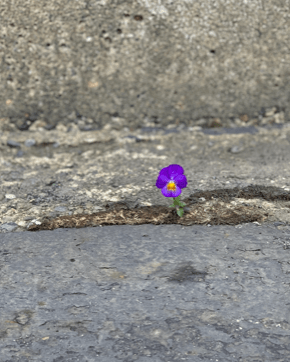
And through it all she has grown.  Like a little flower growing up in the cracks of the sidewalk.  She developed a delightful sense of humor. She became a leader.  She discovered a love of dance, and the gift of singing.  Always athletic, she became skilled at soccer, basketball, and softball.  She loves to run, and to swim.  She always has a plan, which usually involves breaking a rule, or two.  She is rambunctious, and funny.  Full of laughter.  Full of life.

Last fall, at the age of 10, the nightmares returned.  Relentlessly.  And she started becoming agitated at bedtime.  We didn’t put it together initially.  Actually, it took her telling us why she was becoming agitated and aggressive at bedtime before we realized what was happening.  

“Because I’m scared to go to sleep and have the bad dreams again,” she blurted one night.

Last month, after one particularly enraged night, she ended up in a children’s psychiatric hospital.  She was scared.  We were heartbroken.  She felt she’d failed.  We felt we had failed her.  

This past Tuesday she completed the program and came home.  There was much celebrating in our house that night.  She got to choose what we had for dinner.  And she chose the dinner we all knew she would choose. She and the other kids played cards together at the table, and Geoff and I commented on how nice it was to hear all the giggles again.  Before bed she snuggled in next to me on the couch to watch part of a movie. I put my arm around her and kissed the top of her head.

“I love you, Mom,” she whispered.  “I missed you.”

I told her I love her, too.  And that I had missed her, too.  

An hour later she tried to kill herself.  And we knew that she needed to go back to the psychiatric hospital.  She was actually the one to say that she needed to go back.

We reassured her that this is not a punishment.  That this is not because she is “bad.”  And that she doesn’t have to earn the right to come home. 

She listened and said that she knows all that.  Then she promised to “work on stuff” so that “I can be okay.”  We hugged her again and again and told her that we know that she will.  And that we want her to be okay.  To be happy. And wonderful.  To thrive.  To have a really, really, really long, happy life.  We reminded her how very much we all love her.  And she told us that she loves all of us, too.  

And we sent her off.  To battle. To fight against things which never should have been a part of her life in the first place.  Experiences which horrified.  Which froze her body in fear and shock.  Memories which are now imbedded in her brain and which re-awaken at night-time, continuing to torment.  To the point that she fears sleep.  ‘

The cruelty of it isn’t lost on any of us.  That somehow it wasn’t enough that she survived horror at the age of 5. Now at 11 she has to actually go back to that space in time and reprocess the trauma so that she can move forward from it.  

I’ve had a hard time focusing this week.  I lose my train of thought.  I walk into a room, forgetting why I came in here.  I stop talking mid-sentence, suddenly blank on what I’d been saying.  

Our 14-year-old daughter tells us that she thinks there’s something really wrong with her.  “My chest aches.  I can’t catch my breath.  I can’t sleep.  I can’t stop crying.”

We explain that this is grief. And together we sit and look at the stars and talk about how things are, and how we hope they will be. 

Last night as I was heading up to bed I found a small scrap of notebook paper lying on the floor in the family room. I picked it up, inspecting it for just a second before tossing it in the garbage.

Five little words written in pencil.  In a child’s handwriting.  Our child’s handwriting.  

“I am about to die.”

I stared at the note, as the tears flooded in again.  And in an instant the heaviness returned to my chest.  And I fought again just to catch my breath.

She’s safe at the hospital today.  She sounds good when we talk on the phone.  We tell her that we love her.  And that she can do this.  She just needs to get better.  

She says she knows.  And that she’s working on it.  

And we remind her that she doesn’t have to earn the right to come home.  She just needs to get better so that she can SAFELY be home.  

She says she knows that.  And then we talk about what we did today, and she shares what she did today.

And we will continue to fight for her.  Fighting for her safety.  Against anything and everything that is unsafe for her.  

We will continue to love her, and reassure her, and remind her what a great kid she is.  

And we will continue to turn her over.  Every day.  To our gracious God.  Who loves her more than we do.  Who knows the hurts and the torment better than we do.  Who sees the nightmares.  Who keeps His arms around her at all times, keeping her safe and protected. We will continue to trust that it is so. 

And I kept that little note I found on the floor after she had left.  Because someday when I’m very old, and when she has grown to adulthood, I will show it to her.  We’ll talk about how hard we prayed for her back in those days.  When she was just a child.  We’ll talk about how hard she fought to get better.  We’ll smile together.  And probably shed a few tears.  

And together we will remember that one week.  That one really exhausting week.   

Pushing The World Away

Years ago I read something about doing push-ups.  The writer was making the point that doing push-ups was harder for her than for others.  She said that although it looks like a simple push-up, she wasn’t just pushing herself up, she was pushing the world away.

I’ve often thought of that reference.  And smiled. 

I have often walked a very fine line between being busy and on top of everything, to being overwhelmed and buried in things.  Since childhood, I haven’t tolerated boredom.  I’d far rather be running around like a crazy woman than be bored.  And there are definitely days when I step over that very fine line.

I’m not real good at recognizing the signs for when I’ve taken on too much.  I tend to be optimistic and think I can do whatever I set my mind to.  Until it’s too late.  And it’s blown up in my face.  Again. It would be nice if I could learn to see it coming before it actually blows.

Some time back, I was starting to miss appointments.  I had things scheduled on the calendar, but wouldn’t look at the calendar until it was too late.  Or I’d have things written on the calendar for the same times.  One appointment here and another there, scheduled.  Same time, same day.  I knew I’d stepped over the line again, and could feel the craziness engulfing me.  Too much. Too many obligations.  Too many expectations.  I couldn’t do it all.  And in trying, I wasn’t doing any of it well.

I needed to slow down. Needed to slow my world down.  

It’s a common theme in our culture, I think.  Families have gotten busier, children are swamped from the time they begin kindergarten, if not before.  Both parents are having to work full-time out of the home.  Life has become too busy.  We are all in the fast lane, all the time.  And we’re raising our children in the fast lane.  It seems like we are putting increasing demands and expectations on our children.  We’re stressing them out.  Teen suicide is at a peak.  And we wonder why.  Teen drug abuse is at a peak.  And we blame it on the accessibility of drugs.  But we keep doing the same thing.  Creating a mix of stressed out, driven kids; and kids who’ve quit and dropped out because they just can’t compete.  Life’s too fast.  They can’t keep up.  So why try?

Recognizing my own signs of being driven and having too many things on my plate, I decided a few years ago that I needed to do things a little differently.  I needed to slow down.

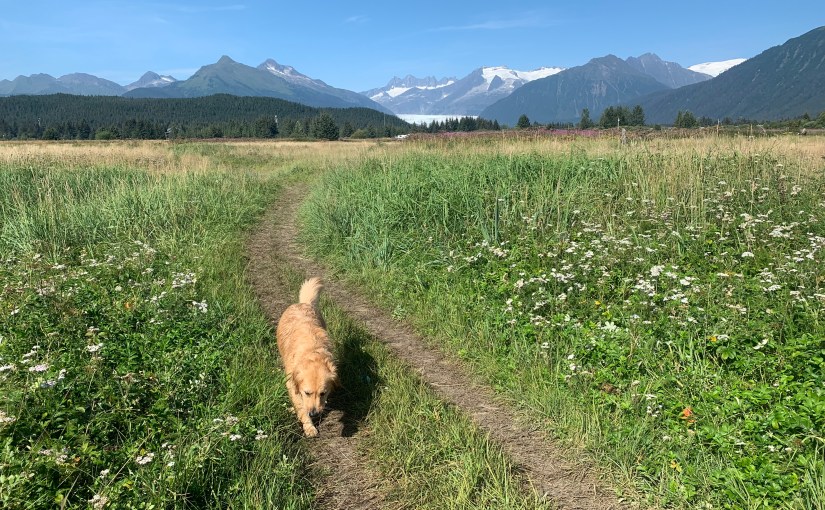
I started walking. Every day.  Rain or shine.  Which is a misnomer.  Southeast Alaska in the fall, winter, spring and even summer is rarely shine.  I have walked in rain, sleet, snow, hail, wind, even more wind, and sideways rain.  I’ve walked through snow, on ice, through puddles, and occasionally on dry ground.  I’ve walked alone, with the kids, with my husband, with friends, and with our dogs.  

I’ve frozen.  And sweated.  I’ve gotten muddy.  And wet. I’ve lost some weight.  And gained some muscle.  And my walks have gone from drudgery to one of the highlights of my days. 

But one of the biggest things I’ve noticed about walking every day is that the world slows down while I’m walking.  I notice things I hadn’t noticed before.  I see the snow and ice melting away, and make note day by day of the increasing bare ground. Today my teenage son and I even noted the first few green blades of grass.  I’m starting to recognize specific types of birds, and noting the return of some of our smaller songbirds.  Soon I’ll be taking note of the growth of wetland grasses, and the blooming of wildflowers.

And for an hour a day I’m taking time to think.  To be. I’ve been able to problem solve a few issues which have puzzled me.  I’ve had ideas of things to try with clients, and with the kids.  I’ve thought about stories I want to write, and people I haven’t talked to for a long time.  

I have an hour a day to pray if I’m walking alone.  Not praying about anything important.  Just visiting.  I’ve decided God probably likes a little stroll through the wetlands or the woods now and then, too.  So I point things out while we walk.  

“Look, there’s a tiny bird with a red face and rose-colored chest.  What type of bird do you suppose that is?”  

“Listen!  The geese are coming back!”

I may look like I’m just out walking.  But really? I’m doing a lot more than just walking. I’m slowing the world down.  For an hour a day.  I figure if someone else can push the world away, I can at least slow it down.

Walking In Faith

I’ve been thinking today about what it means to walk in faith.  To intentionally choose to go into the day by inviting in the One I say that I follow. Every day.  

Walking in faith doesn’t mean being in charge of everything.  Nor does it mean being collared or leashed and submissively allowing myself to be pulled any which way at the whim of some unseen higher power which may or may not care about me.  Walking in faith doesn’t mean not having a say over where I’m going, or how fast I get there.  I think it means trying to be mindful of allowing God to lead.  Being open to new opportunities along the path.  And trusting in a power greater than me, who cares about me, to guide my steps.

Our old dogs, Walker and Lucy, both left us last year.  They both had lived gentle lives.  Enriching our family for 16 and 13 years respectively.  They were members of our family.  Comfortable in what we expected of them. So much so that we rarely had to even tell them.  We’d point, we’d make a clicking noise, we’d snap a finger.  Often we’d just look at them and they’d know what we wanted.  

I don’t recall when Walker was last on a leash.  Once he’d outgrown being a puppy he normally just stayed by us, moving along the path just ahead or right behind us, sniffing at everything that caught his attention.  And Lucy preferred to carry her own leash whenever we walked.  She’d stay right by us on the trail, happily carrying her leash in her mouth the whole walk.  

And now they’re gone.  And we are once again training up a puppy.

Wrigley is 10 months old.  She’s got a sweet personality, and is quick to make amends when she’s made a mistake. Which is often.  

She seems to have a need to carry something in her mouth at all times.  And her dog toys, of which there are many, are rarely what she chooses.  She likes socks.  Shoes. Underwear.  Shirts.  Slippers. TV remotes.  Cell phones.  House phones. Rocks and shells.  Toilet paper rolls.  Pens, pencils, and sticks.  Used napkins or paper towels out of the garbage.  Really anything she can get out of the garbage or off of a counter.  

On walks she will lunge off in whichever direction grabs her attention at the moment.  Going from full stop to full speed in a flash. There is always something of interest to her.  Always something to charge off after.  Seemingly unaware of danger, she’ll strain against the leash, refusing to be guided. 

She’s afraid of other dogs, of eagles, and of the wind.  But she’ll boldly charge out into the road, or race up to the edge of steep cliffs.  Leash training her has been exhausting.

This morning she actually did pretty well on our walk.  She started off in normal fashion, randomly lunging after one thing and then another, only to be held in check by the leash.  But midway through our walk she seemed to be getting the hang of things.  She trotted along happily sniffing at interesting things on the dock—broken mussel shells, feathers, cigarette butts.  Stopping to investigate pigeons sitting on the railings, or wind chimes singing out from the slightest breeze.  

I was thinking how pleasant it was to finally be able to relax my grip on the leash.  I still had a firm grasp, just in case.  But I wasn’t constantly having to brace for impact, anticipating her next lunge.  It was actually becoming a pleasant walk with the dog, instead of a grueling training session.

“Good girl, Wrigs,” I said, reaching to give her a pat.

But instead of basking in my praise, she startled, and whipped around abruptly at the sound of my voice from behind her.  Totally caught off guard to see me right there.  Clearly she’d forgotten about me, and had thought that she was on a solo adventure.

Her reaction only lasted a second, and then, smiling, she wiggled up next to my foot.  Delighted to see me there.  And not just a little bit embarrassed by her reaction.

“Yes, I’m still here,” I said, laughing.

She promptly rolled over onto her back, tail wagging, still smiling, waiting for a pat. 

“Did you forget that I was walking with you this morning?” I teased, rubbing her belly. She licked my hand eagerly.  Clearly embarrassed for her little faux pas.  And I think knowing that I had seen her startled reaction.  No use trying to pretend it hadn’t happened.

We started walking again, both of us still smiling.  But pretty quickly it started to occur to me how very much like Wrigley I am.  

I try to walk in faith.  I try to invite God into my daily walk.  Asking God to be present with me.  To lead the way and to guide my step.  To help me be open to new opportunities along the path.  And to keep me safe from unseen dangers.

And much too often, like Wrigley, I get sidetracked.  Something off the path grabs my attention and I lunge at it.  I see or hear something I don’t understand and I let anxiety and fear take over while I cower.  Or I let in anger, and then don’t recognize how dangerously close I get to the cliff.  I end up taking unnecessary risks, thinking that I’m still just walking along the path. When in reality I left the path quite a ways back.  I bow to selfishness and convince myself that I alone will dictate which way I go.  And somewhere along the walk I forget all about the One I invited to walk with me this day.  To lead me.  To guide my steps.  

By the time Wrigley and I finished our walk this morning I was thinking about my own daily efforts to walk in faith, and how frequently I lose sight of what that actually means.  I specifically thought about some of the times I have been suddenly startled at the presence of God, having completely forgotten that I had issued that invitation.

And I wonder if God, in God’s infinite and inexplicable patience with me, doesn’t chuckle at those times, as well.  Laughing at my startled response.  

I almost think I can hear it.

“Yes, I’m still here.  Did you forget I was walking with you this morning?”

Stop Running

Our family is multicultural, and multiracial. Race and culture are talked about frequently in our home. Often irreverently. We all know that we’re different. We don’t share the same gene pool. We don’t share the same cultural history. Or the same race. We just share the same family.

My husband and I both come from northern European backgrounds.  Primarily Scandinavian.  And I used to say that I didn’t really notice race.  But a few years ago we stopped saying that.  

Our son Mo is African American.  He prefers being called Black.  Mo was 16 or 17 and had been invited to join a travel team from Alaska to play in a basketball tournament in Los Angeles.  Most of the team was from Anchorage, which is roughly 800 miles north of us.  But Mo and a couple of his teammates were invited to join this particular travel team.  

Unbeknownst to us, after the tournament the rest of the team flew out of LA to return to Anchorage.  But Mo and his two teammates from southeast Alaska had to remain in Los Angeles another night, unchaperoned, to catch their flight out of LAX.  Returning through Seattle, and then after a layover, to fly home. To our little community in southeast Alaska.

To say that we were unhappy with this turn of events is an understatement. Three boys from a small town in southeast Alaska left alone in a hotel near LAX overnight, without a chaperone, was not what we had signed on for.  

Mo stayed in contact with us, frequently checking in to let us know what they were doing that evening.  Geoff had encouraged him to order room service for dinner and to hang out around the hotel.  But they were low on money and had decided to go get burgers for dinner.  There was a place they’d seen just a few blocks down the road.

Later that night Mo called Geoff.  Breathless.  

Immediately, I could hear in Geoff’s voice that something was wrong.   I stopped what I was doing to watch and listen. “What’s going on?! What’s wrong?!”

Then Geoff’s response, “Mo!  Stop running! Stop running!  Just stop running!  Right now!  All three of you.  Just stop running!”

The boys, all three of them African American, had walked down a few blocks from their hotel to get burgers.  They’d heard gunshots.  There’d been a shooting.

And instinctively they had taken off running.  As fast as they could.  Fleeing for the safety of their hotel.  

Mo said they could hear sirens.  And that they “just want to get out of here!”  

And Geoff, forever the calm one in our family, had raised his voice. Demanding that Mo and the other two boys “stop running.”  That their lives depended on it.

They made it safely to their hotel.  And the next morning they flew to Seattle, and then back home.  

But for Geoff and me that was the moment we stopped saying that we don’t really notice race.  We noticed race that night.  We noticed, and knew, that the boys’ safety required that they not run.  Even from gunshots.  With sirens all around.  

And the realization hit us.  That had it been our son Ben who called that night we would have told him to get out of there as fast as he could.  To get back to the hotel.  To safety. We would have told Ben to run as fast as he could.  

Our son Ben is white.  

But for our son Mo the rules are different.  And though we hadn’t previously ever really identified that, that particular night we instinctively knew it.  We knew that Mo’s safety required that he stop running.  

Our family is multicultural, and multiracial.  Race and culture are talked about frequently in our home.  Often irreverently.  We all know that we’re all different.  We don’t share the same gene pool.  We don’t share the same cultural history.  Or the same race.  We just share the same family.

And in future generations, I have hope for our family.  For our grandchildren.  And our great-grandchildren.  That they can grow up in a world where the rules are the same. Regardless of their gene pool. Regardless of their cultural history, or their race.  That they all have opportunity to prosper.  And the right to be safe.  

Even if they have to run for it.