Ducks in a Row

I was in a hurry to pick up kids at school when the cars ahead of me stopped in the middle of the road.  My immediate response was irritation.  What in the world.  There wasn’t anyone trying to cross.  No stop signs.  I looked around.  Come on.

A second or two later, I saw her.  A mama duck, proudly and cautiously leading her troops across a busy road. There were six little ones following obediently behind their mama.  She stepped out first, warily watching for any threat to her children.

It’s a busy street.  And with school getting out, it was a busy time of day with lots of traffic.  As the ducks got to the middle line, I held my breath, hoping that the cars coming fast on the other side of the yellow line would see the procession in time and would stop.

The mama duck waited cautiously for a second, and then stepped out into the oncoming lane of traffic as those cars now slowed down and stopped, as well.  I exhaled.

As soon as she reached the other side she hopped around to watch as the littles all finished the journey in safety.  It didn’t seem like any of the littles had any idea how perilous their journey was.  But their mama did.

It was actually a nice little break in the pace of my day.  A forced respite from my schedule. And in that moment of respite I got to thinking.

One of our kids has been struggling lately.  She has a language processing delay and it often takes her just a few seconds longer than everyone else to understand what’s being said, and to respond. She’s on a team right now where the coach will give multi-step directions for drills.  If she has to stop to see what everyone else is doing next, so she’ll know what the next step is, the coach will make everyone stop the drill and will then humiliate her by making everyone on the team start over from the beginning because “someone stopped.”

It’s not that she can’t do the drills.  It’s that she can’t hold all the verbal instructions in her head long enough without losing her place.  She can do it.  She just needs to stop the traffic every now and then so she has enough time.

Another one of our kids has a fetal alcohol spectrum disorder.  So far, he’s doing remarkably well learning at a normal pace.  Reading was exceptionally hard for him, but he’s starting to get it.  He forgets things a lot.  Things that he does every single day.  But all the sudden one day he’ll forget and need to be reminded. It’s not that he can’t do it. It’s that he needs the traffic to stop for him every so often so he can make it across the road safely.

Another one of the kids in our home has had a tremendous amount of trauma in his childhood.  He witnessed a violent murder, and grew up in a village full of domestic violence and substance abuse.  He struggles to maintain control of his emotions, and sometimes he just has to take off and go walk in the woods alone for a while to re-regulate.  He’ll blow up, and swear at teachers.  He’ll storm out of school unexcused.  He’s always repentant afterwards, after he’s gotten his emotions settled back down.  He’s about 5 or 6 years old, trapped in a 14-y-o’s body.  It’s not that he can’t handle the stresses of school, or all the busy social interactions of a teenager.  It’s that sometimes he needs the traffic to stop so he can cross the road without getting run over.

As I pulled into the school parking lot to pick up our kids, my mind was still focused on the traffic stopping to let the little ducks cross the road, and how well each of those little ducklings did following in line, doing exactly what they were supposed to do.  It wasn’t that they weren’t able to cross the road.  It’s that they needed a little more time.  And the traffic stopped.

The traffic on the busy road stopped for them.

That’s really the wondrous part of the whole thing.  It wasn’t the ducks at all.  It was the traffic.   It was the individual drivers who realized what was happening, and stopped to allow the little ducks time to safely cross the road.

So I think this will be my prayer from now on.  For each one of our little ducks as they go through their lives.  I will pray that traffic will stop for them. When they just need a little more time to safely cross the road.

Can I Hold Your Hand?

The kids and I walked to church this morning. Their dad had gone in early and would meet us there.  As we neared the church our four daughters ran on ahead, leaving me alone for a few minutes with our 7-year-old son, Benson.

Ben and I took our time.  It was a bright morning.  There was a slight breeze.  The air felt a little warmer.   I looked around at the water and the sky wondering if spring might finally be here.

“Mom?” Ben asked.

“What?”

He stopped for just a second, looking up at me.  Squinting into the sun.    “I want to tell you something.”

“Okay.”

“You sure are pretty,” he said.  “Can I hold your hand?”

He had just gotten a new white, button-down dress shirt with a blue clip-on tie.  I had helped him clip the tie on before we left the house.  He had the shirt tucked in neatly to his navy blue dress pants. As I was getting ready earlier I had seen him scrutinizing himself in the hallway mirror.  He had wetted his hair down, frustrated with the cowlick he inherited from his mother.  Then he had just stood in front of the big hallway mirror for a couple of minutes adjusting his tie, straightening his shirt, making sure everything was okay.

I smiled, and reached for his hand.  “Thank you, Ben.  You’re looking pretty sharp this morning, as well,” I said.

He smiled up at me again.  And scrunched up his eyebrows.

In that instant, I was remembering the first time I saw him.  He was a big baby.  Still little in my arms.  I sat in my hospital bed holding him that morning.  He had brown hair then.  But very faint, blond, eyebrows.  And even then, that first morning he was with us, I noticed what distinctive eyebrows he has. Eyebrows that are not straight and flat, or even gently arching over his eyes.  Ben’s eyebrows are dramatic.  The kind of eyebrows an artist would give, as an afterthought.  One a little different from the other.  I noticed it that first morning.  I even ran my fingers gently over his eyebrows that morning.  Smiling to myself.  This boy would have great eyebrows, I remember thinking at the time.

Now that he’s 7, he’ll scrunch up his forehead sometimes.  Usually when he’s trying to be funny, or pretending to be serious.  He’ll raise one of those brows slightly higher than the other.  Further exaggerating them.  We’ll almost always laugh.  And I’ll think, every time, what great eyebrows he has.

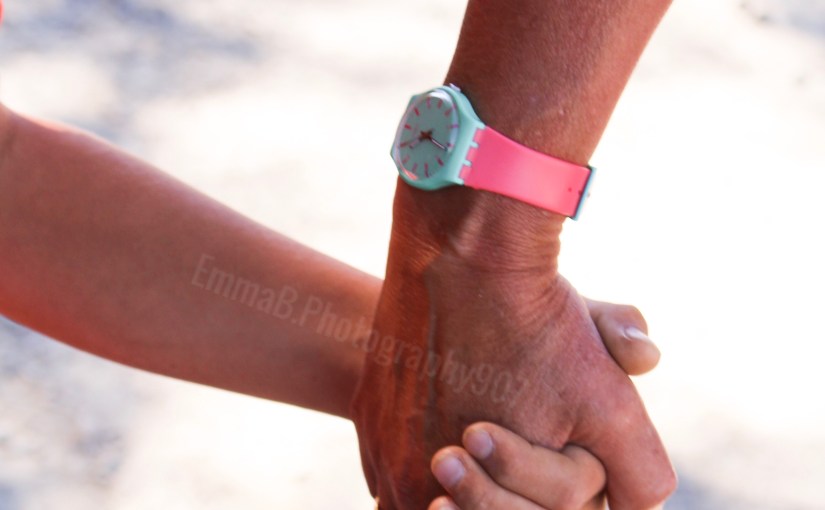
I looked down at him again this morning as we finished our walk to church. He was walking confidently alongside me. Dressed in his new dress shirt and tie. Holding my hand.   I wasn’t taking his hand to pull him along with me, anymore. He was holding my hand. Proudly.  I gave his hand a squeeze.  He squinted up at me once more.

And in the next instant, just before we reached the door, I thought of him as a young man.   Walking confidently.  All dressed up.  Having double-checked himself in the mirror before leaving the house.  I pictured the eyebrows.  Raised slightly in a show of good humor.  And in my mind he was walking with someone.   Smiling at her.  Taking her hand.  Walking proudly alongside her.   Eager to show her off to the world.

But she wasn’t me anymore.  And I wondered how it will feel to step aside then.  Knowing that my job was done.   That I had just been the training ground.

I let go of his hand as we reached the church.  He stepped ahead of me and opened the door.  Waiting for me to enter first.  I reached over and ran my hand through his hair.  He looked at me.   A little admiringly, I think.

And I told myself to memorize that look.  Right then.  To memorize that moment.  To hold onto it.  For tomorrow. When it is no longer me whom my son smiles at and asks, “Can I hold your hand?”

Dancing with Grandpa

I was upstairs folding laundry when 8-year-old Marthy came upstairs crying.  She walked past me without saying anything, went into our bedroom, and flung herself onto our bed.

I finished folding the last few items of clothing and went into the room and sat down on the bed next to her.  I asked what was wrong and started rubbing her back.

Marthy is the child I often worry about.  Things don’t come easily for her.  She struggles frequently.  Reading and writing are difficult for her.  Riding a bike was a huge hurdle.  One which she cleared two full years after her twin sister, Emma.  Marthy is language delayed.  Fairly significantly so, I think.  She often misunderstands things, thinking that people are being mean to her when really, they were simply teasing her good-naturedly.  All these things result in Marthy often feeling bad about herself, and often getting her feelings hurt.

A sob erupted.  “I’m just always breaking things, or losing things,” she cried.

There was some truth to that, and I wondered what had been broken or lost this time.

“What happened?” I asked.

She proceeded to tell me of her latest little mishap.  I listened to the whole story, assuring her that I thought it would be okay.   She stopped talking for a moment, overcome with body-wrenching sobs again.  Then she blurted, “I miss Grandpa.”

My dad had died ten months earlier.  He’d been blind the last 10 years of his life.  All the kids loved Grandpa.  But to Marthy he was a special friend.  When he and Mom would visit, he’d spend most of his time sitting on the couch in our living room, limited by his loss of sight.  Marthy was the one always content to sit next to him, holding his hand.  I never knew what all they talked about on those visits.  I just knew that Dad always told her she had a beautiful smile, and that no matter what, she shouldn’t let anything keep her from smiling. “Put on your smile,” he’d say to her. And she adored him.

“We all miss Grandpa a lot,” I reminded her.

She sniffled.  “I know,” she whimpered.

My thoughts went back to an afternoon several weeks previously when Marthy had been playing dress-ups.  She’d come downstairs in some fancy get-up and started dancing around the living room. A smile had lit her face.  I was sitting on the couch at the time, watching her. Watching a glow on her face. Understanding, I think, that she was someone else just then.  Someone grown up and beautiful.  Someone confident.  Graceful and lovely.  She floated around the living room, staring off at nothing.  Glowing.  And at the time I’d had the strangest feeling, wondering if somehow Dad was there. If he was right there in the living room right then.  Dancing with Marthy.  At the time, I’d had to fight to hold back the tears as I watched her face that afternoon.

“You know, Marthy,” I began, as she continued crying hard into my pillow, “a few weeks ago you were in dress-ups and you were dancing around the living room. And I started tearing up watching you because I had the strangest feeling that maybe Grandpa was here dancing with you right then.”

I was silent then.  Giving her time to let it sink in.  Sure enough, she stopped crying, and rolled over to look at me.  Her face was damp with sweat and tears.  Her eyes were puffy, and red.  She wiped her nose on her sleeve and looked up at me seriously. Studying my face.

I held her gaze. Though I couldn’t help thinking there was something more in her eyes.  She wasn’t studying me trying to see if I was serious.  It was something else.  More like she was trying to see if she should tell me something.  Trying to see if I could handle it.  If I could be trusted.

After a second or two, she sat up and took hold of my face with both of her sweaty, little hands.  Then, still looking into my eyes, she said, “Mom, can I tell you something?”

That was it.  She had been trying to decide if I could handle it.  If it was safe to reveal a secret to me.  Whatever that secret was.

“Yeah, Marth, you can tell me something.  I’ll believe you,” I assured.

She paused for a moment, still looking into my eyes.  Then she said simply, “Grandpa dances with me all the time.”

I started tearing up.  She continued to hold my face with both hands and look at me.  I was the one crying now. Marthy was very calm   and the words, the secrets, started flowing out of her.

“I hear Grandpa a lot,” she said.  “He whispers to me.  I tell him that I miss him.  I say, ‘I just miss talking to you on the telephone, Grandpa.  I wish I could just talk to you sometimes.’  And he tells me that he loves me and that he misses me, too. In my heart I hear him telling me, ‘Put your smile on, Marthy.’”

I laid back onto the bed then and put my arms around her.  We laid there for a while that afternoon.  Me missing my dad.  And Marthy missing her best friend whom she had adored.

Marthy is the child we often worry about.  We watch her struggles, and the huge efforts she puts forth for even the most minor successes.  We often have to wipe away her tears and try to explain that no one was being mean to her, that she had just misunderstood.  Again.  She, more than any of our other kids, struggles to learn new things.  Struggles to feel good about herself.

And yet.  And yet. There is a giftedness there, as well. I see it all the time.  And I know that I don’t understand how God’s universe works.  That it simply isn’t for me to understand it.   But it makes complete sense to me that even now God allows Dad to continue being Marthy’s best friend.  Reminding her to put on her smile.   And, every once in a while, since he’s no longer limited by blindness, even joining her in the living room.  For a dance.

When the Chips are Down

When I was 10 our family drove from Washington to Minnesota for a family reunion.  My parents liked to marvel about how well-behaved we kids were. Either they had forgotten the truth, or they never really knew what was happening in the back seat.

I remember one afternoon in particular, sitting by the window in the backseat of the Oldsmobile.  I think we were in South Dakota.  My sister Jude, three years older than I, reached over quietly and stabbed me in the thigh with a pencil.  I suspect I had done something to her first; though interestingly, I no longer remember that part. I jumped to grab my wounded leg, and sat rocking back and forth holding my leg for a few seconds.  Then, very calmly, I reached over and engaged the cigarette lighter.  When it popped up, glowing red, I pulled it out, turned toward her, and branded her on the thigh.

For years I had a dark grey mark in my thigh from the pencil lead.  And Jude could point to a small circular scar on her leg.  Souvenirs of our trip to Minnesota.

Our family recently completed a 7,000-mile road trip across 13 states and four Canadian provinces with our five kids.  Overall it went pretty well.  To my knowledge nobody was impaled or branded.  We just endured 7,000 miles of fighting, 7,000 miles of spitting, 7,000 miles of kicking, 7,000 miles of throwing whatever was handy.  7,000 miles of listening to conversations like:

“Oh yeah, smell it now.”

“I’m not gonna smell it, you smell it.”

“Mom!  We need a wipe back here.”

“Look, I’m a queen.”

“No, you’re a dork.”

“Duh, if you open your eyes you can see better.”

“May Day, May Day, May Day.”

“Kiss me, baby.”

“Quit telling me to kiss you.  I don’t want to kiss you.  Mom!”

“Will everybody just shut up!”

And finally, “I can’t stand my brother and sisters.  I wish I was the only child.”

One afternoon, in a hopeless attempt to shut them up for a little while, I offered each of them a gumball.  But I didn’t have five gumballs. I only had three.  So they each had half a gumball.

“I wanted red.  How come I have to have green.”

“I want the green.  I got orange.”

“I don’t care what color I have.  Quit whining, you guys.”

We sat up in the front seat rolling our eyes.  Do they have to fight over everything?  Can’t they just appreciate each other every once in a while?  You know, they’re all pretty lucky to have each other.  Don’t forget that.

What came next surprised even me.

“Here, Ben, I’m done with my red.  Do you want it?” Kathryn offered.

“Yeah.  Thanks, Kathryn.  Emmy do you want my green one now?” Ben offered up his already-chewed piece.

“Somebody want orange?” Emmy asked.

As we listened from the front, they all traded their chewed pieces of gum to someone who wanted that one.  We up front exchanged silent glances.

That night, we were still on the road after they had all fallen asleep.  I sat in the back with somebody’s head resting against my shoulder, and someone else’s legs sprawled across my lap.  Two kids behind me were asleep, equally intertwined, with arms and legs lying limp where they had fallen.  And one up front was asleep hanging onto her dad’s arm as he drove.

I sat watching them all sleep, and found myself searching in the dark for that old pencil lead mark in my thigh.  I couldn’t find it anymore.  And I started hoping that my sister Jude still at least has her scar where I branded her thigh with that cigarette lighter.  Because some things just shouldn’t be forgotten.

So here’s to siblings.  Because when the chips are down, who else can you spit on, throw a flashlight at, burn with a cigarette lighter, say that you hate, kick, share your chewed gumballs with, and still fall asleep on?

A Dog Story

It was shortly after our first litter of puppies was born that a friend showed up on our doorstep one afternoon.

            “I heard you had puppies,” she said, as I opened the door.

            I welcomed her in, inviting her to come see the pups in the back corner of the dining room near the heater, where the house is the warmest.  They were in the whelping box, snuggled against and nursing on their mom.  Lucy, our little lab/retriever mama calmly raised her head, and looked at our visitor.  She didn’t get too excited about anything with a litter of hungry pups to feed.

            We asked Lucy if we could borrow a couple of her puppies for a few minutes. And after receiving some sense of acknowledgement from her, I grabbed two sleeping pups and carried them back into the living room.

            Our friend sat down on the floor holding a puppy.  I sat a few feet away holding the other.  As the kids started busily retelling the miracle of puppy birth they had witnessed only a few days earlier, our friend sat quietly holding the puppy.

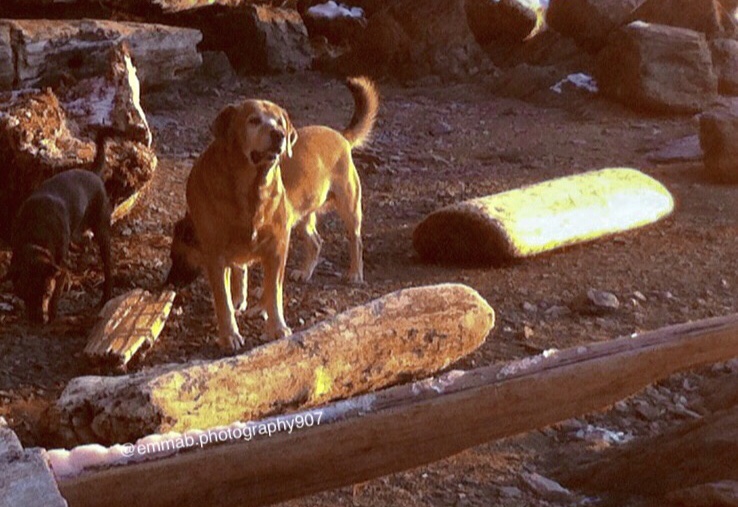
            Walker, our bigger yellow lab and the father of the pups, came over and nosed at our friend’s hand.  Maybe checking on his offspring.  Maybe just conveying his pride in his kids.  Even old Maggie, our black husky mix stood slowly from her rug and came over to our friend.  She poked her nose over our friend’s shoulder and nudged at her arm.

            I told the dogs to go sit down.  But neither did.  Which was unusual for them.  Our friend patted each of the dogs, and spoke a word or two to each of them.  But it didn’t suffice.  Neither dog budged.  Instead, they started licking her.  Maggie on one side, Walker on the other, they licked her hands, then her face.  I ordered them to go sit down, and apologized to our guest.  This was certainly not like them to be so intrusive.

            “It’s okay,” she repeated, and then spoke again to each of them.

            The licking continued.  Becoming more persistent.  Nudging her arms, her neck.  Pressing against her.  Intent on licking.  I was on my feet by then, irritated that they weren’t listening to my reproaches.  I snapped my fingers, calling them from the room.

            “No, it’s okay,” she repeated again.

            That’s when I saw her tears.

I sat back down.  Waiting.

            She set the puppy down on the carpet then and, head down, put an arm around each of the two big dogs, allowing them to comfort her.  Welcoming them to lick away her tears.

            “We lost Buddy this morning,” she finally whispered.

            Buddy was their dog.  Another gentle old soul like Maggie.  Old and irritable.  Adoring and loyal.  A week or so earlier he’d fallen through the ice of the lake where they lived, and had apparently never fully recovered from the shock and turmoil of it.  They’d done everything they could.

            I said I was sorry.

            She nodded.

            Then we both sat quietly.  Even the kids sat quietly.  Watching. As Maggie and Walker offered her the comfort she sought.

            After a bit, we returned the two pups to their mama.  And I assured our friend that it was fine to come by any time. The puppies would be here for the next eight weeks.  And with 12 dogs in the house, she could get her dog fix any time.  She said she would do that, and then left.

            And as I closed the front door I stopped and looked at Maggie and Walker who had been intently focused on her from the moment she’d come in the door. They were sitting in the entryway, watching as she left.  I walked over and patted each one on the head for a moment.  I told them again what great dogs they are, and apologized for scolding them when they wouldn’t listen to me and leave our friend alone.

            “I didn’t realize you knew exactly what you were doing,” I explained quietly.  “I didn’t know yet what I think you already knew.”

            They both graciously accepted my apologies and went and laid down.  And I returned to my day.  Once again humbled by my own short-sightedness.

Under A Light

We were sitting in church in a pew near the back.  It was an unusually dark and gray morning.  The lights of the sanctuary were turned on.  It  might be that they are always turned on for services on Sunday morning.  But most of the time there is enough light streaming in from outside that I don’t really notice the lights in the building.  This morning, for all its dreariness outside, I noticed and welcomed the warm lights in the sanctuary.

It was midway through the sermon when I noticed out the corner of my eye 9-year-old Emma making strange faces and playing with something on her skirt. It wasn’t distracting, so I didn’t pay much attention at first.  But after a few minutes of it, I finally leaned to my left to speak with her.

“What are you doing?” I whispered.

“Mom!” came her excited whisper back, “I am sittin’ right under a light!”

“What?” I turned to look at her.

“I’m sittin’ right under a light!” she repeated, this time cautiously pointing a little finger up at the ceiling above her.

I looked up.  She was right.  Directly overhead was one of the 12 cylindrical lights that lit up the sanctuary. I looked back at her and smiled. She was beaming, with the look of Christmas in her eye.

“You look all lit up and bright,” I whispered to her, smiling back.

“I know,” she replied simply.

I turned my attention back to the sermon, though some of my thoughts remained on Emma and her light.  Pretty soon she was again making faces, and moving her arms around as though trying to grab something.  My attention was fully divided now.  Part of me following the sermon; part watching Emma and the light.

She held her face upturned, squinting into the light.  When she noticed that I was watching again, she lowered her face and smiled at me.

“If I look up at the light,” she whispered hoarsely to me, “everything else looks kinda dark.”

I nodded.  Smiling. I could remember doing things like this myself in church when I was a kid.  Anything to find interest during services which seemed to last an eternity. But I also had to smile at the metaphor which was being handed to me, once again, in the hands of a child.

I turned back to the sermon, but most of my thoughts remained on Emma and her light.  Though the entire sanctuary was well-lit and warm this morning, everything else outside was dreary.  And in that well-lit sanctuary, there were a few, like Emma, who were lit slightly more than the rest of us.  Those 12 who were sitting directly under lights.  Though I don’t know that any of the other 11 were as delighted by it as Emma was. They may not have even noticed their special status.

In the next moment she was reaching up with her hands, as though capturing bits of light which might otherwise be falling unused.  Then she’d pour her hands over her face and head.  Like someone would do to wash their face and hair in running water.  I knew she was trying to capture wasted light.  Light that wasn’t falling directly on anyone.  And trying to pour out that captured light onto herself.

When she saw that I was watching her do this she stopped.  I smiled.  She grinned, slightly embarrassed, and shrugged shyly.  Probably hoping that I wouldn’t say something to make her stop.

Truthfully, making her stop hadn’t even occurred to me.  I was totally taken in by the whole thing.  Recognizing that yet again I was being given a gift, through small hands.  Almost like God was whispering, “Psst, look!  Look what I’ve got to show you!”  I teared up a little, and wanted to chuckle at the same time.

“I get it!  Thanks!” I wanted to whisper back.

I glanced over at Emma again.  Sitting up straight, hands folded in her lap, face turned upward, eyes squinted shut, smiling.  Radiant, in the light.  And my prayer for her right then was that she always find delight in sitting directly under the Light.  That she always keep her face upturned to It.  Looking directly at that Light.  Because when you do, everything else seems kind of dark by comparison.  And when difficult times hit for her, which I know they will, that she will remember to reach out and grab any extra Light she can find.  Pouring it out on herself.  Being filled with It.  And that she be, always, radiant in the Light.

Remember This on Father’s Day

Kathryn was two-and-a-half, and I was pregnant with Anna.  I had a lot of morning sickness.  Which is a misnomer.  I had round-the-clock, never-go-too-long-in-between-eating sickness.

Kathryn had crawled into bed between Geoff and me during the night, saying something about not feeling well.  In the early morning hours she reared up on her knees, started to say something about being sick, and spewed.  Geoff was asleep on his stomach, right in her line of fire.

I heard the wet splat of it connecting with his back, and quickly jumped out of bed.  Kathryn was crying.  Geoff, awash in puke, was suddenly wide awake and telling me to get some towels.

All I could think of was getting out of the room before I, too, threw up.  Sucking in air through my mouth, I plugged my ears and hustled off to the bathroom, willing myself not to be sick.

“Ruth, where are the towels?” I heard Geoff call.

“I can’t get them right now,” I answered, filling the tub with a pleasant, warm bubble bath.

“Why not?” he called.

“I just can’t.  I have to stay in here or I’ll be sick.”

I heard him mumbling something.  I didn’t really care what it was.  I still had my ears plugged, trying to erase the memory of that deafening splat sound.

I turned on the fan, turned up the hot water, and stepped into a calming floral-scented bath.  I could still hear Kathryn crying, and wished that she’d just be quiet.

Geoff opened the bathroom door a few minutes later.  I quickly shut my eyes.

“What are you doing?” he asked, exasperated, holding our screaming child.

“I had to have a bath.  Don’t talk to me right now.  I’m trying to not be sick,” I explained, rocking back and forth in the bath.

“Okay, so why are your eyes shut?” he pressed.

“Because I know you have vomit on you and I’d rather not have to look at it right now,” I explained, as gently as I could.

He made a mocking sound.  I didn’t care.

“Well, do you think you can bring yourself to bathe her, too?” he asked, handing me a naked, screaming child.

Calmly, I looked her over.  “I’d rather not,” I said.  “She’s got vomit on her, too.”

“Oh well,” he said, setting her down in the tub and turning to leave the bathroom.

I looked at him right then.  And wished I hadn’t.

Squeezing my eyes shut again, I started rocking back and forth in the bath. Breathing in the calming floral-scent. I doused Kathryn quickly to get rid of any vomit smell and replace it with the smell of bubble bath.  She, too, calmed right down.

After a while, I relaxed and knew the threat of my being sick was over.  I got out of the tub and got Kathryn out. I put her in some clean pajamas, and put her back to bed in her own bed.  Then I went out to the living room to find Geoff.

“I put Kathryn back in her own bed,” I said brightly.

“Think maybe I can go shower now?” he asked.  It was pretty apparent that he wasn’t happy with me.

“Yeah, go ahead,” I said, not wanting to discuss things further.

“I made up the hide-a-bed,” he said, as he shut the bathroom door behind him.

I saw then that he had pulled out the hide-a-bed and made it up with clean sheets and pillows.  He had brought out my water bottle, and our alarm clock.

The washing machine was going.  So I poked my head into our bedroom to see that he had stripped off all the bedding and apparently stuck it all in the washer.  And he’d opened the bedroom windows to air out the room.

By the time he got out of the shower, I was comfortably settled on the hide-a-bed.  I apologized for not helping.

He shook his head at me as he climbed back into bed.  “Just remember this on Fathers’ Day,” he said.

And after all these years, I still do.

Losing Wendy

“How can God love people who hurt other people?” Our kids have asked us that question many times over the years.

We’ve answered to the best of our ability.  We try to explain a limitless, perfect God, using our limited, imperfect minds.  We think we’ve said all the right things.  God is God.  God’s love is perfect.  God knows the hearts and minds of all of God’s children.

Still, it has remained one of those theological quagmires.  And ultimately, imbedded somewhere in that question, lies the other quandary.  Why try to be good if God loves you anyway?

Tragedy struck our home last night.  Right in the middle of dinner.

We had gotten six little chicks a few months ago.  The kids named them, and we kept them in a playpen in the garage with a heater going next to them to keep them safe and warm until they were old enough to go outside.  We’d been advised to keep them inside until they stopped “peeping” as this is the sound that drew predators.  And sure enough, on their first outing to the backyard their “peeping” brought several eagles to alight in the surrounding trees within minutes.

A week ago, our chicks moved outside to the coop, and the chicken pen permanently. We’ve had beautiful weather these past couple weeks, and after a couple months in the garage, they seemed excited to move out to the chicken pen.

Just yesterday, I sat out on a feed bucket in their fenced in, hopefully predator-safe, chicken pen visiting with them.  I call them our girls.  As in, “Good morning, Girls.”  While we visited I hand-fed them some carrot peels and shredded cabbage.  When they finished those we hand-fed them dozens of worms which the kids had dug up.  When the worms were gone, a couple of the “girls” took a few pecks at my empty hands. One started pecking at my ankle bracelets.

And just a couple of hours later, during dinner, 13-year-old Emma looked outside in horror and announced, “One of our chickens is dead!”

We all jumped up from the table.  “Are you sure?  How can you tell?”

“Because it’s laying in the middle of the backyard, and there’s feathers everywhere!” she yelled, trying not to cry.

I ran outside in my socks, followed by most of the family.  And there, chewed up and wet with slobber, lay Wendy, our little brown and white chicken.  Dead.

Our three dogs, Walker, Lucy, and Optimus, had been out back while we were eating dinner so they wouldn’t be begging under the table.  We’d gotten Optimus a couple months ago.  She was the fifth puppy born to a Chihuahua next door. When the mother couldn’t nurse her, our kids had started bringing her over to our house to be bottle-fed every day. We eventually told the neighbor that we would take her, and care for her, concerned that otherwise she would die.

As we stood inspecting Wendy’s limp, spitty body, Optimus tore over triumphantly. She looked at us expectantly, hyped up over the kill, with a white chicken feather clinging accusingly to her bottom lip.

The word “pound” was mentioned immediately.  And the “hate” word made an appearance, as well.  We ordered the dogs inside, and slammed the puppy in her kennel.

We told her she was bad.  A bad dog. We hollered it at her, as she cowered in the back of her kennel, clearly not really getting what all the fuss was about.

We were angry.  She was a killer.  A “murderer” as one of the kids labeled her.  We didn’t want anyone in our family who would kill another family member.

Geoff fixed the hole in the chicken fence, which was just big enough for Optimus to have gotten through to drag a chicken out of the safety of her pen.  A couple of the boys dug a small grave.  And a little later, tearfully, we buried Wendy in the part of our yard where several other pets have been buried.

It wasn’t until almost bedtime that I let Optimus out of her kennel.

She crept forward, head down.  Submissive. I knew she didn’t understand what she’d done that was bad.  She had tracked the thing, and had finally figured out how to get it.  She probably didn’t even mean to kill it.  Just wanted to play.

I patted her head and told her I wasn’t mad at her.  I told her that what she did was bad.  She pressed against my legs, nose on my hand.  When I finally picked her up, she snuggled in against me. Still breathless.  Worried probably that somehow this, too, would end. That things weren’t really okay. That we didn’t really still love her.

So this afternoon, I’m back out on my feed bucket sitting in the chicken pen. I had a little chat with the girls. I told them I was sorry for what happened to Wendy, and I know that had probably scared them all.  I shared an apple with them, and let them peck at my ankle bracelets.

Optimus is on a run now, on the other side of the yard.  Because if her instinct is to go after the chickens, then she needs some further restrictions to keep her from getting herself into more trouble.  She seems content over there.

And tonight I’m thinking that I might just have a little better idea of how God can be God.  Bad things happen all the time.  People mess up.  Maybe they just thought they’d play.  Never really meant to hurt anyone.  But someone got hurt, nonetheless.  Or dead.

Maybe I can imagine it, because I’ve lived in the chicken pen.  I’ve been one of the wounded.  Lots of times.  I’ve experienced bad things happening, and still tried to trust in a loving, benevolent God who cares about us.

And I’ve also been the guilty one, hiding in the back of the kennel.  Scared to come out.  Sorry.  Submissive. Though maybe not real clear about what I’d done wrong.  I’ve been the one who was worried that maybe this wasn’t real.  That maybe things weren’t really okay.  And that maybe I wasn’t really still loved.

I can imagine God climbing into the chicken pen and sitting on the feed bucket to have a chat with those who loved the one who was hurt.  Apologizing.  Sharing in our pain.  And sorry for our fear.  Offering an apple, and a compassionate ear.  I know that God.

I can also imagine God coaxing the guilty party out from the back of the kennel later.  Offering forgiveness.  And grace. Not making it all okay.  But loving the guilty one, nonetheless.  Offering a hand, and a pat.  I’ve known that God, too.  I’ve felt that hand.

So that’s some of what I’ve been thinking about tonight.  After losing Wendy.

Saving Your Life

Our two oldest daughters, Kathryn and Anna, are teenagers now.  Kathryn is 15 and is preparing for her driver’s test in a few months.  Anna is 12, almost 13.  For the most part, they get along really well for being teenaged sisters.  But when they spar, it gets ugly fast.  Until Kathryn plays her trump card.

“I saved your life, Anna.  Don’t make me wish I hadn’t,” she’ll yell.

To which Anna, having no real response, will roll her eyes, or throw her hands up in the air, and mutter something like, “Oh yeah, right, Kathryn.  What does that have to do with anything?”

“Well, I’d have my own room now, for one thing,” Kathryn will quip.

Their arguments are usually over fairly quickly, and are completely normal. They’re girls.  They’re teenagers.  And they share a room, because Kathryn saved Anna’s life once.

Kathryn was just a couple weeks away from her third birthday the night Anna was born.  The delivery had gone remarkably easy, compared to my first.  Kathryn had spent most of the day with her grandparents, aunt and uncle, and cousins.  Once Anna was finally born at 9:02 p.m., they quickly brought Kathryn down to the hospital to see her new sister.

I can still remember her walking into the delivery room.  I was all stitched up by then, and covered by a sheet. Geoff was holding Anna, all bundled up in a baby blanket.  Kathryn came in wearing flowered shorts, a t-shirt with a little sweater, and tennis shoes.  And, I noticed right away, she was sporting two new bandaids on her knees.

“I fell down on the sidewalk at Aunt Sue’s,” she’d explained to me.

After seeing that I was okay, she looked around the room at all the delivery equipment.  Both doctors–the ob-gyn and the pediatrician–were still in the room. Both greeted her, and congratulated her on being a big sister.

Then Geoff carried our new little bundle over to where Kathryn was standing and asked if she wanted to see her new little sister.  She’d nodded, somewhat apprehensively.  He gently lowered Anna so that Kathryn could see her. He even let her hold Anna for a second. Kathryn had smiled, but still seemed hesitant.

“Our new baby’s all bleedy.  And her doesn’t have any arms and legs,” she’d said.  Words which have become immortalized in our family.

Geoff started to explain that she does have arms and legs, they were just wrapped up tight in the blankets.  Then he asked what she’d meant about Anna being all bleedy.  At that, Kathryn pointed to the underside of our new little bundle.  The side she alone could see.  Geoff turned Anna over in his arms, to find a huge area of the baby blanket, larger than his hand, soaked with blood.

Both doctors immediately stopped what they were doing and took Anna.  They unwrapped her quickly to find that her umbilical cord had torn from where it had been cut.  It had split in two, down to the skin.  Arterial blood was spurting from her little belly.

At the time, I was in that post-birthing euphoria.  I recall feeling interested in what was going on.  But not particularly concerned.  I did notice, however, that these two doctors whom we had known for some time were moving quickly.  In fact, though they spoke calmly, I was thinking that I had never seen either of them move quite this quickly before.  They took off the clamp, pulled her torn cord up higher, and re-clamped it on the actual skin of Anna’s tummy.

The spurting stopped.

Then the doctors quickly weighed the bloody blankets against two identical, unused blankets, trying to establish how much blood was actually lost.

For me, it wasn’t until early the next morning when our pediatrician, Dr. Dave, came into the hospital room to check on Anna that I realized how serious this might have been.

I told him that I had never known that something like that could even happen. I’d asked him how common it was for the umbilical cord to tear after it had been cut and clamped.

He had looked thoughtful for a second.  Then said, “In all my years as a doctor, it’s the first time I’ve ever seen that.”

“So, she could have bled to death,” I pursued, watching him closely.

He nodded, looking at me.  “She nearly did.  If the nurses would have put a diaper on her before they wrapped her up, she would have bled into the diaper, and none of us would have even known there was a problem.” After a moment’s pause, he added, “You know, as the girls grow up, you can tell them both that Kathryn saved Anna’s life the night she was born.”

I said that we would certainly do that.  Then he went on to explain to me that with the amount of blood she lost, we should expect some jaundice.

“She’ll be yellow.  People will comment about it, and want to give you advice.  Tell them that your doctor is already monitoring it,” he’d smiled.

Anna did turn yellow over the next days.  Then she turned orange.  But eventually her blood supply got back up to where it was supposed to be.  Even her belly button healed just fine.

When Kathryn came in to visit at the hospital that next morning, we unwrapped Anna so that Kathryn could see that she did in fact have arms and legs. She’d seemed relieved at that.  We even turned Anna over to show Kathryn that she was no longer “bleedy.”  And then we’d explained to her that Anna’s cord had torn and that she had almost died.

“And you saved her life,” Geoff had said, fighting back tears.  “If you hadn’t told us she was bloody, we wouldn’t have noticed it in time.”

Kathryn had smiled then.  The smile of a child, understanding that she had played an important role in something. Or maybe it was the beginning of an understanding that she would always have a trump card.  To hold over her sister’s head.  To torture her with when necessary.  After all, she had already saved Anna’s life, hadn’t she? For crying out loud, what more could anyone possibly expect?


Post Script:  Kathryn recently gave the maid of honor toast at Anna’s wedding reception. She introduced Dr. Dave, and asked him to come up and verify, once and for all, that she really had saved Anna’s life the night Anna was born.  And Dr. Dave happily complied.

Stealing Wishes

          What happens to wishes once they’re wished?  Once the die is cast.  Or the candles blown out.  Where do the wishes go?  And if those wishes are really prayers, are they any less of a wish?  Or more of one?  Is it really possible to steal someone else’s wish?  Really?

            I was walking around a lake not far from home with our daughter Anna, now 14.  Recent rain showers had made the air through the woods steamy and moist, and made the trail muddy and soggy in places.  We visited as we walked.  Joking, mostly.  Enjoying spending some time together, just the two of us.  Which in itself is rare.

            We visited about numerous things.  Sharing remembrances of earlier walks on this, and other, trails.

            “Remember the time we saw a bear cub up in that tree?” she asked.

            I said I did, and we laughed about how we’d had to get a ride back to our car.  Because we couldn’t find where the mama was.

            We rounded a corner in the trail, and Anna said to me cheerfully, “Okay, Mama, let’s get some money!”

            “Mama” is not a name we’ve used with the kids.  I’ve always been Mom.  Except when they were really young.  And now. Now I’m “Mama” when they’re being funny, teasing me, or just feeling particularly light-hearted.

            “What do you have in mind,” I asked.

            “Come on, right up here,” she laughed, jogging up the trail.

            Ahead was a small footbridge over an even smaller stream, which was nothing more than seasonal run-off from the mountains up ahead.  And at the bottom of the stream, nestled in among grasses, twigs and mud, is change. There’s been nothing there over the years to designate it as a wishing well.  Nothing more than one person, one time, tossing a coin into the water and probably uttering a wish.  Over the years others did the same as they passed.

            “So what’s your plan?” I asked, slightly hesitant.

            She was already standing in the grasses off to the side of the trail, pulling off her shoes and socks.

            “I’m going in.  You stand on the bridge and tell me where to go. ‘Cause once I’m in there, it’s really hard to see.”

            “You’ve done this before?” I questioned.

            She looked up at me and smiled that smile.  The one that tells you that you are at imminent risk of losing any sense of control. That though she’s smaller than you, younger than you, and less experienced, the only reason you’re in charge is that she has so chosen it.  Big blue eyes laughing from underneath damp and dangling bangs. Braces flashing as she chuckles.

            I sighed, knowing that smile.  Fighting being swept away by its current.

            “When and with whom?” I pursued.

            “Me and Sara did this last summer.  We got a bunch of change.  It was really fun.  Come on, Mama.”

            I resigned myself.  Okay.

            “Here, hold my socks. I’m wearing my shoes in though, because I don’t want to step on anything.”

            I nodded.  Then, standing on the small footbridge, I glanced in both directions and gave the go-ahead, as she stepped into the water.

            “Brrrr, that’s cold,” she remarked.  She bent to pick up a dime, before proceeding a second step.

            I started pointing out where other coins lay, half hidden in the silt at the bottom of the creek. And every few seconds I glanced both directions down the trail to make sure no one was coming.

            Anna proved to be very good at uncovering coins in a creek bed.  And very thorough.

            “Don’t you think we oughtta leave a few?” I asked.

            She looked up at me from her position in knee-high, ice cold water, and smiled again.  Surely, I was joking.

            I shrugged.

            Twice during our mission, I called “car”, and she quickly jumped to the grass on the side of the creek. Just in time to look nonchalant before cars rolled by us slowly, admiring the beauty of the lake behind us.

            “Okay, there’s something silver over there.  Looks like a dime, maybe,” I said, pointing off to her left just another step or so.

            “Got it,” she answered, following my directions.  “Oh! It’s a quarter!”

             “Must’ve been a big wish.”

            She paused to smile up at me.  That smile again.  The same one we used to get when we’d catch her cutting her bangs, or find her under the table at coffee hour after church with 30 Oreos mounded around her and chocolate all over her face.

            I smiled back. Then quickly gave directions to a few more coins hiding in the murky bottom of the stream.

            And as quickly as she’d stepped into the creek, she was climbing back out, sweatshirt pocket hanging low, full of wet and dirty coins.  In a minute, we were back on the trail, finishing our walk, eager to count our loot.

            “So,” I asked, “what happens to all those wishes, do you suppose? You know, if someone steals the coin you wished with.”

            She turned to me and laughed.  “I don’t know.  But let’s see how much we got and then go buy some ice cream!”

            “Okay!” I answered, almost as eagerly.

            “Actually Mama,” she added, “I think the wishes have a better chance of being answered if someone else takes that wishing coin and uses it for something great like ice cream.”

            I chuckled.

            We ended up with just under two dollars in change, and quickly spent it on a couple of ice cream bars, supplemented with change from the car.

            And on the drive home, as I enjoyed my ice cream bar, I thought again about wishes.  What happens to wishes after they’re wished? Particularly if someone else steals the item that was wished upon.  And what were those wishes, anyway?  Because if any of them were parents’ wishes for their children, for special moments shared with them before they are grown and gone, I know what happened to that wish. It came true.