The Most Important Thing

My husband Geoff was out of town, so the job of afternoon taxi service had fallen to me for the day.  As our 8-year-old foster son climbed into the back seat and buckled in I asked how his day had been.  He said it was good.  He had liked the snack I’d packed for him.  He asked about my day and I said it was good.  Then he wanted to know what we had planned for the rest of the day and I said that as soon as he was buckled in we were heading over to get the middle schoolers.  He was good with that plan.  It’s the same plan we have every week day.

I pulled out of the elementary school parking lot and started to make my way across town.  I was thinking about what I still needed to get done this afternoon, reminding myself to send an email when I got back.

“Hey Mom,” came his voice from the back.

I responded.

“What’s the most important thing?” he asked.

Interesting question.  Without hesitation I said that to me the most important thing is having a relationship with God.  That as long as I keep that first it reminds me who I am, and how I should be.  And that most everything else seems to kind of fall into place. 

Silence.

I waited to see where he was going to go with this.  Wondering what he was thinking about, and if my answer had made sense to him.  I also wondered what had precipitated that question. 

As a foster family we try to be mindful of the spiritual and cultural backgrounds kids bring when they get to our home.  We try to be open and respectful of their beliefs, and open about ours.  We’ve had a lot of interesting conversations with kids over the years, and we generally try to reinforce mutual respect of beliefs. 

I was curious about what he was working on in his thoughts.  But after a few minutes of silence my thoughts went back to the email I needed to send when I got back.   I checked the clock on the dashboard to make sure I was on time to pick up the other kids. 

“Oh,” he said suddenly, after several minutes.  “I thought you were gonna say vegetables.”

I chuckled.

“Well, that’s a good thought,” I said.  “Vegetables are really important, too.”  

“Yeah,” he agreed.  “You always say we need to eat ‘em every day, and it doesn’t matter if we like ‘em or not.” 

“Yep, I do say that,” I agreed.  Still smiling.

Silence returned to our car as we waited together for the middle schoolers to come out.  And my thoughts wandered.  I thought about my life-long relationship with God, and how I stray away from it, still, every once in a while.  How I wander off the path that I know I should be on.  How I react and behave in manners that don’t reflect what I say I believe, or what matters to me.  How frequently I have to find my way back to the path I thought I was on. 

I thought about how differently I feel when I know I’m on that path, walking the walk I was made to walk.  How that’s where peace is.  Yeah, my relationship with God really is the most important thing.

And, it’s true, I am a big proponent of vegetables.  But if someone living in our home thinks that vegetables might just be the most important thing to me, it’s possible that I might need to back off on the kale a little bit.

Although I don’t really see that happening.
Aloha Oe

My mom died two years ago on Mothers’ Day, at the age of 90.  She had been telling us for the past 10 years of her life that she was “ready to go.”  She missed my dad.  And as Alzheimer’s slowly and steadily stripped away at her she seemed only to become more “ready to go.”

Mom was the oldest of four kids in her family.  She and her sister Elaine, the second oldest in the family, were two years apart.  And in virtually every other way imaginable they were together.  They were the best of friends growing up.  Elaine entertaining Mom during a lengthy bout with scarlet fever when they were little girls.  Mom protected Elaine and the others during the hardships and uncertainties of the Great Depression. 

As teens and young adults they double-dated, often sitting up late at night visiting about the things young girls visit about.  Harmonizing on the popular songs of the day.  And giggling into the night.  In fact, it was Elaine who set up Mom on a blind date, with Dad.  So it was fitting that a year or so later they were married, Mom and Dad, and my Aunt Elaine and Uncle Carl, in a double wedding. 

In the early years of their marriages they both ended up moving from the Midwest out to Washington state.  Still close, geographically and emotionally.  They would get together frequently, kids in tow.  And while the cousins played the two sisters would sit at the kitchen table and visit, often breaking into song.  Their songs and visiting punctuated with giggles.

Elaine and her family moved to Hawaii for a few years while we were all kids.  The two sisters kept in touch with handwritten letters, and the very rare long-distance phone calls.

I was nearly a teenager when they moved back to Washington state, closer to our family.  Oh gosh, the excitement at our house when that was announced!  And over the next years, once again, when our two families got together we kids would each pair off with our same-aged cousins, and the two sisters would sit and visit, often breaking into song.  Their songs and visiting punctuated with giggles.

The last time they saw each other, Elaine had come up to Alaska on a cruise ship to visit Mom in a long-term care facility.  Mom recognized her younger sister, but wasn’t able to do much other than hold Elaine’s hand.  And Elaine spent the day sitting next to Mom, holding her hand, catching her up on what was happening with family near and far.  And singing some of the old songs which Mom could still recognize and hum harmony on. 

Then a year or so later Elaine came to Mom’s celebration of life.  My cousins brought her.  By then she was beginning to develop some of the same symptoms we’d seen years earlier in Mom.  She knew who we all were, kind of.  Although it was hard to be sure because her gracious and friendly spirit hid any confusion we might otherwise have recognized.  She told me several times that she was sorry to hear that my mom had passed, and that she sounded like she’d been a wonderful lady. 

Just as we were beginning the brief service, Elaine stood up near the front and began to sing. It was a spontaneous gesture.  She was moved.  So she stood and sang a song she’d learned during her years in Hawaii.

 Aloha Oe. 

Some of our cousins looked uncomfortable.  I think maybe worried that their mom was disrupting.  Interfering with what we had planned.  Not sure how best to intervene.

And I thought it was perfect.

Perfect!

In that very moment I could see Mom again.  Standing somewhere nearby.  Once again young and beautiful.  Glowing.  Loving all of us.  Smiling lovingly at her younger sister, who even through the confusion of dementia might just have had a clearer understanding of what this celebration of life was all about than any of the rest of us.

“Aloha Oe,” she sang.  Until we meet again.

And I’m just guessing, but I’m pretty sure Mom reached out and took hold of Elaine’s hand while she sang.  Smiling at her.  Loving her.  Honored by her song.  And enjoying once again her sister’s beautiful gift of singing. 

Other people said touching things, sharing memories and stories for Mom’s celebration of life.  The whole afternoon was a loving tribute to our mom.  And we were surrounded by loved ones. 

But my Aunt Elaine’s song stands out the clearest to me now.  It has become one of my most precious memories of that day.  Of Mom’s celebration of life.

And I imagine that the day is not too far off when Mom and her younger sister will be together again.  Both once again young and beautiful.  Together, holding hands.  Visiting and singing.  Giggling into the night.

Until then, “Aloha Oe.”  Until they meet again.

Postscript:  My Aunt Elaine passed away a few weeks ago.  Like Mom, hers was a life well lived, and much loved.  And I really am pretty sure that Mom was there to take her hand and bring her along.  Eager to catch her up on everything.  I can almost hear them.  Singing and giggling.  Together again.

The View From The Back Seat

It had been a stressful few months.  Home was too busy.  Work was too busy.  Too many things to be done, and not enough time to do it.  Every night as I climbed into bed I had more things on my list than I’d had when the day had begun.  I could feel the stress.  I knew I needed a change.  But I hadn’t yet figured out how or what I could do differently.

I had a counseling session that week with a man who, now in his 40s, had decided to address his “anger issues.”  He used our sessions to essentially do his own therapy with very little input from me other than to encourage and to be a sounding board, to ask questions, and occasionally to intrude.

In previous sessions he had already explained to me how he’d always been in  trouble as a kid, and that this pattern hadn’t changed much in adulthood.  He had identified numerous traumatic events when he was a child, and now as a 40-some-year-old man he was starting to think that possibly those traumatic events, the ones which still evoked tears in the telling of them, might somehow be linked to his temper.

We had been discussing some strategies he might try in managing his anger.  The idea being to unravel some of the anger before it became rage.  I made suggestions, and he chose which strategies he thought might work for him.  He’d try them out for a week or two and then come back into session to let me know how it had gone.  He held on to the ones which worked, and discarded the rest.

 “So, I decided to ask God to help me with this, this, anger thing,” he said, this particular afternoon. 

I nodded, recognizing that he was taking us on a new path.  I said that I thought this was a good idea, that people’s faith and belief systems play a big role in their healing. 

I’ve heard it said that counselors shouldn’t talk about faith with clients.  And I disagree.  A client can talk about whatever he or she chooses to talk about in session.  It’s the counselor’s job to meet them where they’re at.  If the client chooses to talk about faith, then we will talk about faith.  The client’s experience with faith.   And how those beliefs impact the client’s healing, decisions, and relationships. 

In his next sentence he told me that he’d been “raised in the church.”

I said I hadn’t known that. 

“And I was raised being told that you have to have faith like a child,” he continued, using his fingers to make air quotes around the words, ‘faith like a child.’

I nodded again, letting him know I was on this path with him but he was leading.

“I always wondered what the hell that even means.  Faith like a child,” again with air quotes.  “And how’re we supposed to do that?” he said, throwing his hands into the air in exasperation.

I said something about having also been raised in the church, and having some familiarity with what he was referencing.

He explained that he needed to figure out how to trust God to help him with his anger.   “Do I ask God to just take it from me?  I don’t know how the hell I’m supposed to have the ‘faith of a child’ that God will actually do that.   I’ve heard people talk about ‘letting God have the steering wheel,’ or ‘letting God have the driver’s seat’ and I just always figured what the hell does that even mean?!” 

He paused to take a sip of his coffee and collect his thoughts.  I sat silently, waiting.

“Then the other morning, I’m driving into town.  The weather’s bad.  It’s rainin’ so hard I can barely even see the road.  I got my kids in the car, taking them to school.  My daughter’s on her phone, probably checkin’ in with her friends about what everybody’s wearing, and my son, I don’t know what he’s even doing.

“And right then it hit me, you know?”

He paused again, I think to make sure I was keeping up with him.  I held his gaze and nodded.

 “The kids, they’re doin’ their own thing,” he continued, his voice growing louder as he finished his story.  “They’re not even WATCHING the ROAD!  They know I’m going to get them there safely because I’m their FATHER.  They’re not worried.  They trust me.  They’re not even watchin’ the road.”

He paused to take another sip of his coffee. 

I smiled. 

“So I’m thinkin’ that’s what it means to have the faith of a child,” he said calmly.

I nodded, and said I thought that was a great illustration. 

We talked a little more about his focus on asking God to help him with his rages, as well as trying out a few of the other strategies we had already identified.

He agreed on the course he wanted to take. 

“I’m actually kind of excited to try this,” he said.  “God knows I need to get a handle on this.  I mean, my God, I almost pulled over and punched a guy the other day because he stepped out right in front of my car!  I gotta get a handle on this.”

We both chuckled for a second. 

Our session ended, and I sat thinking about the last few months and how stressful things had been.  I had known that I needed to do something differently.  But I was still looking for the answer within me.  I had forgotten all about what it means to turn something over to God.  To pray about a burden, and actually leave it with God.  To give up some control–which is definitely not one of my strengths.  To trust the Driver to get me safely to my destination.  And to appreciate the view.  From the backseat. 

One Last Dance

We knew that my brother Jim was dying.  He was in a hospital in Texas.  I’d heard from my sister Jude, and from one of our cousins who was with Jim, that it would be “any day now.”   On Friday morning of that week I had called him just to say hello and tell him that I loved him. 

He was weak. I think our cousin was there in the room with him holding the phone to his head so he could visit with me. 

My sister had said a day or two earlier that Jim had told her that our dad was there in the hospital room with him.  That Jim could see him, and visit with him.  Dad had passed away 12 years earlier. 

In our very brief phone call that Friday morning I asked him if Dad was still there.

“Oh yeah,” he said weakly, “he’s here.”  Then after a second’s pause, he added, “Everybody’s here.”

He didn’t have the strength to recite names to me.  I was content to hear that everyone was there, and assumed this meant other relatives and loved ones who had already gone on to Heaven.

I asked Jim to give Dad a hug and a kiss from me and tell him I miss him.  Jim said that he would, and then he told me that he thought he’d be joining Dad soon. 

I swallowed, and nodded into the phone.  Then I said, “When you do go, try to stop in and see Mom on your way.  It would mean a lot to her.”

“Definitely,” he answered.

Mom had later stage Alzheimer’s type dementia and was living in a nursing home a few blocks from my home in Alaska.  Jim hadn’t seen her in a couple of years as he had been living far away and travel for him was difficult.

I told him again that I loved him, and he said the same.  Then we ended our call.

Mid-afternoon I was at work when my sister Jude called to let me know that Jim had just passed away.

I left the office and went to see Mom. 

Mom’s dementia had progressed to the point where language was difficult, and eye contact was rare.  I usually had to bend down to get my face right next to hers for her to see me.  Every once in a while, she’d say a brief phrase like, “Oh say,” or “Oh yah,” in her typical Norwegian-American fashion.  But that was about it for language.

I knew I wouldn’t be telling her about Jim’s death.  There was no point in telling her.  I just sat down next to her on the couch and took hold of her hand.  I told her that it was me, Ruth, her favorite child.  Which sometimes still made her smile. 

That particular day she just closed her eyes and nodded.  Letting me know that she knew it was me. 

After a few minutes I asked her if Jim had stopped by yet.  I explained that he was going to try to stop by today and visit her. 

She opened her eyes and looked at me, and said, “No.” 

Minutes later she drifted to sleep, with her chin resting down on her chest.  Still holding my hand. 

I sat thinking about my brother.  Trying to give this new reality a little time to seep into my brain. 

Mom stirred, and then lifted up one of her feet into the air and began swinging her leg from side to side.  I’d not seen her do anything like this before.  She seemed to still be sleeping.  But after a few seconds she put her foot back onto the floor and then lifted up her other foot, swinging that leg from side to side. 

She continued doing this, alternately lifting up one foot and then the other, swinging one leg back and forth, side to side. 

It wasn’t until I noticed the smile on her face that it occurred to me that she was dancing. 

Jim had lost both of his legs to diabetes and had spent the last six years in a wheelchair.  He’d often told me that he looked forward going to Heaven and being able to run and jump and even dance again.

Mom danced for a while longer, alternately raising up one foot and then the other and swinging them side to side, as I sat next to her on the couch holding her hand.  With tears streaming down my cheeks. 

I whispered a thanks to Jim for stopping by to visit Mom. 

By the time I left for the evening the dancing was over.

The next afternoon I stopped in to see Mom again.  I sat down next to her, and took her hand.  I got down close to her face and told her who I was.  Ruth, her favorite daughter. 

She looked in my direction, though not directly at me, and nodded. 

I started telling her about my garden, and that I needed to start pulling weeds soon before they completely took over.  She seemed to be listening, but I couldn’t tell if there was any understanding.

And then I said, “By the way, did Jim stop in to see you yet?  He had said that he was going to try to come visit you yesterday.”

She turned and looked directly at me, which rarely happened anymore.  She smiled, looking me in the eye, and said, “Oh yes, that was such fun!”

My heart sped up, and the tears started to come.  I swallowed again, mentally counting out how many words Mom had just strung together.  Six.  Six words. It had been some time since Mom had put six words together.

I tried to be casual.  I nodded and said, “Oh good,” as though this wasn’t an unusual conversation all the way around.  And after a moment or two I asked, “Did Dad make it too?  Or was it just Jim?”

“Oh no, he was here, too!” She told me, as the smile spread across her face. “It was such fun!”

I smiled, desperately trying to stay calm.  “Oh good,” I said again, silently counting in my mind how many words she had just said.  Ten words!  Ten!

We sat for a while longer, together on the couch, holding hands.  Mom, with a peaceful smile on her face, staring at nothing.  Me, once again in tears.

My brother had died the day before.  And true to his promise, he’d come to see our mom one more time.  To share one last dance with her.  I had seen it.  And I knew.

It was a gift to my mom.  Getting to see Jim and Dad again, even if only for a brief few moments.  Being able to again enjoy their company, and share a quick dance with them.  It was a gift to my mom.  From the God of the universe.

And it was a gift to me.  For me to see it all happen right in front of me.  And for me to know. 

Raining Feathers

I had a professor in college who held up a magazine one day in class and asked us to describe what he was holding.  Several of us took turns at describing the magazine.  We said that it had a scenic picture of mountains with a picture of a pack of cigarettes in front.  After we all agreed that we had sufficiently described the magazine in his hand, he shook his head and said, “No.  I am looking at the same magazine.  And I see a red border with a man’s face in the middle, and the word TIME across the top.” 

It was an introduction to the concept of perspective.  A lesson I have had repeated experience with over the years.  It’s always interesting how people can experience the same event and come away having experienced two totally different events. 

Ten-year-old Anna, 9-year-old Ben, and 7-year-olds Martha and Emma, were all sitting at the kitchen table eating cereal.  It was an overcast morning.  Fairly typical weather for southeast Alaska in the springtime. 

 I was making a cup of coffee when Anna shouted from the kitchen table, “Hey, look!”

The other three kids immediately expressed the same excitement as they all four stood to stare out the kitchen window.

“Yeah, look at that, Mom!” Emma exclaimed.  “It’s rainin’ feathers!”

I walked over to look out our kitchen window. 

Sure enough.  It was raining feathers.  Light grey feathers.  Each gracefully floating down to the ground in front of our kitchen window.  Lots of them.

“Yeah!” Ben agreed, equally excited about this strange occurrence.  “And only in front of our house!”

“Why’d you think God’s rainin’ feathers just on our family?” asked Martha, already caught up in the wonder of the morning.

I said I wasn’t sure.  And as more and more feathers danced their way past our window I started wondering what might be happening up on the roof.  Guessing that whatever it was it might be a little less magical than “feathers raining down just on our house.”

As the kids focused again on their breakfasts I slipped out the back door and down the side steps to get a different perspective. I crossed the road so I could see our roof better, as the feathers continued to filter down.

And there, on the very edge of our roof, sat an eagle enjoying its breakfast. Violently shredding what looked like it had been a seagull.

The eagle’s sharp talons were ripping apart the seagull’s lifeless body.  Its bloodied beak stabbing for more fresh meat. 

All the while, light grey feathers were gently cascading down to the ground. Right in front of our kitchen window.  And four blissfully excited little faces staring out the window at the magic and wonder of it all. 

Suppressing a smile I made my way back into the house, and was greeted with a barrage of questions.

“Well?!” 

“Did you see anything?!”

“What do you think is going on, Mom?!”

“Yeah, why’s God havin’ feathers rain just on our p’operty?”

I hesitated a second before answering.

“Well, I did see something up there,” I said.  “And it is definitely only raining feathers down on our property.”

They were thrilled.  This certainly was a magical day.  Why would God be doing such a crazy thing?

They cleared their empty bowls, and I recommended they stay inside and keep a look out.  It’s possible, I warned, that if they went outside the feathers might stop raining down on us.

They thought this was wise counsel and agreed to watch from the living room window.  And I crossed my fingers that the eagle would continue to be as diligent with its meal as it had been so far and not cast away any big, bloody chunks which would be viewed with horror from the spectators down below.

We all went on about our morning after that.  Although the kids took turns lingering by the window every few minutes just to see if this strange phenomenon was still occurring.

We certainly all had a different perspective on the events of the morning.  There’s the seagull, whose experience wasn’t the greatest.  The eagle, who was only interested in a meal.  Me, who had the benefit of seeing the carnage on the roof, as well as the excitement immediately below it.  And the kids, for whom this had been a magical morning, full of wonder and awe at God’s sense of humor. 

I took another sip of my coffee, once again acknowledging how very important perspective is. 

What Happened?

I was in a counseling session not too long ago with a young man who was going through a painful break-up with his girlfriend.  He was tearful, leaning forward in his chair, often with his face in his hands, telling me what had happened, or what he thought had happened. 

“I mean, I thought things were going really well.  We love each other.  We had just signed a lease on a place together.  I’ve never been this happy in my whole life.”

He went on to tell that she had told him that he needed to move out, and he thought she had “just needed some time, you know?”  But then she had told mutual friends that it was over, and he didn’t understand what had happened.

“I mean, I don’t know if I did something wrong, or if she just needed some space.  I don’t know if I’m supposed to try to contact her, or leave her alone.” 

He was baffled, and the uncertainty of how he had gotten to this place added to the pain of the break up. 

“At some point, how do I know what I did wrong, so that I don’t ever do that again.  Whatever it was,” he said tearfully.  “I don’t even know what happened!”

We processed it for a bit, and then focused on what he needed to do right now, and in the next couple of weeks, to move forward, at least for now.  And after he left the office my mind once again flashed on an image from years earlier.

Our son Benson was two years old at the time.  I had just had the twins, Martha and Emma.  Kathryn and Anna, ages 7 and 4, were out for the afternoon, and the babies were sleeping soundly.  I had been sitting in my rocking chair enjoying the quiet and trying to write when Benson came stumbling out from his afternoon nap.  He was sweaty, wearing only a t-shirt, one sock and a diaper.  He climbed up on my lap.  I put my computer off to the side to snuggle for a little bit. 

We rocked together.  His damp hair sticking to my neck.  His diaper feeling uncomfortably warm on my lap.  I kissed the top of his head and asked him if he’d had a good nap.

“Yeah.  Where Ka’hryn and Anni?” he asked.

I said that they were at Dad’s office and would be home in a little bit.        

“Where the EmMarta?”

I had smiled.  Ben still didn’t really get that each of our two babies had a name.  To him they existed as one.  And they had become, “the EmMarta.”

I reminded him that Emma and Martha, our two babies, and were still napping.

“Just you and me, Mom?” he looked up at me.

I said that, yes, for right now it was just the two of us.

He looked up at me again, and smiled.  Then he slid off my lap and headed for the toy box.  We spent the next half hour or so playing cars, playing catch with the football, and then setting up his little wooden train track.  

Ben’s nose had started to run.  He’d smeared it with his forearm a couple times.  I finally asked him if he would please go into the bathroom and get some toilet paper for his nose.

He was visibly surprised.  He never got to be in the bathroom alone. 

I started to explain that I thought he was old enough to get his own toilet paper when he needed to blow his nose.

He nodded, very serious about this new responsibility. 

“Just get a little piece about this long,” I said, holding my hands about a foot apart.

“Okay!” he shouted, jumping to his feet, and excitedly running to the bathroom.

After 30 seconds I called to him to hurry up. 

No response.

I waited another 10 seconds and called to him again to come on.

Still no response. 

I was just getting up off the floor to go check on him when he emerged from the bathroom, arms loaded with a huge mound of toilet paper, with more toilet paper trailing him down the hall.  He had a completely bewildered expression on his face.

“Mom,” he said, on the verge of tears, “what happen?”

It’s an image that has stuck with me over the years since.  I close my eyes and can still see Ben.  Like during the session with the young man whose girlfriend had ended things without him having an inkling that the relationship was in trouble. 

Or when someone comes into the office saying they need to go to treatment.  Often they’ll say they don’t know how they even got to this place.  They’ll shake their head, remembering back to days long ago before addiction owned every aspect of their life, and say, “I don’t even know what happened.” 

And that image of little Ben with the armload of toilet paper and a bewildered facial expression will cross my mind again.

Or when a woman comes in for counseling saying that she’s been in an abusive relationship for years.  She’ll start to explain to me that “he wasn’t always this way,” and she doesn’t really recall when things “started getting bad.”  She’ll drop her head in defeat and say, “I don’t even know what happened.” 

And again I’ll see that image of two-year-old Ben, on the verge of tears, with half a roll of toilet paper in his arms. 

The circumstances differ.  But the experience is universal. That sudden recognition that we’re in a place we shouldn’t be.  A place we never wanted to be.  We didn’t realize we were even on the road to here.  But now here we are.  Somehow we managed to ignore the signs telling us where we were heading.  Pretending otherwise.  It’ll be okay.  I got this.

And the next thing we know, we’re here.  Shaking our heads in defeat.  Not fully realizing how we got here.  Maybe beginning to see that the signs really were meant for us.  We just didn’t read them.  And now we’re here, standing with an armload of toilet paper, a bewildered facial expression, trying not to cry.  Completely taken by surprise, and unsure what to do next.    

I don’t even know.  What happened?

Caught Off Guard

For years we have sent the younger kids in our home to bed at their normal bedtimes on New Year’s Eve with promises that we will awaken them before midnight so that they can participate in welcoming in the New Year.  It’s not clear to me how much any of them actually sleep in the hours between bedtime and midnight.  But it’s become our tradition, and it’s worked fairly well.  They know they’re not going to miss out on any celebrations.  And we think we have slightly less tired kids on New Year’s Day.

A couple of years ago, per our New Year’s Eve tradition, the six youngest kids in our home were sent off to bed at their normal bedtimes with our assurances that we would wake them a few minutes before midnight.  At 11:40 we woke them up, and they excitedly came downstairs in great expectation of celebrating in the New Year.  There was a good deal of chatter, and knowing glances, as they gathered in the kitchen waiting for their goblet s of sparkling apple cider.

My husband’s dad always celebrated New Year’s Eve by sounding an airhorn from their front porch.  Much to his wife’s chagrin.  Since his passing, my husband Geoff has carried on that tradition in our home.  

So as the kids all lined up in the kitchen to get their goblet of sparkling apple cider, Geoff went to get the airhorn.

“Okay guys,” he explained, airhorn in hand, “I’m going out on the deck to sound the airhorn at a couple minutes to midnight.”

They all grinned.  Okay.  Heads nodded.  Okay.  Yeah.  That’s a great idea, Dad.

I handed each of them their sparkling apple ciders with which to toast in the New Year.   Geoff put our dogs away safely in their kennels to keep them from panicking at the sound of the airhorn and the fireworks which would soon be lighting up our neighborhood.  All the while he narrated for the kids what he was doing, and why.

“I’m just gonna put the dogs away first so they don’t get scared and try to run off when the fireworks start,” he explained. 

Heads bobbed.  They grinned.  Yeah, good idea.  This was so exciting.

As Geoff opened the front door, he turned back toward the kitchen, cautioning the kids one more time.  “Okay, remember, this is going to be really loud.  So be ready!”

“Okay!” they all chorused.  Excitedly waiting for the airhorn to announce the final countdown, and then the toast to the New Year.

They grinned at each other.  Everyone excited.

Geoff went out on the front porch and sounded the airhorn.

And six little nervous systems over-responded.  Six little arms, holding six goblets of sparkling apple cider, jerked in response to the loud airhorn.  Sending six glasses of sparkling apple cider into the air to land in hair, on pajamas, on the kitchen counter, the cupboard doors, and the floor.

“What was THAT?!” Geoff and I asked in unison.

The kids all looked around, fully startled by what had just happened.  Each one now dripping sparkling apple cider down their faces.

We all got a good laugh out of it.

Even though they’d had multiple warnings, even though both Geoff and I had cautioned them that it was going to be “really loud.”  Those little nervous systems still startled, and over-reacted.  Somehow, even though they had known it was coming, and were even WATCHING Geoff while he sounded the airhorn, they’d still been caught off guard. 

Just like when I know I have to be somewhere, and I think I have plenty of time, but somehow still find myself being late for something important.  

Or when I’m in the kitchen and reach to take hold of something hot.  Something that I’d just had on the burner, and I knew was hot.  But I grab it anyway and burn myself.

Or when I’m watching a movie and I know something bad is about to happen.  But I still jump out of my seat when it actually occurs.

I’m caught off-guard.  I wasn’t paying enough attention.  I forgot.  I didn’t notice.  I thought I was prepared until the exact moment when I realize that I wasn’t.

And just like that!  Bam!  Sparkling apple cider is all over the place.

I hear it from other people a lot, too.  Like when they’re determined to stop gambling, and then they find themselves walking into a casino.

Or when they’re determined to make it to work on time every day for their new job.  Until one day it just doesn’t happen.  

Or when they’ve been working their recovery program for addiction.  They’re doing really well.   Getting healthier.  And then somehow they end up in the backseat of a friend’s car with a needle.  

Somehow, even with the best of intentions, they were caught off guard.  They lost track of time.  They forgot.  They weren’t expecting the circumstances that arose.  They didn’t have a plan, or their plan didn’t work.  They let their guard down and didn’t see the signs in time.  

Even though they knew it was going to happen, when the airhorn went off they were startled by reality.  Caught off guard.  

 And just like that!  Bam!  Sparkling apple cider everywhere.

Bright As Snow

Alaska in late fall and early winter is dark.  We go to work in the dark, and we return home in the dark.  Our kids go to school in the dark, and it’s dark again by the time they’re getting out of school.  The trees have lost their leaves, the vibrant colors of earlier fall are long gone, ripped from trees and bushes weeks ago by storm winds.  The skies become heavy with clouds, blocking out much of the sunlight which might have been there otherwise.  The rain comes seemingly without end.  Rain, wind, and darkness.

This year the darkness has been getting to me.  Maybe because it’s been darker than normal.  We’ve had storm after storm after storm with very little break in between.  At times the darkness becomes palpable.  Suffocating. 

Or maybe the dark is getting to me more this year because everything’s been darker this year.  Lots of stress and worry.  Lots of trauma and loss everywhere we look.  Lots of fear and anxiety, and hate.  We worry that we’re not safe.  We’re not sure what to believe anymore.  What’s truth, and what are lies?  We’re not able to do a lot of the things that have been normal parts of life up until this year.  We don’t gather.  In fact we’re encouraged to isolate.  I think this is the first time in my life that isolating has been encouraged as a safety precaution.

I think isolation breeds darkness.

I don’t know that I’ve experienced a year before that has involved quite so much fear and anxiety.  People are worried.  Unemployment is up.  Businesses are struggling just to stay open.  It’s hard to pay bills when you can’t find work.  Hard to keep food on the table.  Hard to maintain a home. 

More darkness creeps in.

Concerns for safety are everywhere.  At the community level, as well as the global scale.  We don’t feel safe.  At least not as safe as we used to feel.  We particularly worry about keeping our kids safe.  Safe from dangerous situations, dangerous drugs, dangerous people. 

Darkness thrives in fear and distrust.

And there’s the other darkness, too.  Darkness of spirit.  Darkness of memories.  Regrets, hurts, lies, suspicions, loneliness.  Our lack of hospitality and generosity.  Our selfishness and greed.  Our fears and resentments.  Our hatred.  The darkness we carry within us.  And these too block out much of the light as thoroughly as do storm clouds. 

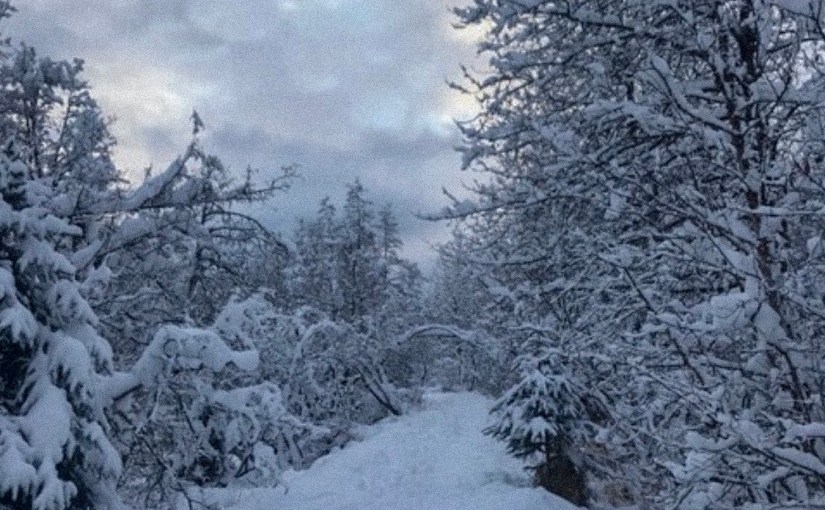
But this morning we woke up to the season’s first snow!  It’s always an exciting morning.  By March, and even April or May some years, waking up to more snow doesn’t illicit the excitement of the year’s first snowy morning.  The first few snows each season are greeted, at least in our house, by welcomed enthusiasm. 

“Look outside!”

“It snowed!”

“Yeah!”

There’s a magic to that morning.   The world is suddenly transformed.  Instead of the heavy darkness to which we’ve become accustomed during the previous weeks all is suddenly new and bright.  Instead of the rain slapping down on the windshield, white flakes drift and float, landing softly for a moment before being whisked away.  There is stillness to the world.  Peace.

I’ve been thinking about snow today as I’ve been out shoveling a path through the backyard to the chicken coop.  I love the snow.  After weeks of darkness it’s a pleasant change to have to squint against the brightness of the world.  I actually had to take a break to go find my sunglasses. 

And as I worked at clearing the path to the coop, I got to thinking about darkness and light.  And about snow. 

We were raised believing that we could ask to be washed clean of all of our mistakes and darkness.   That not only would God listen to this request, and grant it, but that God actually delights in doing this for us.  That in a moment, we could be transformed from our present state to become new.  Once again as bright as snow.

I still believe that. 

I still believe that it is God’s desire, and certainly God’s capability, to transform us.  To transform our whole world.  To rid us of darkness.  Taking away our fears and worry, our stress and anxieties, our traumas and losses, even our hatred and our loneliness.  And make us once again as bright as snow.

The darkness has been getting to me lately, which isn’t really normal for me.  I think I needed the snow this morning, as a reminder.  That although we may be in a season of darkness that season will not last forever.  The darkness will ease off, and light will return.  Just like it always does.

I always love waking up to the first snow of the season.  The reminder that darkness will not forever cover the Earth.  The reminder that even in the darkest time of the year, in the blink of an eye, without advanced notice, God can cover all that darkness.  And that even though things may appear bleak, God has everything under control, and has the capability to transform everything.  Eliminating the darkness.  Making everything, once again, as bright as snow.

The Green Tablecloth

One cold winter afternoon many years ago I was desperately trying to figure out how to get through the afternoon.  The kids were small, none were in school yet.  The weather was below zero and snowing.  Our condo was cramped with little room to play.  By mid-afternoon the kids had already painted, colored, done a couple of puzzles, played dress-ups, taken a bath and finger-painted in the tub, played with make-up, and watched a movie.  They were going stir-crazy, literally bursting at the seams of the confining condo.  And I had run out of ideas for how to keep them occupied for the last couple hours of the day until Dad would be home from work. 

“Okay, everybody get ready,” I announced.

“Ready for what?  Are we going somewhere?” they asked.

“Just get ready,” I repeated.  “Go wash your hands and faces, brush your hair, make sure your clothes are clean, pick up your room and get your best dollies and stuffed animals ready.  When you’re done, shut your bedroom door.  That way I’ll know you are ready.”

Immediately there was excitement in the air.  What was Mom doing?! 

In the kitchen, I desperately looked around for something fun they could have for an afternoon snack.  We didn’t have anything fun. 

I finally grabbed three small plastic containers and filled each one with some raisins, a couple of mini marshmallows, and half of a graham cracker.  I added three paper towels, neatly folded.  Then, in an effort to make this ordinary afternoon snack seem like something special, I grabbed an old green tablecloth out of a bottom kitchen drawer.

The tablecloth was about 3-foot square with a frayed edge.  I chose it mainly because I wouldn’t care if it got permanently stained or torn.  It was already old and worn. 

I put the paper towels, the plastic containers of snacks, and the old green tablecloth into a grocery bag.  The kids’ bedroom door was now shut.  They were ready.  I stood outside the door, listening to snippets of excited conversation.

“What do you think she’s doin’?”

“Do you think Mom has presents for us?!”

“Maybe we’re goin’ somewhere’s really fun!”

“I wonder what we’re s’posed to be ready for!”

I took a deep breath, hoping that I hadn’t just set them up for disappointment, and knocked sharply at the door.

Silence.  Then a small, dignified voice said, “Come in.”

“Hi!” I said brightly as I walked into their room with an air of importance.  “I felt like doing something fun today.  So I packed up a picnic and thought I would stop by your house and see if you and your kids would like to share a picnic with me.”

For just a second they sat motionless.  Silently watching me, wondering what this was all about.  Then, still not quite sure what to think, they each started to smile. 

Kathryn, our oldest, was the first to join me.

“Yes, we’d love to,” she said.  “We were just sitting here wondering what to do with our kids this afternoon.”

Anna, already taking her cues from her older sister, jumped in next.

“I have my kids right over there, Mom.” She pointed to her row of neatly set-up stuffed animals.

“Well,” I continued cheerfully, “I just hate being cooped up inside on these cold winter afternoons.  So, I brought my kids over to play with your kids.  And I packed us a picnic.”

“Where should we have it?” they wondered.

“Oh look, I’ve left your front door wide open,” I said as I shut the bedroom door again.  “Why don’t we have our picnic right here?  I brought a special new tablecloth that we can use.”

I took out the ugly, old green tablecloth.  They “oohed” and “aahed.”  I spread the tablecloth on their bed as we chatted about our children, like busy moms like to do.  Then I set out the folded napkins, and handed each of them a plastic container of goodies. 

We sat around the tablecloth, on the kids’ bed, surrounded by dollies and stuffed animals.  And the room was filled with animated visiting, giggles and smiles as they munched on the “fancy little snacks” I had packed for us. 

And much too quickly the magic time was over.  Our picnic ended and it was time for me to go “home.”  I gathered up the empty containers and gently picked up the tablecloth, full of crumbs and with a few spots of sticky marshmallow and crushed raisins.  I put it all back in the bag, said my goodbyes and left the room.

That was the first, of what would become many, picnics.  And that old, worn, green tablecloth; the 3-foot square one with the fringe at the edges; has been the only thing that has stayed the same.  With it, the ordinary becomes magical.  Hot chocolate and graham crackers.  Crackers and sliced bananas.  Raisins and juice.  Apple slices and peanut butter.  Anything will do provided it’s set out on the ugly old green tablecloth.

Eventually we expanded to having dinner picnics, too.  At times when things weren’t going great.  When we just needed to do something a little out of the ordinary.  Something celebratory.  Dinner would become a picnic on the living room floor with popcorn, apple slices, carrot sticks, salami slices or string cheeses, and maybe even M&Ms.  And all of us gathered around the edges of the old green tablecloth.  Visiting, or watching a movie.

One particular evening after we’d had a picnic dinner out on the living room floor, I had gathered up what was left, and shaken out the old green tablecloth which was once again full of crumbs.  Later, as I was getting the kids into bed, our daughter Kathryn stopped me.

“Hey Mom?” she said in a quiet voice.  “When I grow up do you think I could have the green tablecloth?”

I said I supposed so, and asked why.

“Cause, when I’m a mom I want to do picnics with my kids, too.  It kinda helps you get through long days.”

And I’m pretty sure that was the exact moment in time.  The moment when, for me, that tired old green tablecloth with the fringed edges became priceless. 

Looking at it now, becoming priceless wasn’t a sudden occurrence.  Although it felt like it at the time.  Becoming priceless actually took years.  The process had started years earlier, one cold winter afternoon when I was desperately trying to figure out how to get through a particularly long afternoon.     

Hey Mom

I was in our room putting away clean clothes when she stopped outside the doorway.  She’d come to ask if she could meet some friends at a movie matinee that afternoon.

“Hey Mom.  Uh, I mean, Ruth.”

I looked up to see her standing there.  All four feet ten inches of her.  Twelve years old, going on 37.

She’d been in our home for a little over a month.  And it had been a difficult month.  I don’t know her whole story.  But I know enough of it to know that she’s already learned not to expect anything from the adults in her life.  Certainly not to expect consistency, or rules.  Not to expect fairness, or safety.  Not to expect them to stay, or to protect her.

I smiled, acknowledging her blunder.  She pretended that she hadn’t meant to call me Mom, and I went along with it.  It’s not a big deal.  Just a blunder.

Except it’s not a blunder.  And it is a big deal.

I smiled, and gave the okay for her to go to the movies.  Knowing full well what a huge thing this was.  It wasn’t an error.  It was a deliberate, very tentative, dipping the toes in the water.  She had said it, and I had heard it.  I let her know I’d heard it.  And that it was fine.

I know this trail well.  We’ve been foster parents for a number of years.

We always start out as Ruth and Geoff.  We refer to each other by our first names when we’re talking to a new kid in our home. 

“Did Geoff say what time he was going to pick you up?”  I’ll ask.

“Ask Ruth if you need to wear a coat today,” Geoff will say.

And somewhere along the way, after a few weeks or a couple months, the other words will start slipping in.

“Hey Dad, I mean Geoff, can I go to the Rec Center after school?”

“Hey Mom, I mean Ruth.  Can I go to the movie this weekend with some friends?”

It’s deliberately formal, dressed down casually so as not to draw attention.  Like saying ‘I love you’ for the first time.  Just going to slip this in right here.  Not sure if you’ll even notice.

We notice.  Every single time.  In the moment we’ll respond as though we didn’t notice so as not to draw attention to it.  We just go with it.  Not a big deal.

But becoming Mom and Dad is always a big deal.  It’s an honor.  And a gift.

I don’t know how many times it’s happened over the years that I’ve gone from being Ruth to being Mom.  It’s a progression marking a child’s acclimation into our home.  A settling down and settling in.  A standing down of the guard.  And every single time it’s a gift.

I was reminded of that again just the other day.  When she stood in the doorway asking if she could go to the movies.

“Hey Mom, I mean Ruth.  Haha.  Yeah, wow, that was weird.  I don’t even know what I was thinking there.” 

Smiling, I acknowledge the change in how she addresses me.  Knowing that she’s watching intently right in this moment.  Waiting to see if she’ll be accepted.  Waiting to see if it’s okay.  Hoping it will be.  Hoping that I’m up for it.  Hoping that I won’t be just another adult to reject her.

“Hey Mom.” 

It’s just a word.  A small word.  But it’s huge.